























The Ultimate Family Basketball Hoop Buying Guide
Having your own basketball hoop at home means the thrill of the game is never more than a few steps away. Whether you're honing your jump shot, teaching your kids the basics, or organizing a weekend pickup game with friends, the right hoop transforms your outdoor space into a personal sports arena. But with so many options on the market—from portable systems to wall-mounted units, from junior sizes to professional-scale rims—how do you choose? This guide breaks down the essentials to help you find the perfect hoop for your family's needs.
Step 1: Know Your Players, Choose the Right Height Range
A basketball hoop isn't a one-size-fits-all piece of equipment. Its Height Adjustable range is the single most important factor in determining who can enjoy it and for how many years.
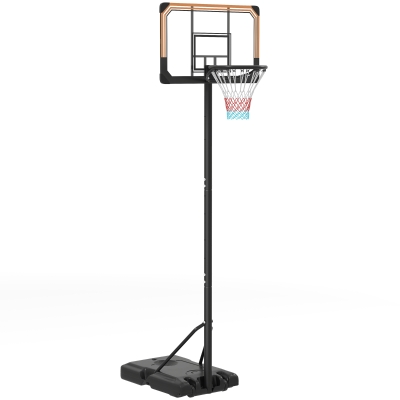
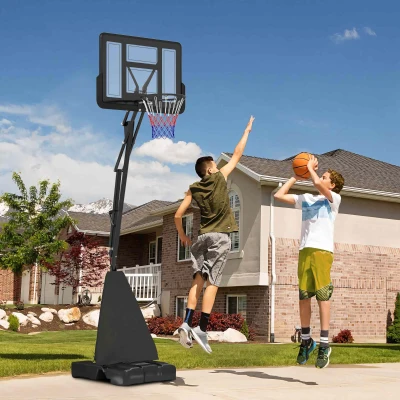
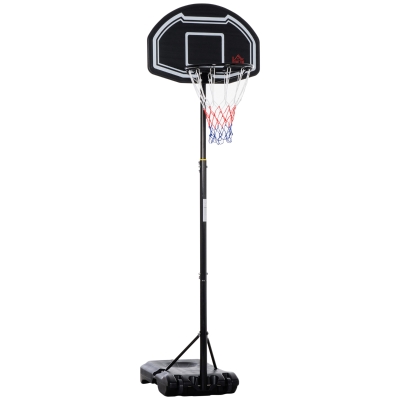
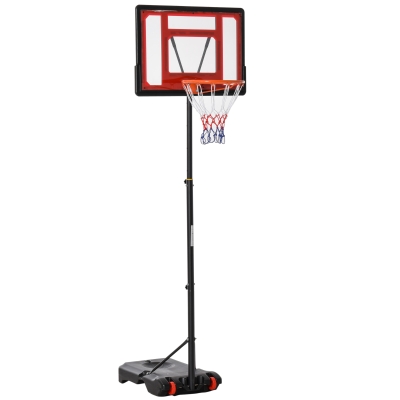
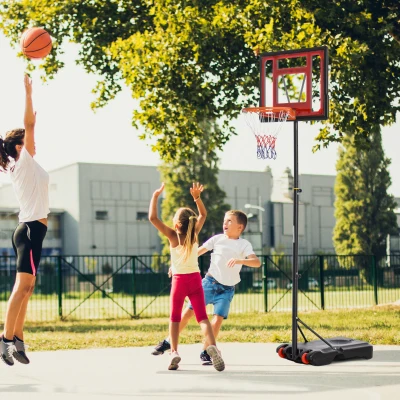
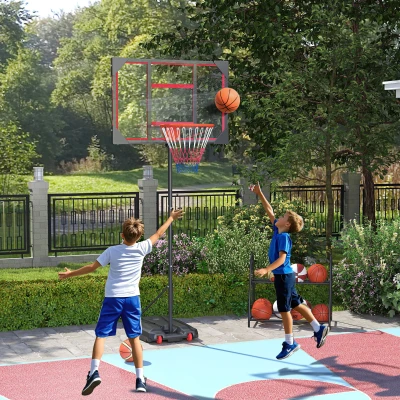
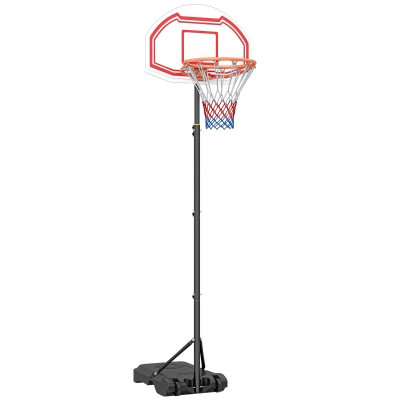
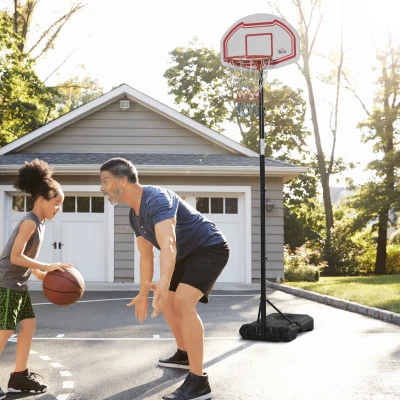
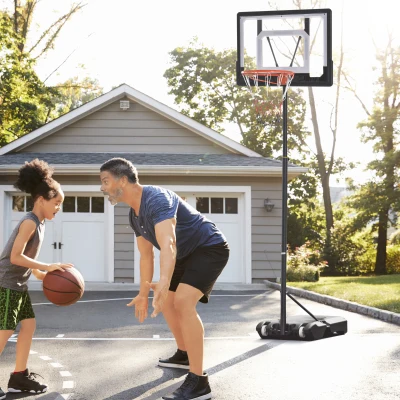
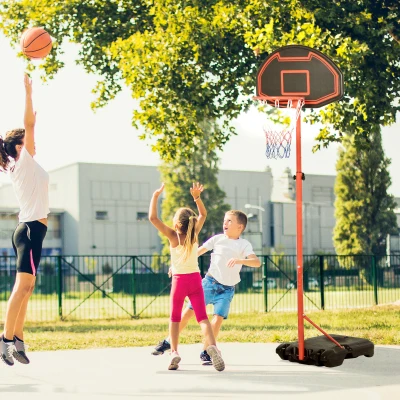
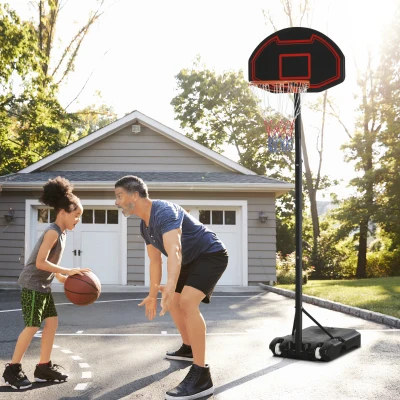
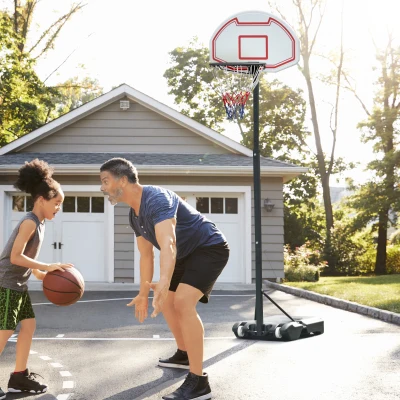
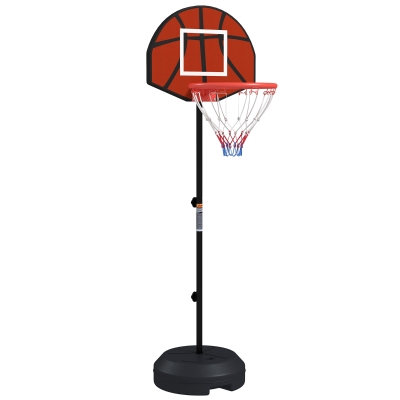
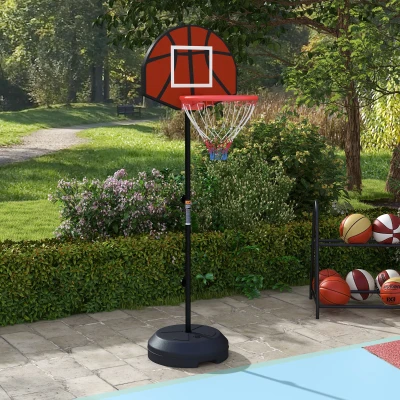
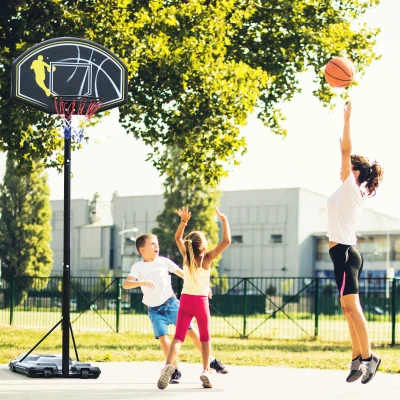
- For Kids and Juniors (Ages 6+): At this stage, the goal is to build confidence and develop proper shooting form. Look for hoops with a low starting height, typically in the 1.5m to 2.1m range. Products like the HOMCOM Portable Basketball Hoop 1.55-2.1m or the AIYAPLAY Kids' Basketball Hoop (210-260 cm) are perfect examples. These allow younger players to start with easy "dunk" shots and gradually increase the height as their strength and skills improve.
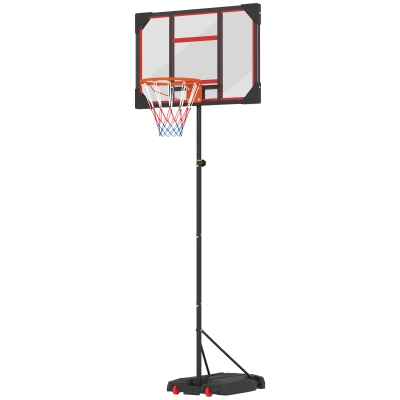
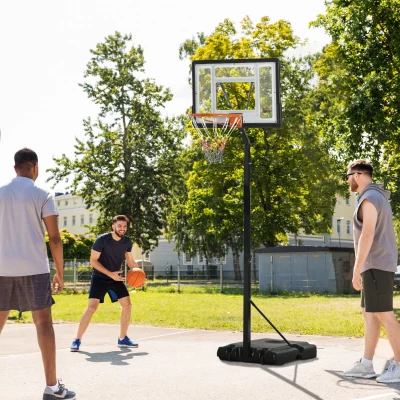
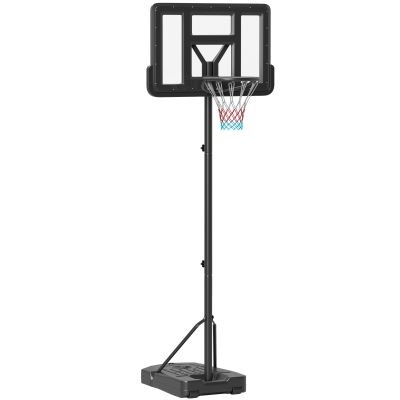
- For Families (Teenagers & Adults): If the hoop will be shared by family members of different ages, opt for a system with a wider adjustment range. Consider models like the SPORTNOW Height Adjustable Basketball Stand Net Set System (200-305cm) or the SPORTNOW 2.4-2.9m Adjustable Basketball Hoop. These can be raised to the official adult height of 305cm (10 feet) for a true game experience, while still lowering enough for teenagers to enjoy.
Step 2: Stability vs. Portability – Find Your Balance
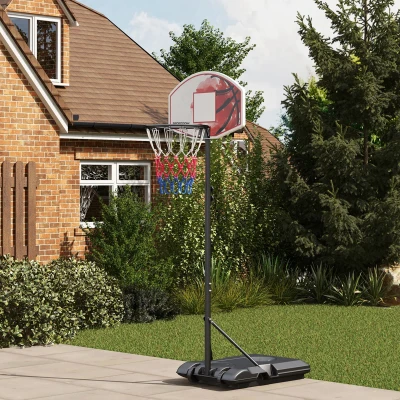
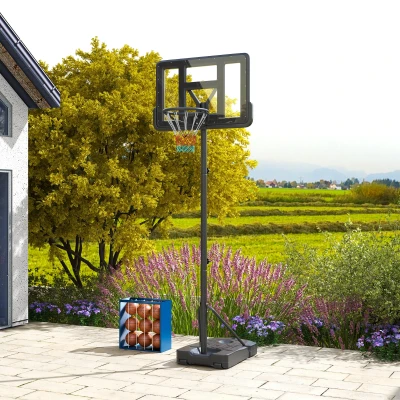
Every Freestanding basketball hoop relies on its base for stability. Understanding the trade-offs between different base types will help you make a safer and more practical choice.
| Base Type | Key Features | Best For | Product Example |
|---|---|---|---|
| Weighted / Fillable Base | Filled with water or sand for a low center of gravity, offering exceptional stability against hard impacts and wind. | Permanent placement in a backyard or driveway. | SPORTNOW Fully Adjustable Basketball Hoop Outdoor |
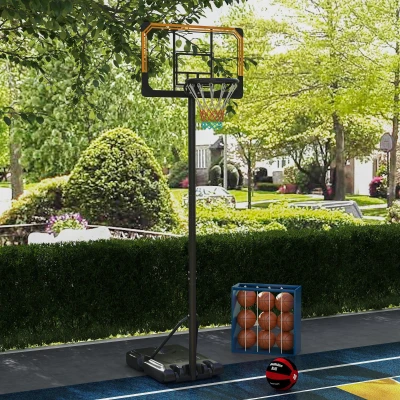
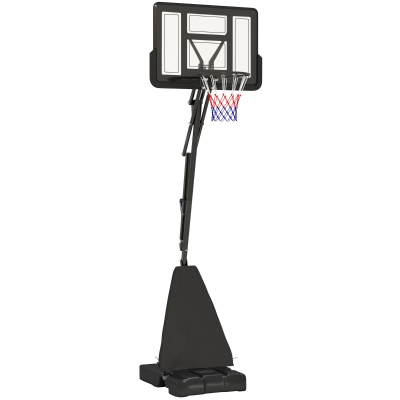
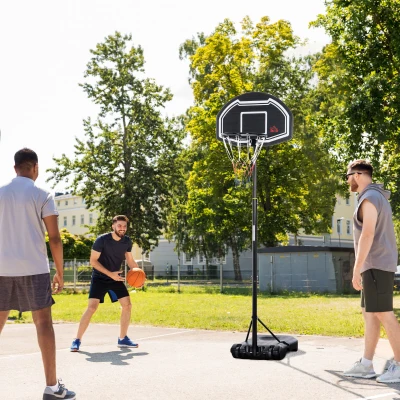
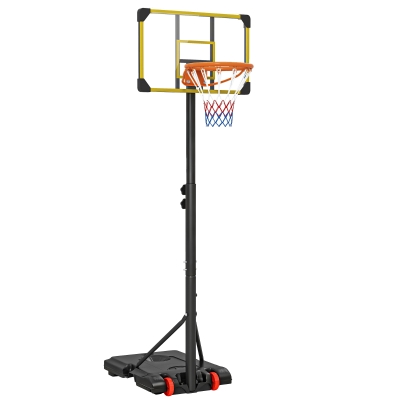
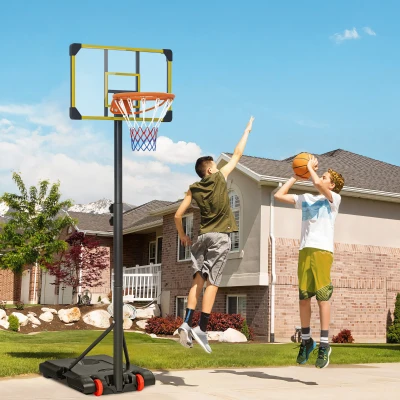
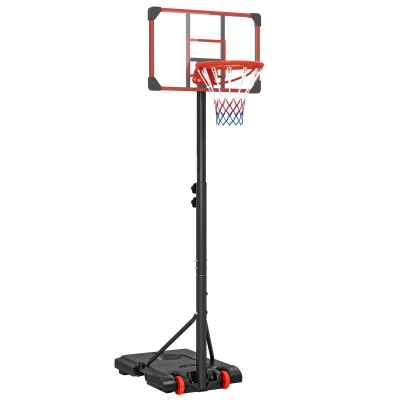
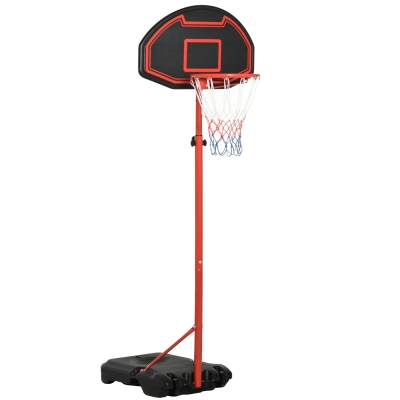
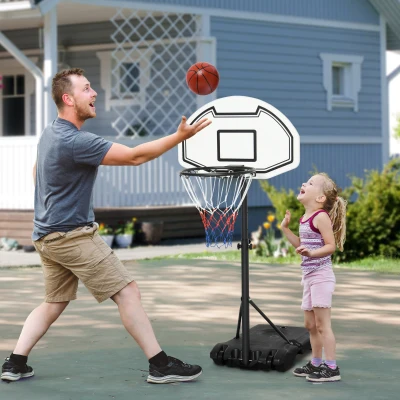
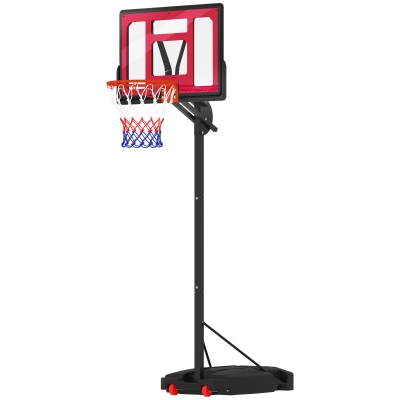
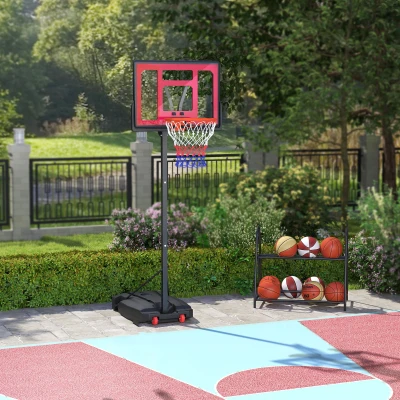
| Portable on Wheels | Combines a Weighted Base with smooth-rolling casters, allowing one person to easily move the hoop for storage or transport. | Families who need to move the hoop between indoor and outdoor spaces or store it away when not in use. | HOMCOM Portable Basketball Hoop Stand with Large Wheels |
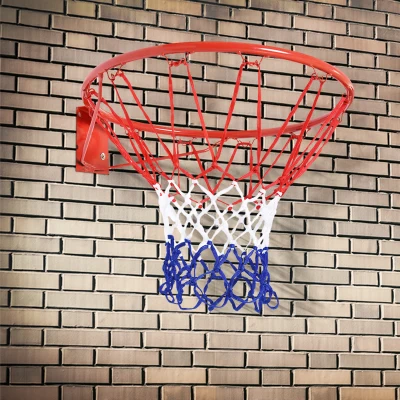
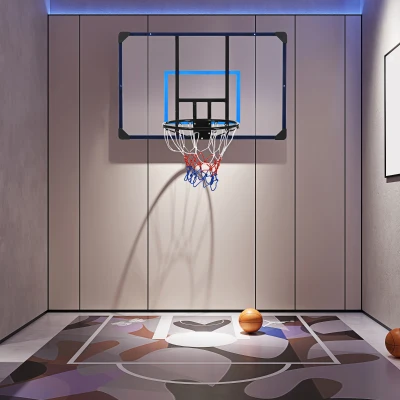
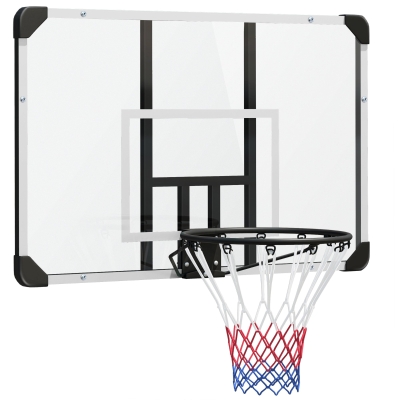
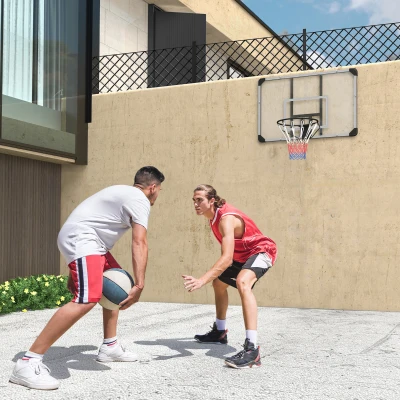
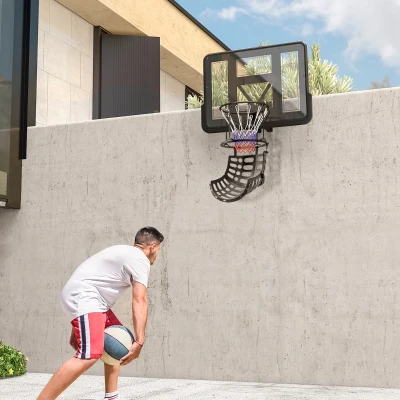
| Wall Mount | Fixed directly to a wall or pole, saving valuable floor space; stability depends entirely on the mounting surface. | Garages, half-courts, or spaces with limited ground area. | SPORTNOW Wall-mounted basketball hoop |
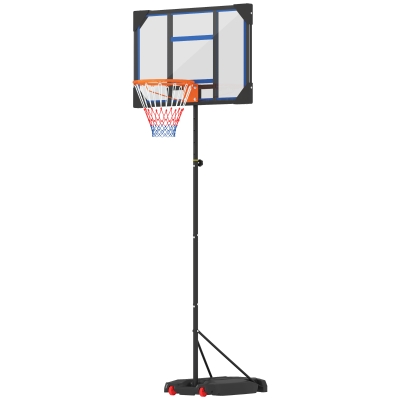
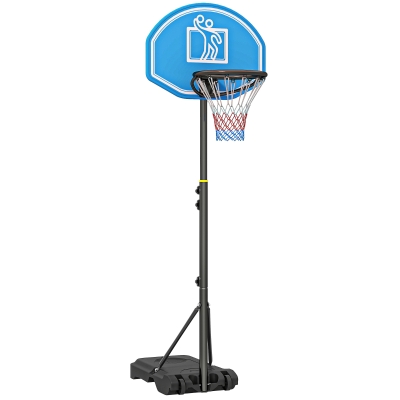
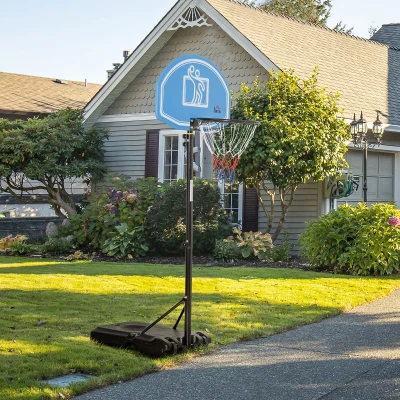
Expert Recommendation: For most families, a portable hoop with a weighted base and large wheels offers the best of both worlds. You get the safety of a heavy, stable base during play and the convenience of easy relocation when it's time to mow the lawn or pack it away for the season. When choosing, look for models with "Large Wheels"—they handle grass and uneven surfaces much better than small casters.
Step 3: Built to Last – Decoding Materials for Outdoor Durability
An outdoor basketball hoop must withstand sun, rain, wind, and repeated impacts. The materials used determine not only its lifespan but also its playing feel and safety.
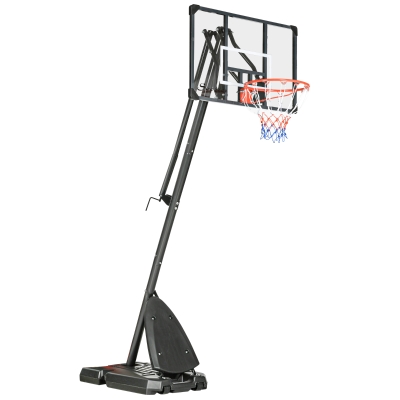
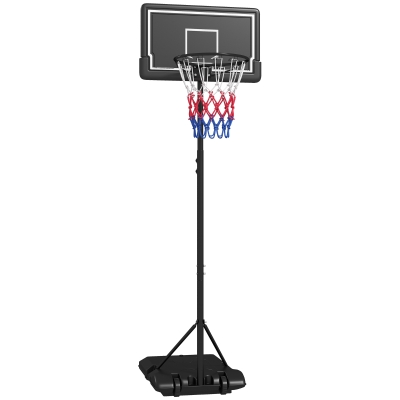
- Backboard Material: This is a key differentiator between entry-level and premium models. A Shatterproof Backboard (typically made of high-strength polycarbonate) is the gold standard for home use. It delivers rebound performance close to glass while offering incredible impact resistance—it won't crack or shatter even after powerful dunks. You'll find this feature on models like the SPORTNOW Fully Adjustable Basketball Hoop.
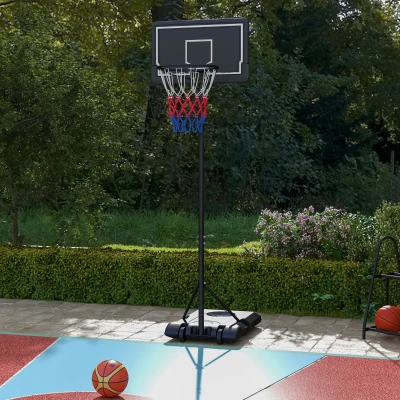
- Frame Construction: Prioritize hoops with a "Rust-Free Steel Frame" or powder-coated finish. This protective layer is crucial for preventing corrosion and structural weakness caused by rain and humidity, ensuring your investment stays solid year after year.
- Net Quality: Standard cotton nets degrade quickly outdoors. Look for an "All-Weather Net" or heavy-duty nylon construction—these materials resist UV damage and moisture, staying intact far longer than cheaper alternatives.
Step 4: Advanced Features That Elevate Your Training
Once you've covered the basics, consider these performance-enhancing extras that can take your solo practice sessions to the next level.
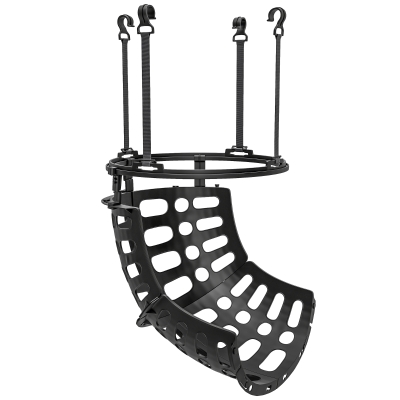
- Ball Return System: For players who train alone, this is a game-changer. The SPORTNOW Basketball Ball Return System channels made shots back to you via a netted chute or slide, cutting out the constant jogging to retrieve the ball. This keeps your heart rate up and maximizes the number of shots you can take in a session.
- Multi-Angle Adjustment: Some higher-end models feature adjustable backboard tilt or rebound angle settings. This allows you to simulate different game scenarios (e.g., bank shots from various positions) and adds a fun, challenging dimension to your practice routines.
Final Takeaway: Your Perfect Hoop Is Out There
Choosing the right basketball hoop for your home comes down to matching the product's specifications to your family's unique needs. Start by asking: Who will play most often? (Kids, teens, adults?) and Where will it be used? (A spacious backyard, a compact driveway, or a multi-use court?). Then, use the framework above to evaluate each candidate against its height adjustability, base mobility, backboard material, and frame durability. We're confident this approach will lead you to a hoop that delivers years of fun, fitness, and family memories.
FAQ
Q1: How much water or sand do I need to put in my portable basketball hoop base for it to be safe?
This is a critical safety question. The correct amount is always to fill to the "Max Fill Line" clearly marked on the base. Most standard bases require approximately 70 to 100 liters of water, or the equivalent volume in sand (sand provides superior stability because it's denser, but makes the unit much heavier to move). Critical warning: Never under-fill the base just to make the unit easier to roll around. An underweight base increases the risk of the hoop tipping over during play or in strong winds, which could cause serious injury.
Q2: My child is 8 years old and 130cm tall. What's the ideal hoop height for them?
The goal is to allow your child to shoot with proper form while still being able to reach the hoop comfortably. A practical rule of thumb is to set the rim height at 30-50cm above their standing reach (when they raise their arm straight up). For an 8-year-old of 130cm, their standing reach is roughly 170-180cm. Therefore, setting the hoop at approximately 2.1m to 2.3m is an ideal starting point. As their strength grows, you can raise it incrementally—up to 2.6m (middle school level) and eventually to the full 3.05m (adult regulation height).
Q3: My hoop stays outdoors year-round. What simple maintenance steps can I take to prolong its life?
Follow this easy "Check, Tighten, Protect" routine to keep your hoop in top shape:
- Protect: While products with a Rust-Free Steel Frame have built-in weather resistance, consider using a waterproof cover during prolonged periods of non-use (winter months) to shield the backboard and net from harsh UV rays and acid rain.
- Check: Every 1-2 months, inspect all visible screws and connection points—especially around the height-adjustment mechanism and backboard brackets. Make sure nothing has loosened from the vibrations of regular play.
- Tighten & Lubricate: Use a wrench to secure any loose bolts. For portable models, apply a small amount of lubricant (like WD-40) to the wheel axles and the height-adjustment pole to ensure smooth, squeak-free operation. Keep the adjustment track clear of dirt and sand to prevent seizing.