










Outdoor Patio Heater Safety & Weather Resistance: A Complete Guide for Year-Round Comfort
Extending your outdoor season into the cooler months is one of the best investments you can make for your garden, patio, or balcony. However, an outdoor heater faces conditions that indoor appliances never encounter: rain, wind, dust, and fluctuating temperatures. Choosing a heater that is genuinely built for the outdoors—and understanding how to install, operate, and maintain it safely—is essential. This guide covers everything you need to know about weather resistance ratings, built-in safety mechanisms, and practical precautions to ensure your patio heater performs reliably for years.
Understanding IP Ratings: Why IP65 Matters for Electric Heaters
When shopping for an electric patio heater, you will frequently encounter the term "IP65." IP stands for "Ingress Protection," a standard developed by the International Electrotechnical Commission (IEC) to rate how well an electrical enclosure seals against dust and water. The first digit (6) indicates complete protection against dust ingress, while the second digit (5) means the unit is protected against low-pressure water jets from any direction. In practical terms, an IP65-rated heater can withstand rain, splashes, and hose-down cleaning without risking electrical short circuits or corrosion of internal components.
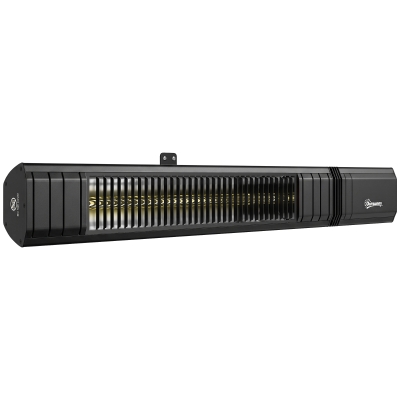
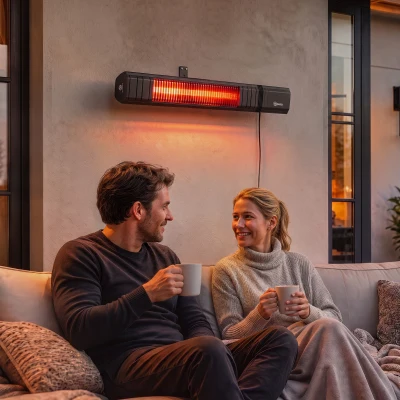
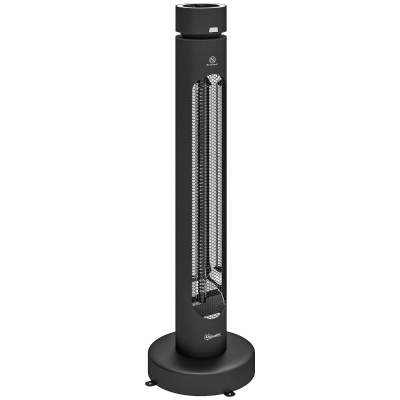
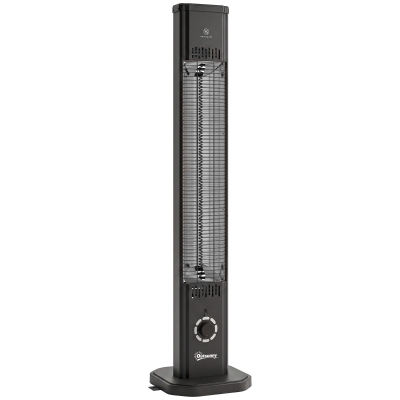
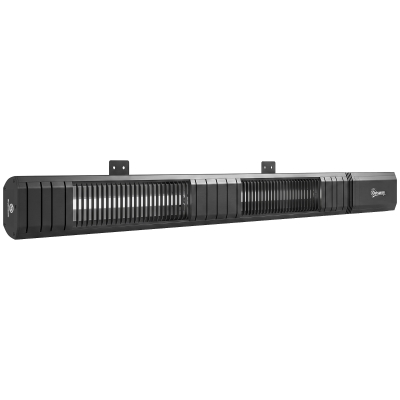
Not all outdoor heaters carry this rating. Many budget models are only "water-resistant" or "splash-proof," which is insufficient for permanent outdoor installation. If your heater will be mounted on an exposed wall, hung under a pergola, or placed on an open patio where rain can blow in sideways, you should insist on IP65 or higher. Outsunny’s range of electric infrared heaters—such as the Outsunny 2000W Electric Infrared Patio Heater and the Outsunny 3000W Wall Mounted IP65 Garden Heater—are explicitly designed with IP65 sealing, making them safe for year-round outdoor use. The 3000W model also offers 9 heat settings and a 24-hour timer, giving you precise control while the sealed housing protects the electronics.
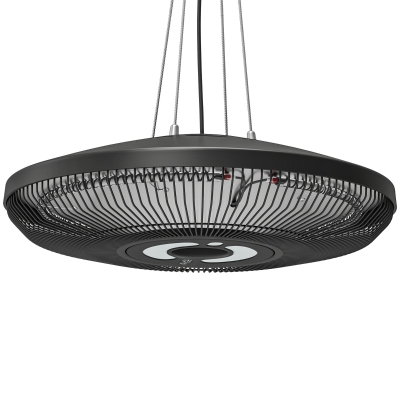
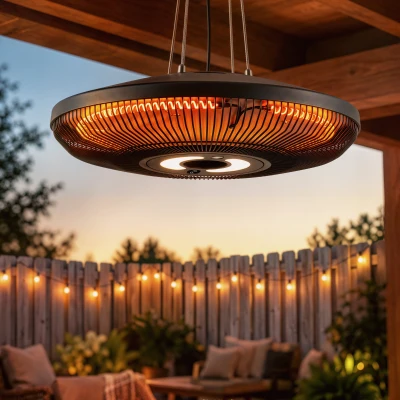
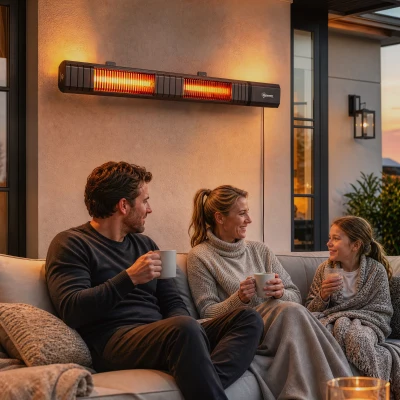
For hanging and ceiling-mounted units, the same principle applies. The Outsunny Hanging Electric Patio Heater with LED Light combines IP65 protection with a dual-purpose design: it provides both warmth and ambient illumination for evening gatherings. Always verify the IP rating in the product specifications before purchasing, and never assume that a heater described as "outdoor" is automatically waterproof.
Safety Mechanisms in Gas and Electric Heaters
Beyond weather sealing, modern patio heaters incorporate several safety features that prevent accidents and give you peace of mind. Understanding what each feature does—and why it matters—will help you choose a safer appliance.
Tip-Over Switches and Flame Failure Devices
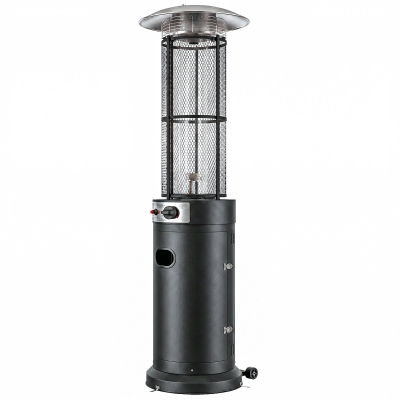
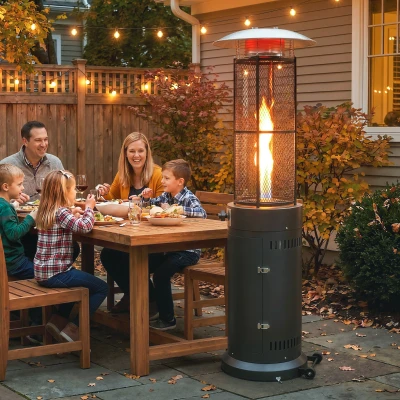
Gas patio heaters, particularly freestanding models, are at risk of tipping over in strong winds or if accidentally bumped. A tip-over switch automatically cuts off the gas supply if the unit tilts beyond a certain angle, preventing gas leaks and potential fires. This feature is standard on quality models like the Outsunny 11KW Freestanding Gas Patio Heater, which also includes a flame failure device that shuts off the gas if the pilot light goes out. If you are considering a gas heater, never purchase one without these two safety mechanisms.
Overheat Protection and Cool-Touch Housing
Electric heaters can also present hazards if poorly designed. Overheat protection automatically disconnects the power if internal temperatures exceed safe limits, preventing fires caused by blocked vents or prolonged maximum-output operation. Many Outsunny electric models, including the Outsunny 2000W Electric Infrared Patio Heater with Cover, include this feature. Additionally, look for cool-touch housings or protective grilles that prevent accidental contact with hot elements—especially important if children or pets share your outdoor space.
Stable Bases and Secure Mounting
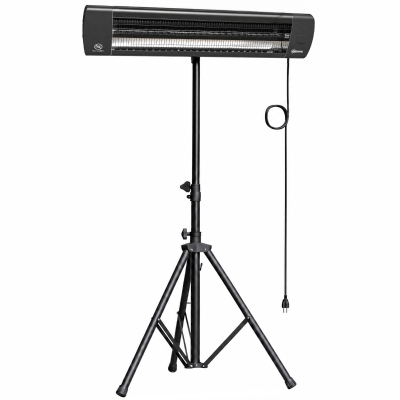
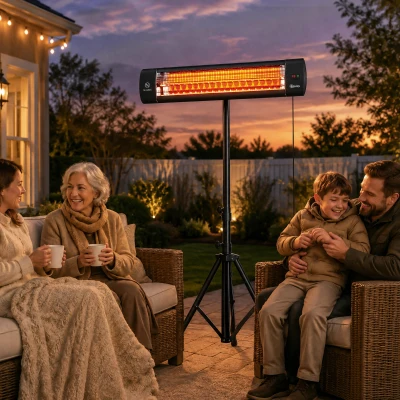
Whether your heater is freestanding, wall-mounted, or ceiling-hung, stability is critical. Freestanding gas heaters should have a weighted base and locking casters to prevent rolling on uneven surfaces. Wall-mounted electric heaters must be fixed to a solid wall with appropriate anchors; never mount them on drywall alone. Hanging heaters require a ceiling hook or chain rated for at least twice the weight of the unit. The Outsunny 2500W Electric Infrared Patio Heater with Tripod offers a stable tripod base that can be adjusted for height, while the Outsunny 3KW Infrared Outdoor Heater with Adjustable Height and 5M Extra Long Power Lead provides a freestanding frame that can be positioned precisely where you need it without extension cords trailing across the patio.
Installation Safety: Placement, Clearance, and Power Supply
Proper installation is just as important as the heater’s built-in safety features. Incorrect placement can lead to fire hazards, reduced performance, or damage to the unit itself.
Clearance from combustibles: Always maintain a minimum clearance of at least 1 meter (3 feet) between the heater and any flammable materials, including curtains, awning fabric, wooden furniture, and dry vegetation. For wall-mounted units, follow the manufacturer’s recommended distance from the wall and ceiling—typically 30–50 cm from the wall and at least 50 cm from the ceiling.
Power supply for electric heaters: Electric patio heaters draw significant current. A 2000W heater requires approximately 8.7 amps at 230V, while a 3000W unit draws about 13 amps. Ensure your outdoor socket is rated for the load and protected by a residual current device (RCD). Avoid daisy-chaining multiple heaters on one circuit. If your patio lacks a nearby outlet, choose a model with a long power lead, such as the Outsunny 3KW Infrared Outdoor Heater with 5M Extra Long Power Lead, rather than using an extension cord, which can overheat when coiled.
Ventilation for gas heaters: Gas patio heaters produce carbon dioxide and water vapor, and incomplete combustion can produce carbon monoxide. Never operate a gas heater in an enclosed space, such as a closed conservatory, garage, or tent. Always use them in well-ventilated outdoor areas, and keep the gas cylinder upright and away from heat sources.
Maintenance and Off-Season Storage
To keep your patio heater safe and efficient, regular maintenance is essential. Before each season, inspect the following:
- Electric heaters: Check the power cord for cracks or fraying. Clean the reflector and heating element with a soft, dry cloth—never use water or abrasive cleaners. Ensure the IP65 seals around the housing are intact and not degraded.
- Gas heaters: Inspect the gas hose and regulator for signs of wear, cracking, or leaks (apply soapy water to connections and look for bubbles). Clean the burner ports with a soft brush to remove dust and spider webs. Replace the battery in the ignition system if needed.
- General: Tighten any loose screws or bolts, especially on mounting brackets and bases. Touch up any scratches on metal frames with rust-resistant paint to prevent corrosion.
When the heating season ends, store your heater properly. Electric units should be unplugged, cleaned, and stored indoors in a dry place—ideally in their original box or a breathable cover. Gas heaters should have the cylinder disconnected and stored separately in a well-ventilated area, and the heater itself should be covered with a dust cover (like the one included with the Outsunny 2000W Electric Infrared Patio Heater) and kept in a shed or garage. Never leave a gas cylinder connected to the heater during long periods of non-use.
FAQ
Q1: Can I leave an IP65 electric patio heater outside in the rain?
Yes, IP65-rated heaters are designed to withstand rain and splashes from any direction. However, "withstand" does not mean "submerge." You should avoid placing the heater in a location where water can pool around its base or where it might be exposed to direct, high-pressure water jets. While the housing is sealed, the power plug and socket should still be protected from standing water—use a weatherproof outdoor socket or an IP-rated connection box. If a severe storm is forecast with flooding or extreme wind, it is still wise to unplug the heater and move it to a sheltered spot. For everyday rain, an IP65 heater can remain permanently installed outdoors without issue.
Q2: How do I safely use a gas patio heater without risking carbon monoxide poisoning?
Carbon monoxide (CO) is a colorless, odorless gas produced by incomplete combustion. To use a gas patio heater safely, always operate it outdoors in a well-ventilated area—never inside a garage, tent, or enclosed porch. Ensure the burner is clean and the air intake is not blocked. Use only the regulator and hose supplied with the heater, and check for leaks before each use. If you smell gas, turn off the cylinder immediately and do not attempt to relight until the leak is fixed. Consider placing a battery-operated CO detector near your outdoor seating area as an extra precaution. Finally, never leave a gas heater running unattended, and turn it off at the cylinder when you go inside.
Q3: What should I check before turning on my patio heater after winter storage?
Before the first use of the season, perform a thorough safety check. For electric heaters: inspect the power cord and plug for damage, clean the reflector and element with a dry cloth, and verify that all mounting screws are tight. Plug the unit into a socket with an RCD and test it on the lowest setting first. For gas heaters: check the hose and regulator for cracks, apply soapy water to all connections to test for leaks, clean the burner ports, and replace the ignition battery if needed. Also inspect the tip-over switch by gently tilting the unit—you should hear it click. If anything seems faulty, do not use the heater until it has been serviced by a qualified technician.