







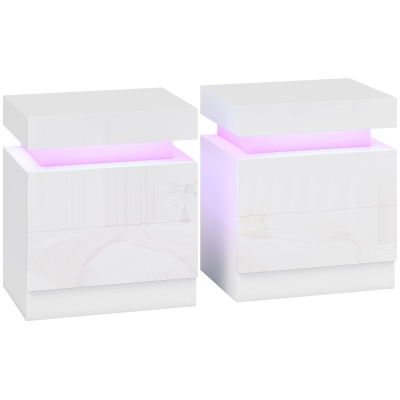

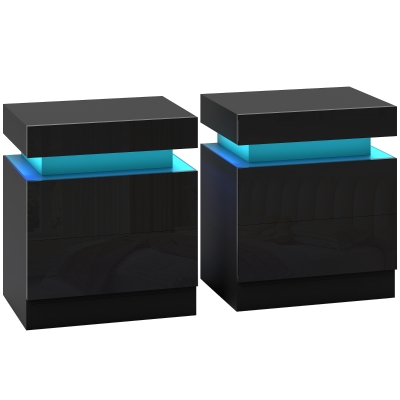

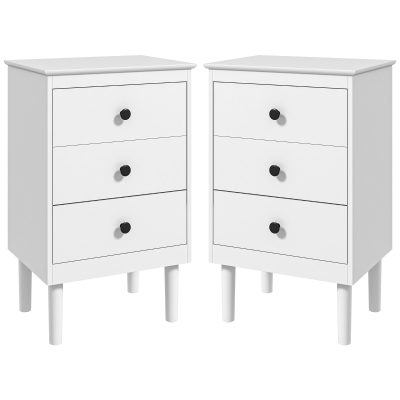

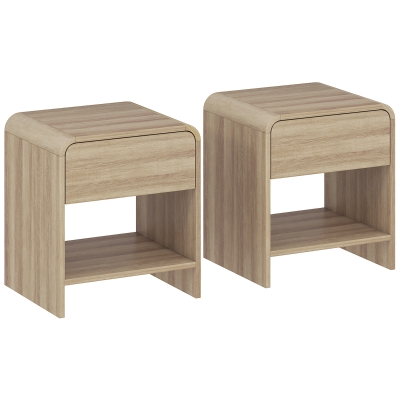




















Bedside Table: Floor-Standing vs. Wall-Mounted — Which Installation Is Right for Your Bedroom?
You've found the perfect bedside table. The style matches your bed, the color complements your walls, and the storage is exactly what you need. But there's one more decision to make before you click "buy": should you choose a floor-standing bedside table or a wall-mounted floating bedside table?
This isn't just about looks — it's about how you use your space, how much cleaning you want to do, and even how your bedroom feels. Both options have their strengths, and the right choice depends on your room's size, your storage needs, and your willingness to pick up a drill. In this guide, we'll break down everything you need to know so you can make the best decision for your bedroom.
Floor-Standing Bedside Tables: Stability and Simplicity
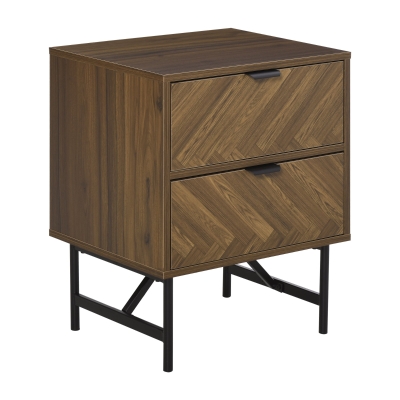
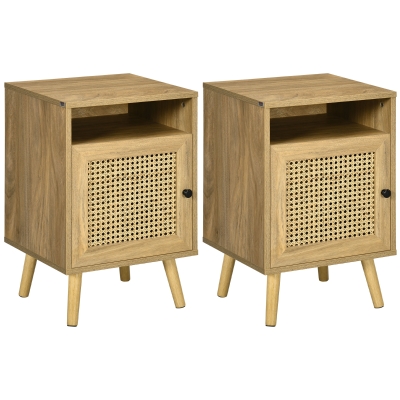
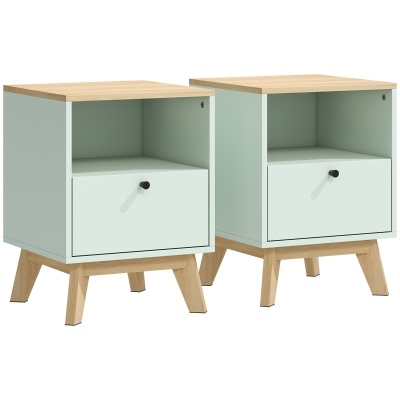
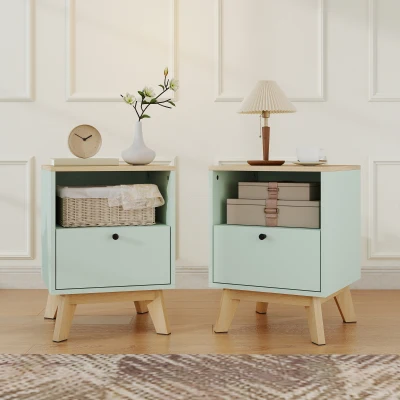
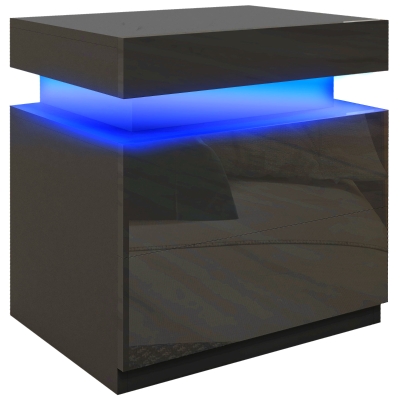
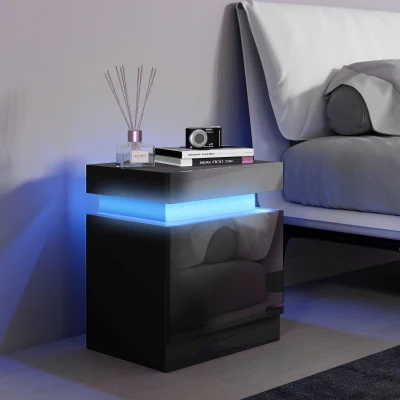
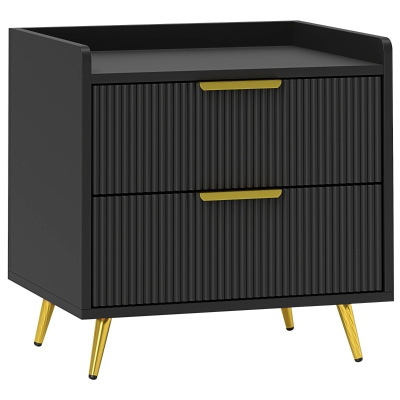
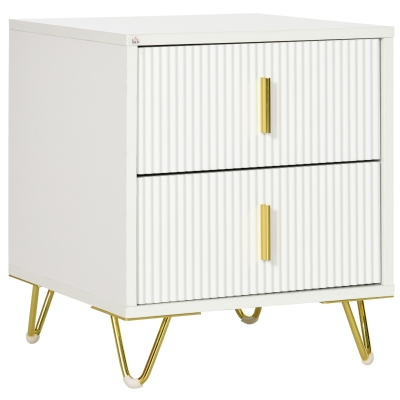
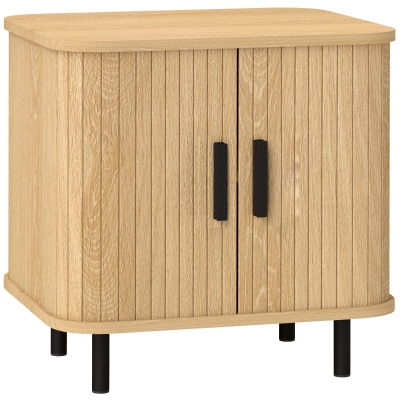
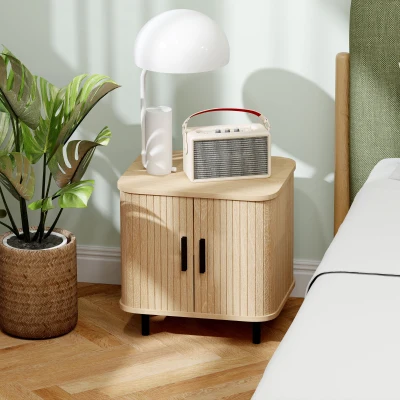
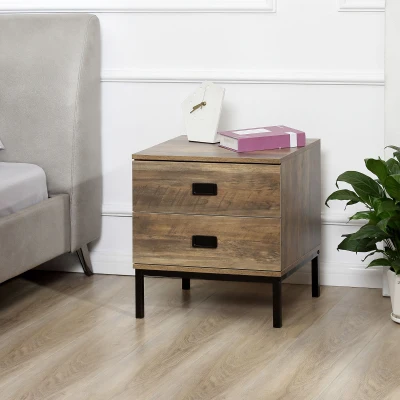
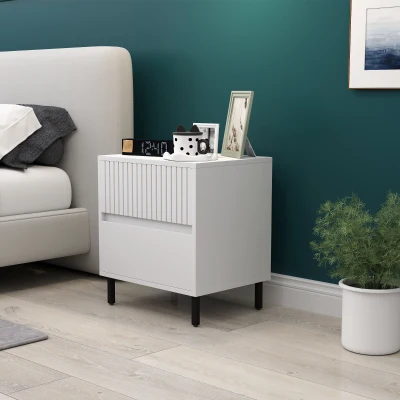
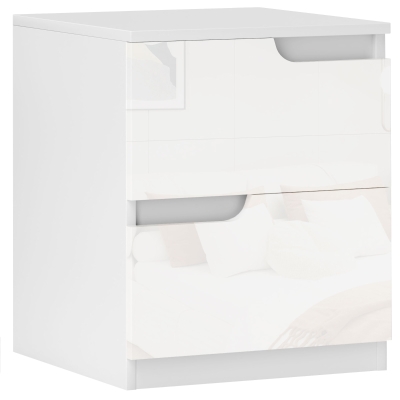
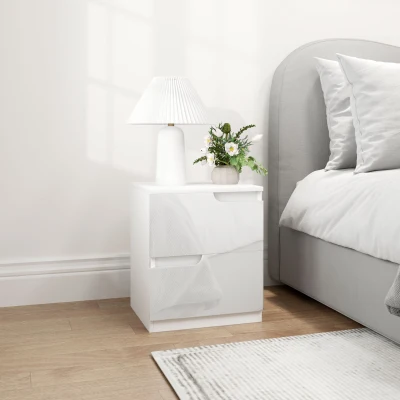
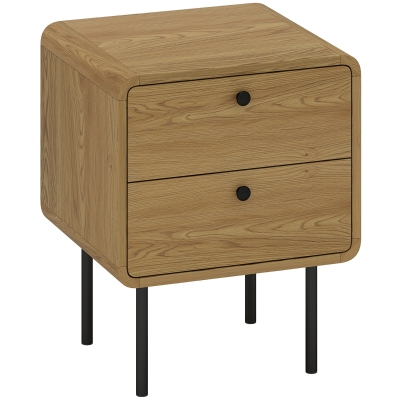
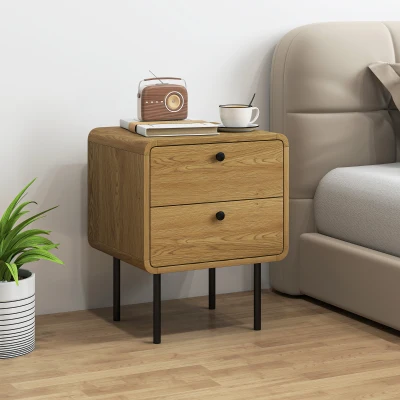
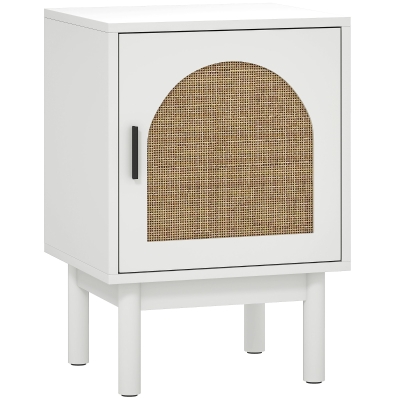
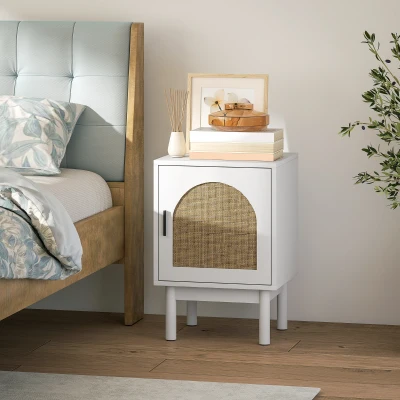
The floor-standing bedside table is the classic choice. It sits directly on the floor, often on four legs or a solid base. This is what most people picture when they think of a bedside table — it's familiar, reliable, and requires zero installation beyond placing it in position.
Why Choose a Floor-Standing Bedside Table?
- No installation required: Simply unpack, position, and start using. Perfect for renters or anyone who doesn't want to drill holes in their walls.
- Maximum stability: With four solid legs and a wide base, these bedside cabinets are incredibly stable. They won't wobble or shift, even if you lean on them or have heavy items on top.
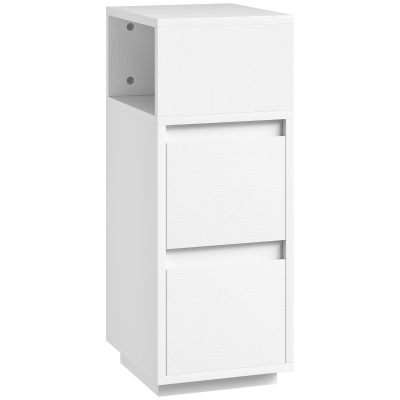
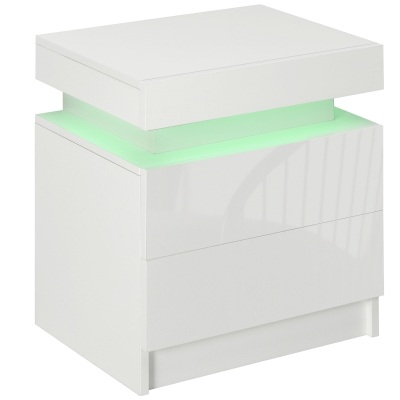
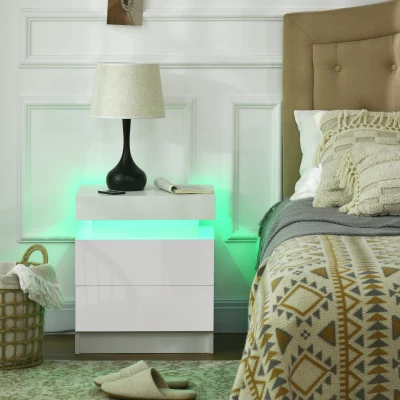
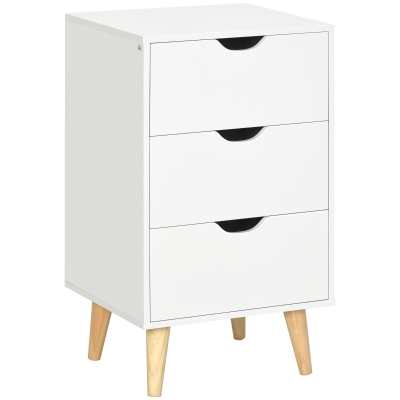
- More storage options: Floor-standing models often have more storage capacity. You'll find 2-drawer bedside tables, 3-drawer nightstands, and even models with cupboards or adjustable shelves.
- Great for larger bedrooms: If you have the floor space, a floor-standing nightstand adds visual weight and anchors the bed area.
Potential Drawbacks
- Floor cleaning is harder: You'll need to move the table to vacuum or mop underneath it. Dust and hair tend to accumulate around the legs.
- Visually heavier: A floor-standing side table can make a small room feel more crowded, especially if it's bulky or dark-colored.
- Less flexible for small spaces: In a compact bedroom, every square inch of floor space matters, and a floor-standing table consumes some of it.
Wall-Mounted / Floating Bedside Tables: Lightness and Cleanliness
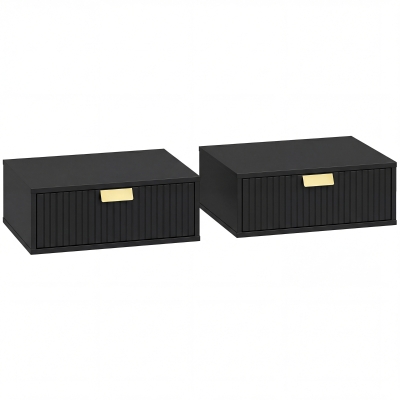
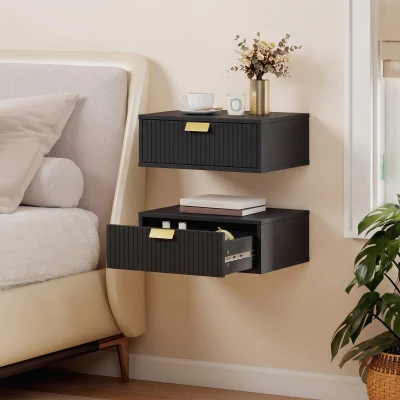
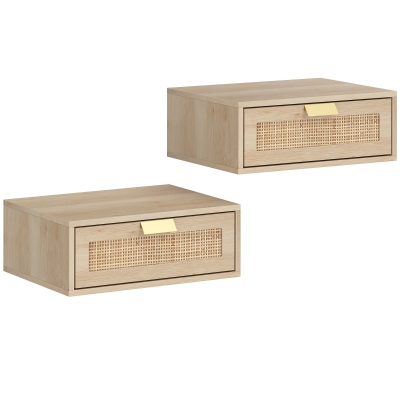
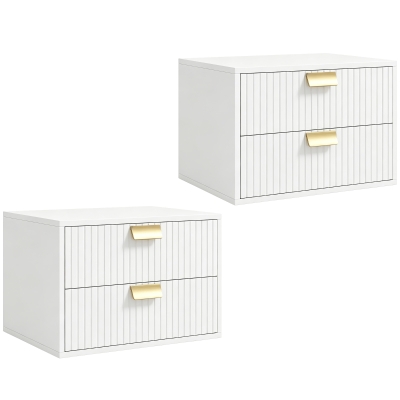
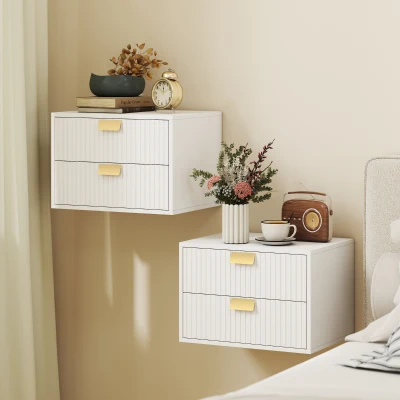
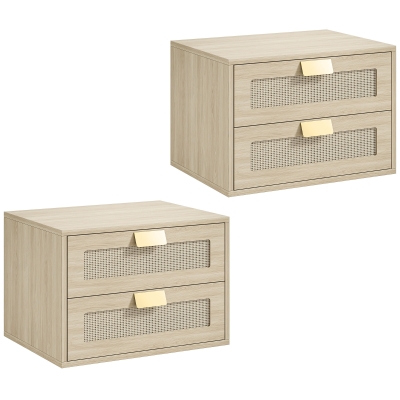
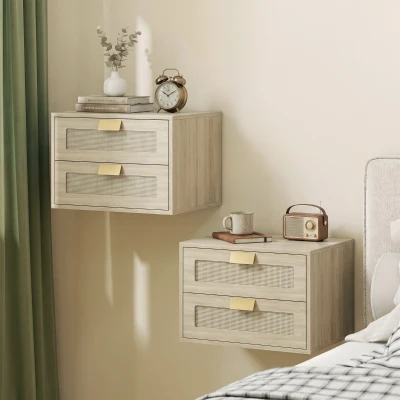
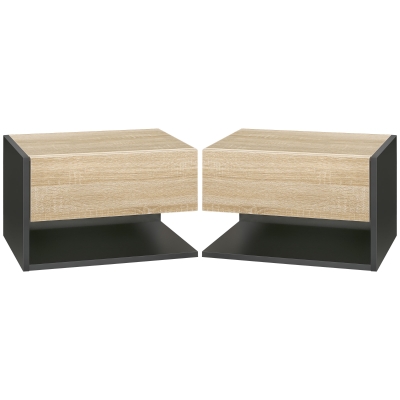
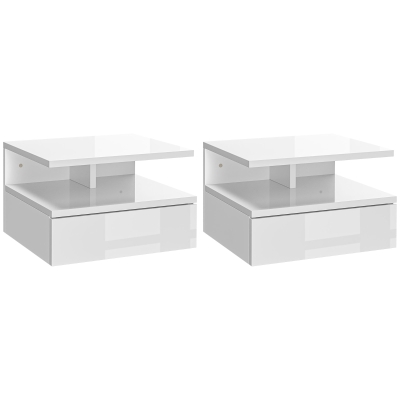
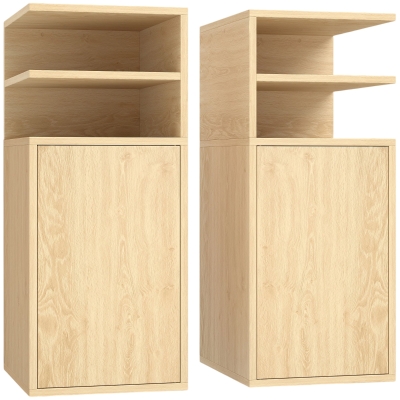
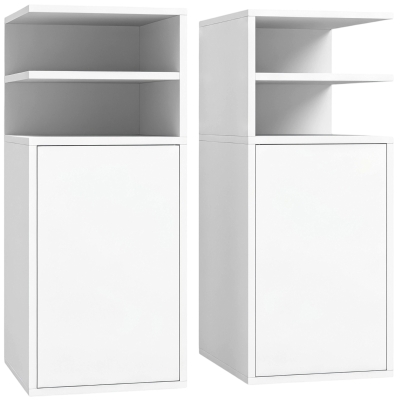
The wall-mounted bedside table, also called a floating nightstand, is attached directly to the wall. It leaves the floor beneath it completely clear, creating a sense of openness and space. This style has become increasingly popular in modern interior design, particularly in small bedrooms and minimalist spaces.
Why Choose a Wall-Mounted Bedside Table?
- Effortless floor cleaning: With nothing on the floor, vacuuming and mopping become quick and easy. No more moving furniture to clean underneath.
- Space-saving design: The floating bedside table makes a room feel larger because it doesn't interrupt the floor line. This is especially valuable in small bedrooms.
- Modern, clean aesthetic: Wall-mounted bedside cabinets create a sleek, contemporary look that pairs well with modern and Scandinavian-style bedrooms.
- Adjustable height: You can mount them at exactly the height you want — flush with your mattress or slightly above, depending on your preference and the height of your bed.
Potential Drawbacks
- Installation required: You'll need to drill into the wall, which means you'll need the right tools and skills — or you'll need to hire a professional.
- Limited weight capacity: Floating bedside tables are attached to the wall, so they can't support as much weight as floor-standing models. They're ideal for a lamp, a book, and a phone, but not for heavy books or multiple storage items.
- Not suitable for all walls: You need a solid wall (brick, concrete, or solid wood) to anchor the table securely. Plasterboard or cavity walls require specialized fixings and may still not support heavy loads.
Wall-Mounted Installation: A Step-by-Step Guide
If you decide to go with a floating bedside table, here's what you need to know before you start drilling.
Step 1: Choose the Right Wall
Your wall type determines what fixings you'll need and how secure your wall-mounted bedside table will be. Solid brick or concrete walls are the best — they provide the strongest anchor points. Plasterboard (drywall) is more challenging; you'll need special toggle bolts or butterfly anchors designed for hollow walls. Always verify that there are no electrical cables or pipes running behind the wall before you drill.
Step 2: Determine the Correct Height
The ideal height for a floating nightstand is generally 50-60 cm from the floor, which roughly aligns with most bed mattress heights. However, the best height depends on your bed and your personal comfort:
- Measure from the floor to the top of your mattress.
- Place the wall-mounted bedside table at the same height or slightly higher (2-5 cm above the mattress).
- This ensures you can reach items on the table without stretching or leaning.
Step 3: Gather the Right Tools
Before you start, make sure you have:
- A drill with appropriate drill bits (masonry bits for brick, standard bits for wood, special bits for metal).
- A spirit level to ensure the table hangs perfectly straight.
- A tape measure for accurate positioning.
- A pencil to mark drill points.
- Screws and wall plugs — most wall-mounted bedside tables include a mounting kit, but always check that the fixings match your wall type.
Step 4: Double-Check Before Drilling
Mark the positions of the mounting holes on the wall using a pencil and spirit level. Hold the floating bedside table against the wall to verify the position before you drill. Check that:
- The table is level — an unlevel table will look wrong and may not sit flush against the wall.
- The height is comfortable for you when you're lying or sitting in bed.
- There's enough clearance for the bedside lamp or any items you plan to place on it.
Which Type Should You Choose?
To help you decide, here's a quick comparison:
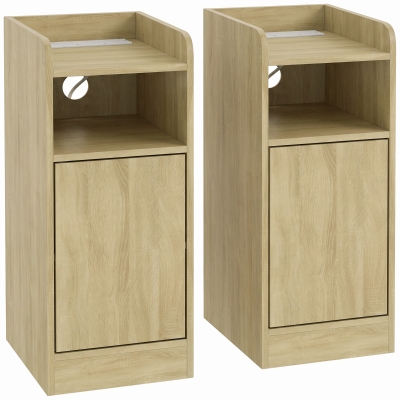
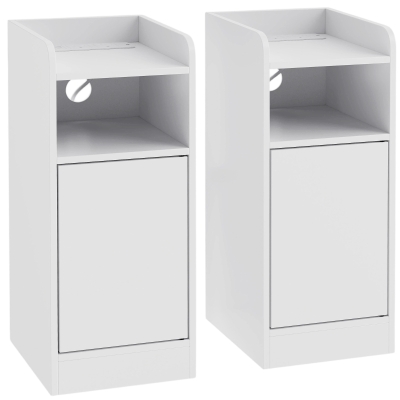
- Choose floor-standing if: You have a large bedroom, you want maximum storage (like 3 drawers or a cupboard), you rent and can't drill walls, or you prefer a classic, traditional look.
- Choose wall-mounted if: You have a small bedroom and want to maximize floor space, you value easy cleaning, you love modern/minimalist aesthetics, or you have a solid wall and are comfortable with basic DIY.
Frequently Asked Questions
1. Can I mount a floating bedside table on plasterboard?
Yes, you can mount a floating bedside table on plasterboard, but you must use special fixings designed for hollow walls, such as toggle bolts, butterfly anchors, or plasterboard plugs. These distribute the weight across a larger area of the plasterboard. However, even with the right fixings, a plasterboard-mounted table will have a lower weight capacity than one mounted on a solid brick wall. For heavier items, consider using a floor-standing model instead.
2. How much weight can a wall-mounted bedside table hold?
The weight capacity of a wall-mounted bedside table depends on the wall type, the fixings used, and the table's construction. Generally, a well-installed floating nightstand on a solid wall can support 5-15 kg. This is usually enough for a bedside lamp, a book, a glass of water, and a phone. For anything heavier — like a stack of large hardback books — a floor-standing bedside cabinet is safer.
3. Do I need to mount both bedside tables at the same height?
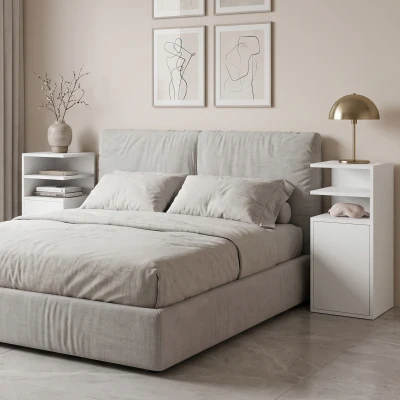
If you have two bedside tables on either side of the bed, it's generally recommended to mount them at the same height for visual balance. However, if your bed is against a wall and one side has a different purpose, you can adjust the height slightly. Just remember that mismatched heights can look unbalanced in a room designed for symmetry. Most sets of two floating bedside tables are designed to be mounted at matching heights.
The Right Installation for Your Bedroom
Choosing between a floor-standing and a wall-mounted bedside table is about more than just preference — it's about how you live in your space. A floor-standing model offers classic stability, generous storage, and zero installation. A wall-mounted table delivers a modern, airy feel, easier cleaning, and a great way to make small bedrooms feel larger.
Either way, the perfect bedside table is the one that fits your space, your style, and your daily routine. Take a moment to measure your bedroom, consider your wall type, and think about how you'll use the table day to day — and you'll make the right choice.