







Buying Guide: How to Choose the Right Under-Sink Cabinet Based on Size and Installation Type
Choosing the right under-sink bathroom cabinet is not just a matter of style – it's also a practical decision that depends on the available space and the type of sink you have. A poorly sized cabinet may not fit, or worse, could block the plumbing. In this guide, we focus on dimensions and installation compatibility to help you find the perfect fit for your bathroom.
1. Measuring Your Space: Width, Depth, and Height
Before buying, it is essential to measure the area where the cabinet will be placed. The most common widths are 60 cm and 80 cm, but narrower models (40-50 cm) are also available for small bathrooms. The typical depth is around 30 cm to avoid interfering with circulation, and height varies between 55 and 65 cm, depending on the distance to the sink.
In addition to the cabinet dimensions, consider the space needed to open doors and drawers – leave at least 50 cm of clearance in front for comfortable use. For very tight spaces, models with sliding doors or vertical opening can be a good alternative.
2. Pedestal or Wall-Hung Sink? – The Importance of the "U" Cut-Out
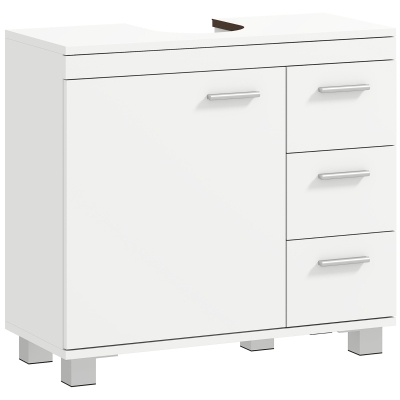
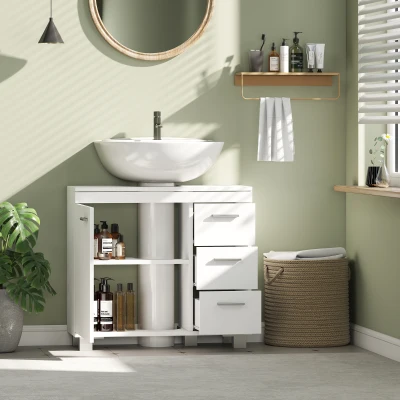
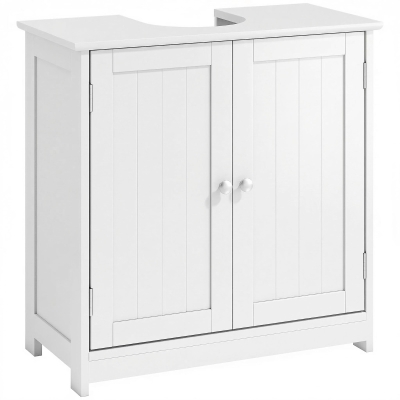
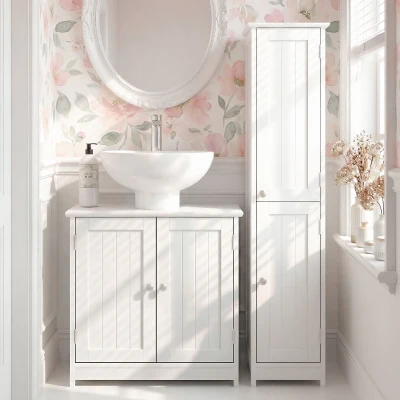
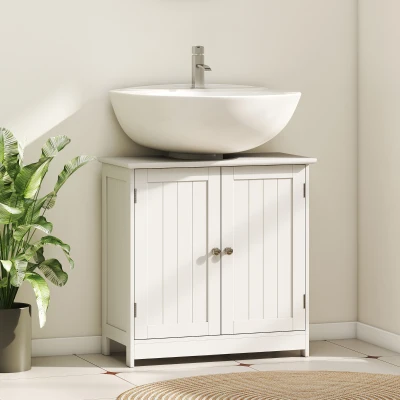
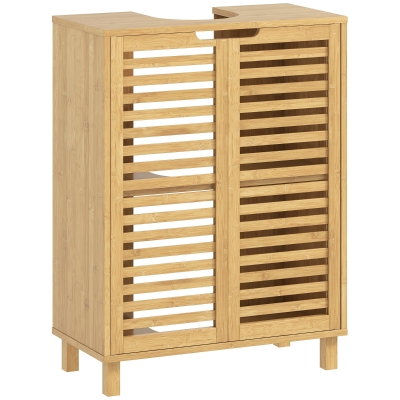
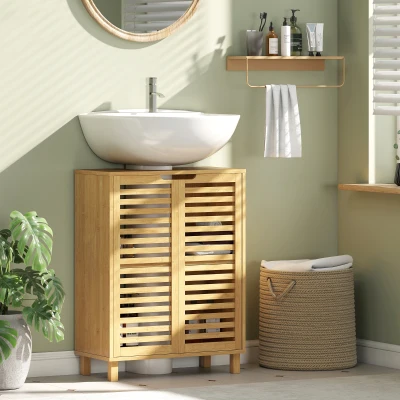
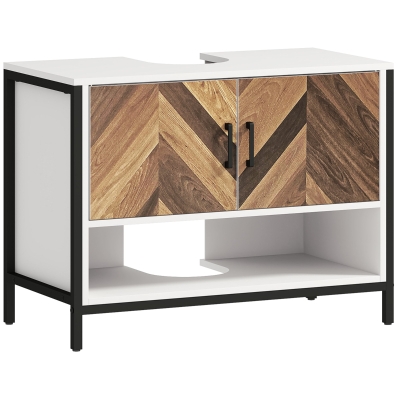
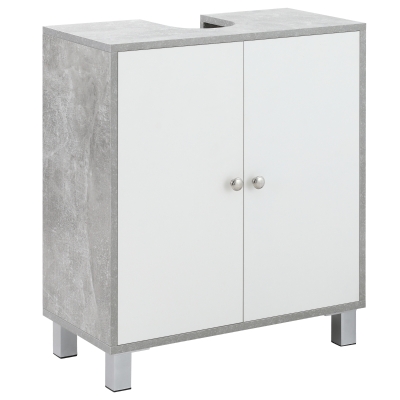
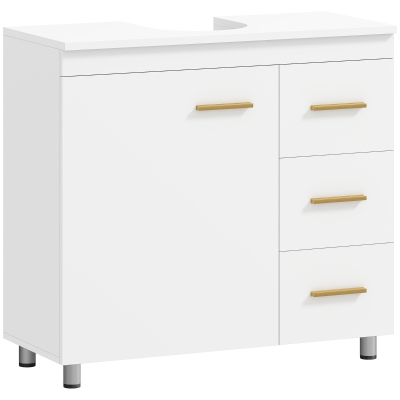
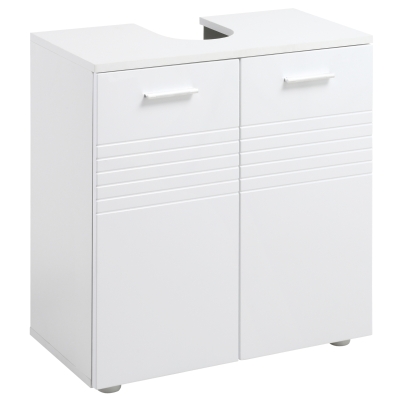
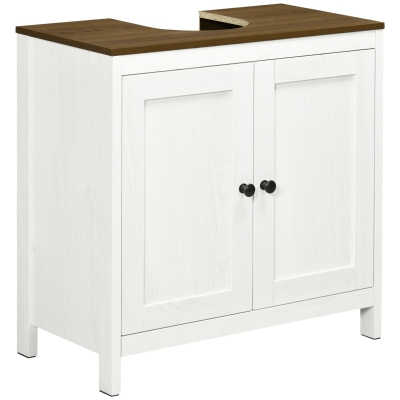
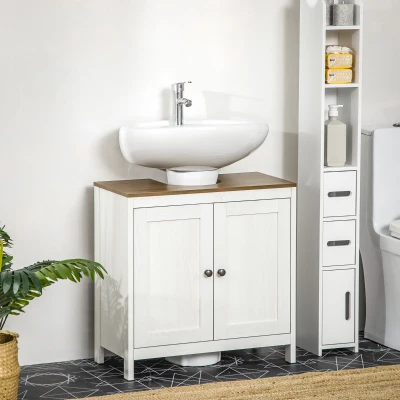
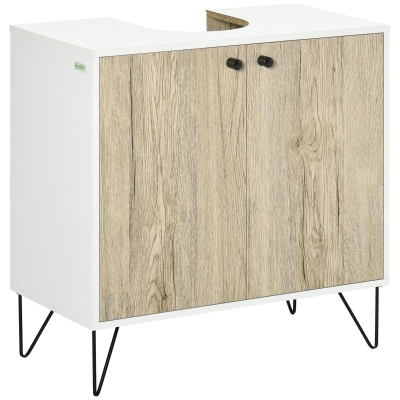
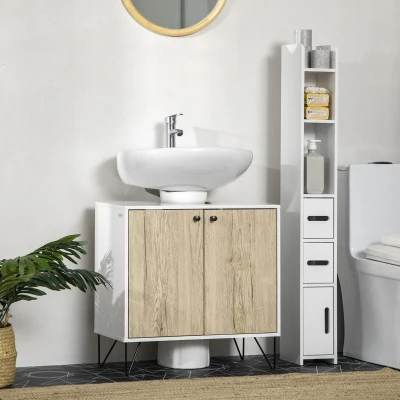
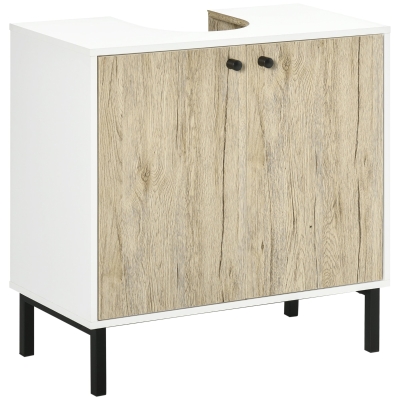
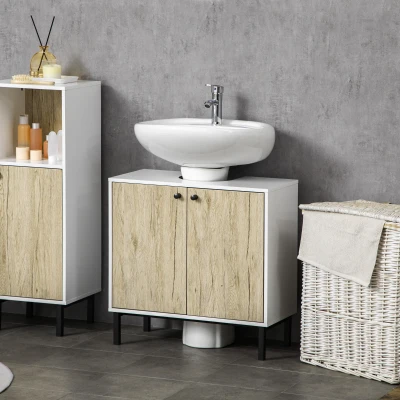
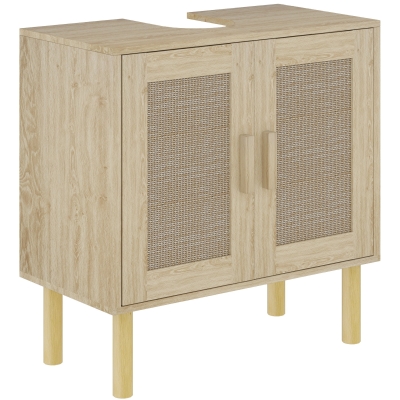
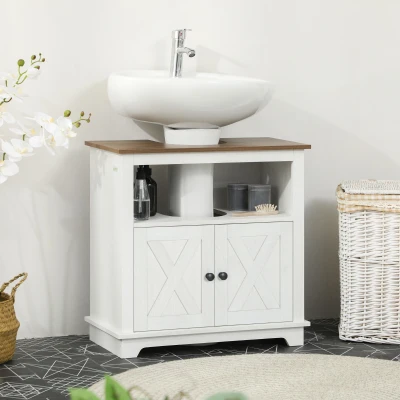
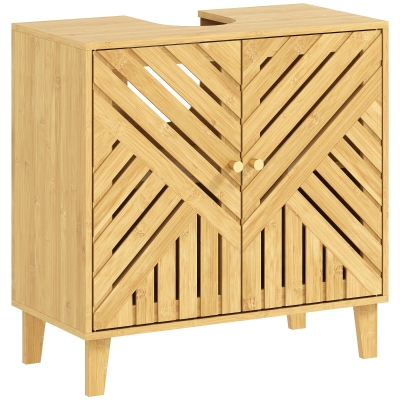
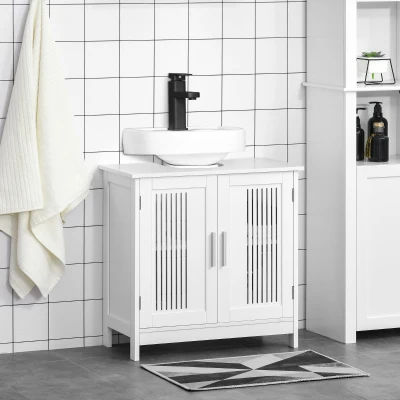
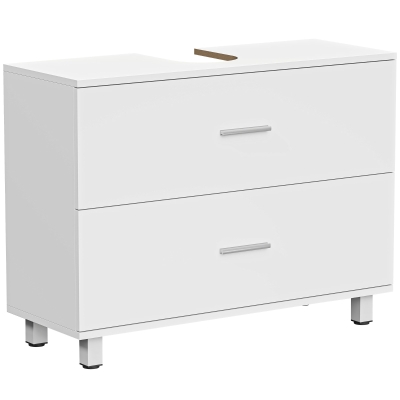
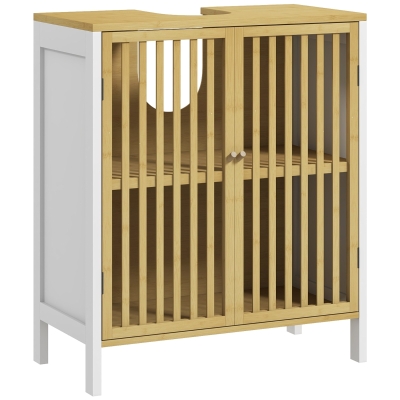
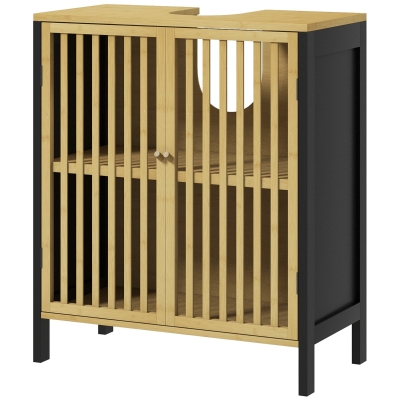
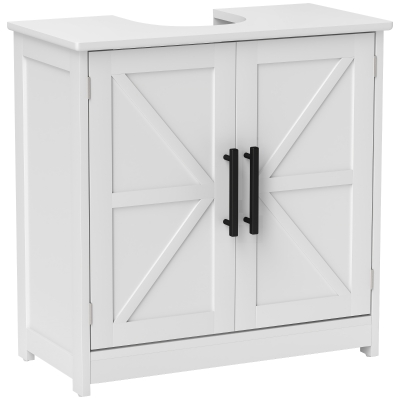
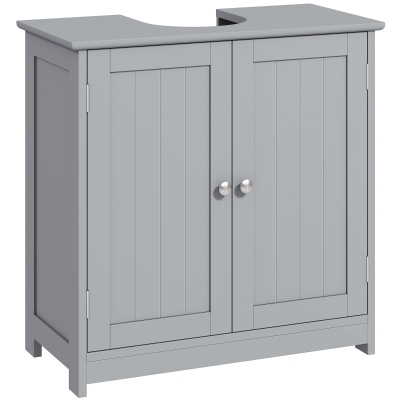
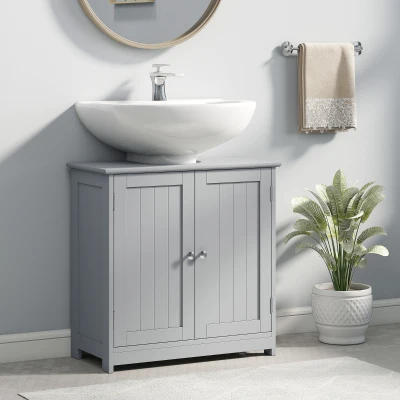
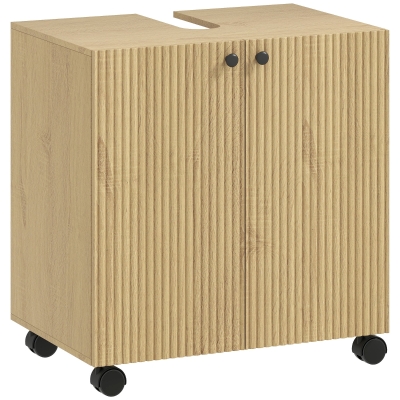
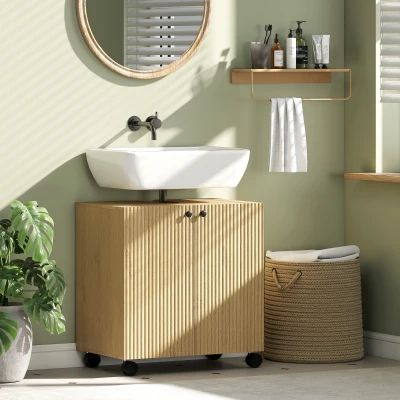
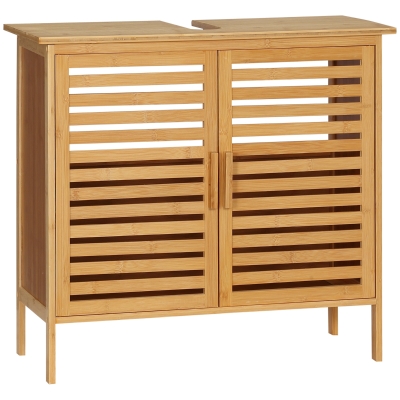
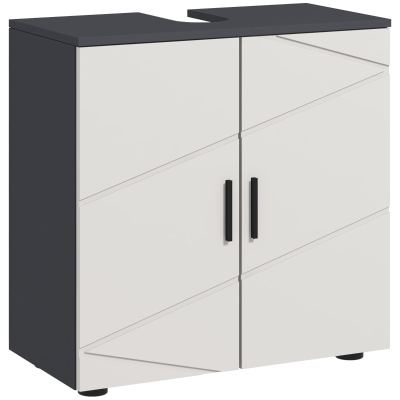
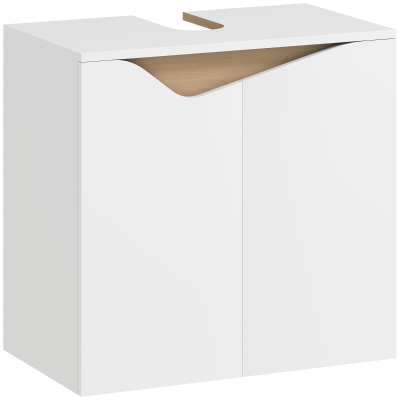
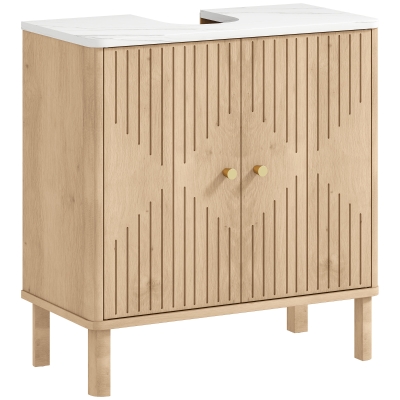
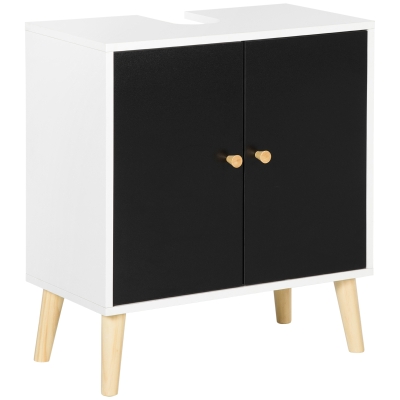
The main distinction among under-sink cabinets is whether they are compatible with pedestal sinks or suitable for wall-hung or countertop sinks. Models with a "U" cut-out on the top allow the cabinet to wrap around the sink's pedestal, sitting flush against the wall. Models without the cut-out are designed for wall-hung or countertop sinks, where the cabinet sits directly beneath the sink.
Before choosing, check the type of sink you have:
- Pedestal sink → requires a cabinet with a "U" cut-out (or a shape that accommodates the pedestal).
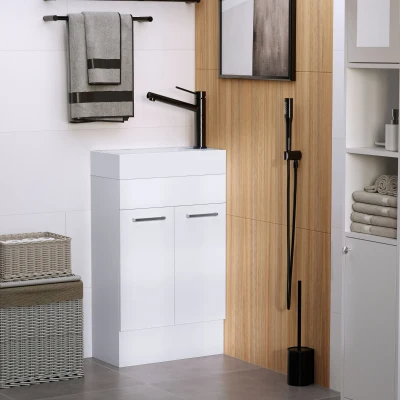
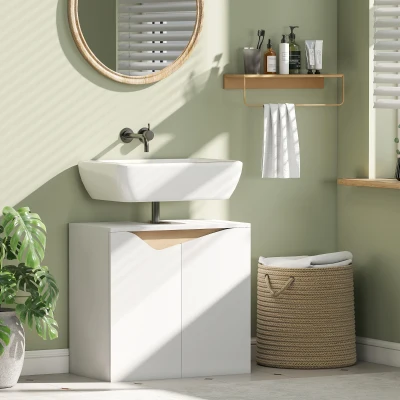
- Wall-hung or countertop sink → can use a standard cabinet without a cut-out.
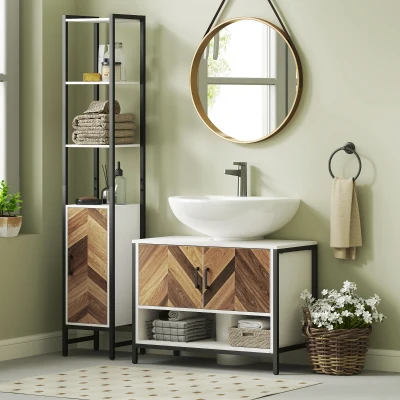
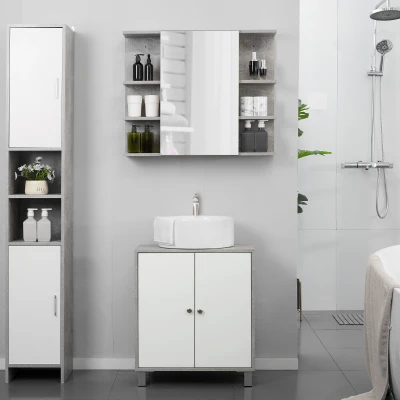
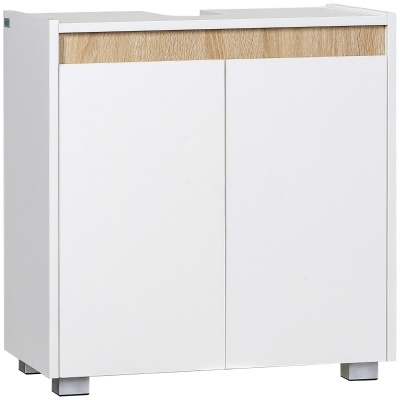
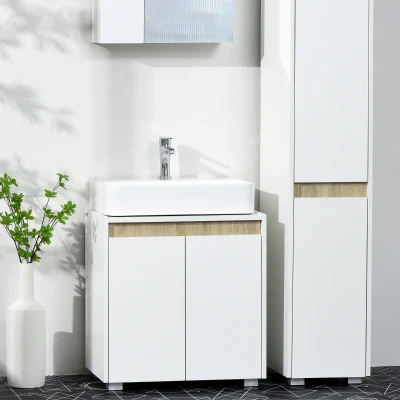
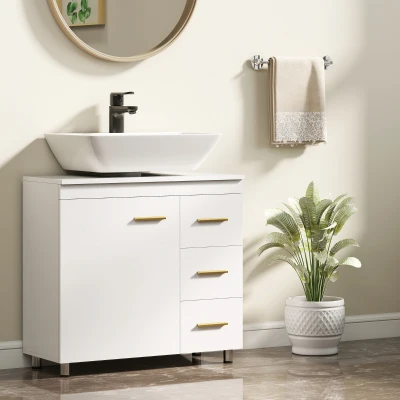
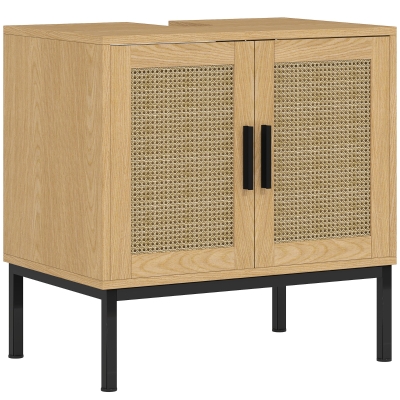
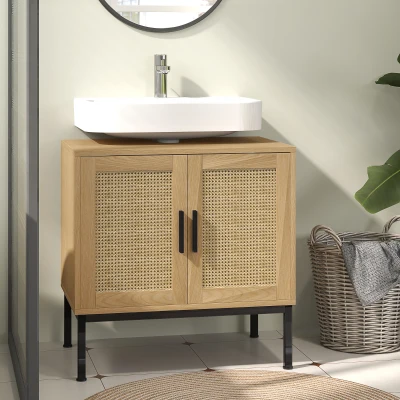
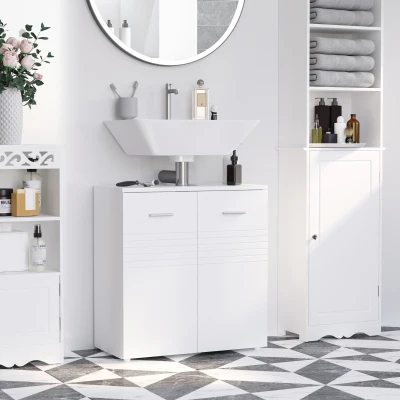
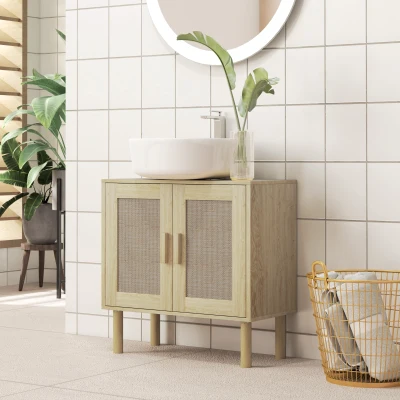
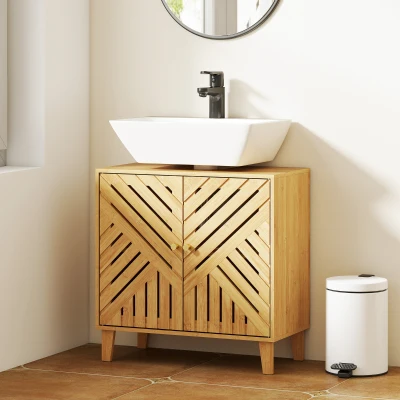
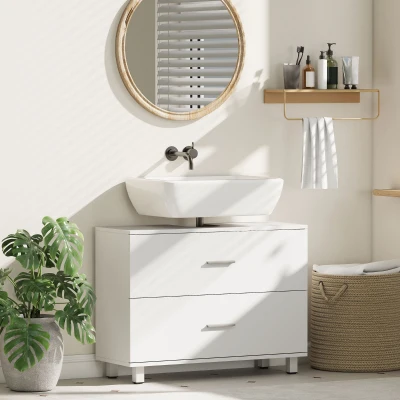
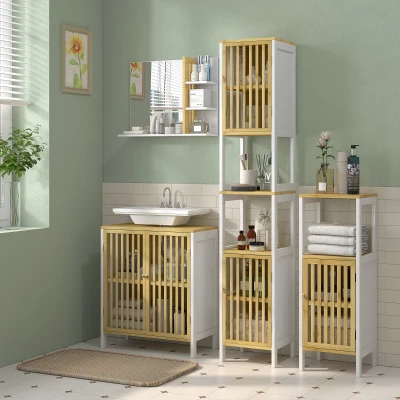
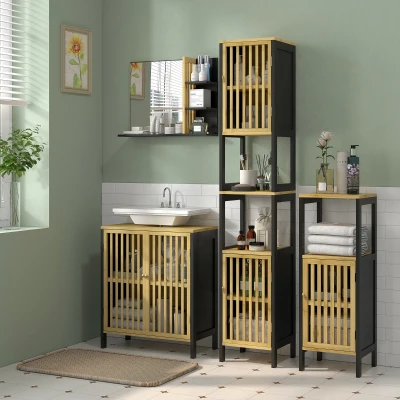
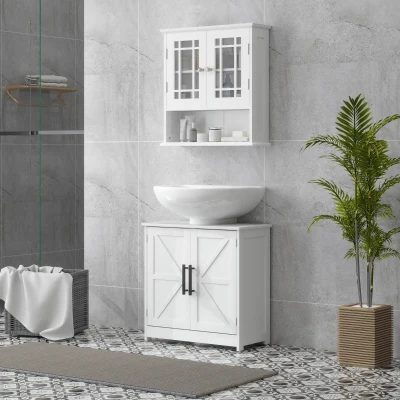
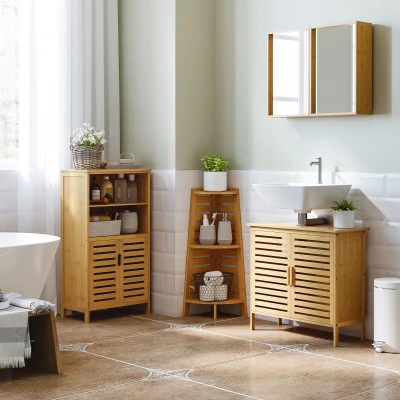
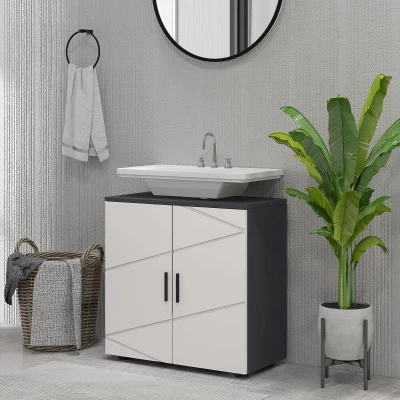
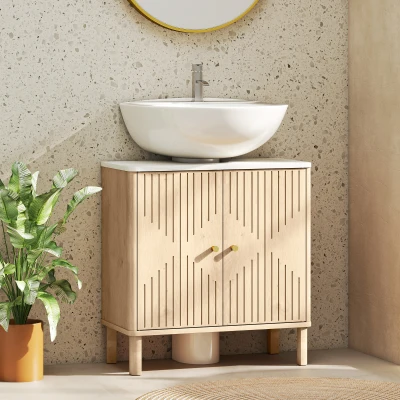
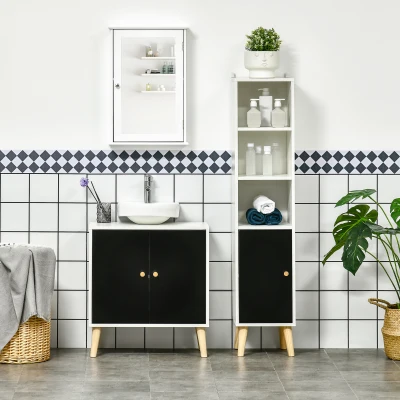
Models from kleankin and HOMCOM with the "U" cut-out (such as kleankin Pedestal Under Sink Cabinet with Double Doors) are ideal for traditional pedestal sinks, while non-cut-out models (like HOMCOM Under Sink Bathroom Cabinet for Basin without or with Pedestal) offer greater versatility for modern sink designs.
3. Compatibility Table: Dimensions and Sink Types
| Cabinet Width | Recommended Sink Width | Compatible Sink Type | Suggested Model |
|---|---|---|---|
| 50‑60 cm | Up to 60 cm | With or without pedestal (U cut‑out available) | kleankin 60x60cm Under‑Sink Storage Cabinet |
| 70‑80 cm | 60‑80 cm | Without pedestal (recommended for wall‑hung sinks) | HOMCOM 80x40x60cm Under Sink Cabinet |
| 80‑100 cm | 80‑100 cm | With pedestal (U cut‑out) or without | kleankin Pedestal Cabinet with cut‑out |
4. Installation: Tips for a Perfect Fit
To ensure the cabinet fits correctly, follow these recommendations:
- Check the trap height: the drainpipe should not interfere with the bottom of the cabinet. In many models, the bottom is cut out to allow plumbing to pass through.
- Level the cabinet: use adjustable feet (if available) to compensate for uneven floors and prevent wobbling.
- Leave room for piping: if there are visible pipes, make sure the cabinet can accommodate them – models with cut-out bottoms or rear openings are ideal.
- Fix to the wall (optional): for added safety, especially in homes with children, some models allow additional wall fixing.
5. Tips for Small Spaces
- Opt for sliding doors instead of hinged doors – they take up less space when open.
- Choose a cabinet with an adjustable shelf to make better use of the interior height.
- Consider a model with drawers – drawers are more practical for accessing small items than deep shelves.
FAQs
1. Can I use a standard cabinet with a pedestal sink?
No, if the sink has a central pedestal, the standard cabinet will not fit because the pedestal requires a cut-out to wrap around it. You will need a model with a "U" cut-out specifically designed for pedestal sinks.
2. What if the space between the sink and the wall is less than 60 cm?
In that case, we recommend a cabinet with a width of 50 cm or less – some manufacturers offer narrower models (40‑50 cm) for compact bathrooms. Measuring the available space is essential before buying.
3. Are under-sink cabinets easy to install myself?
Yes, most models are designed for simple installation, with adjustable feet and clear instructions. You only need basic tools (screwdriver, spirit level, and measuring tape). For models with a "U" cut-out, make sure the cut-out aligns with the sink's pedestal. If you have doubts, consult a professional.