








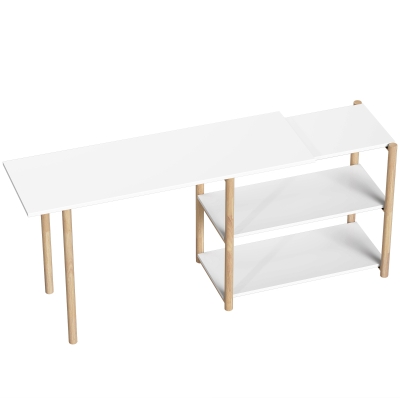
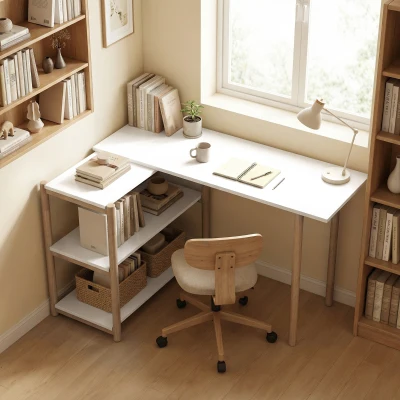












Space-Saving Desks for Small Home Offices – Folding, Wall-Mounted, and Mobile Options
Not every home office has a dedicated room. In small apartments, shared flats, or temporary work setups, a full-sized desk can swallow the space you need for living. Space-saving desks solve this by folding flat, mounting to the wall, or rolling out of the way when the workday ends. But not all compact desks are equally practical. This guide compares folding desks, wall-mounted drop-leaf tables, and mobile desks on wheels, so you can choose one that fits your room, your work habits, and your storage limits.
1. Three Types of Space-Saving Desks – Which One Fits Your Room?
Space-saving desks generally fall into three categories. Each has a different installation method and daily routine.
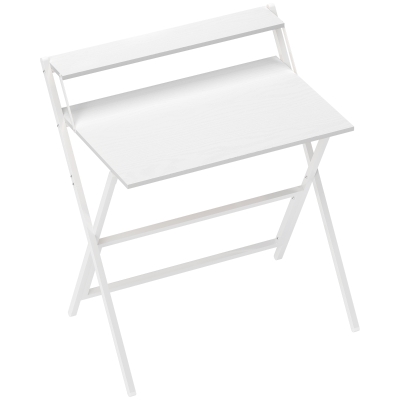
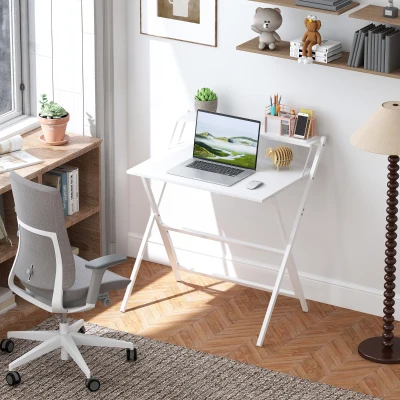
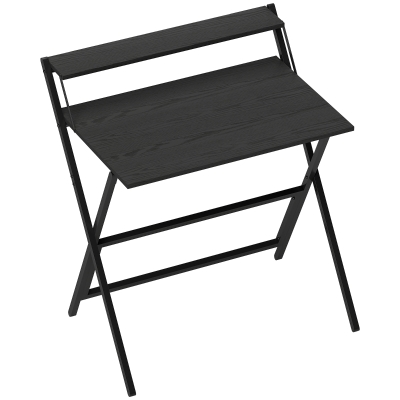
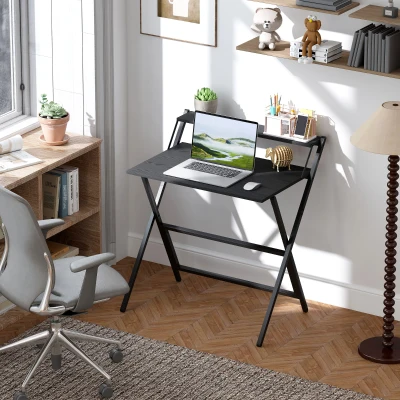
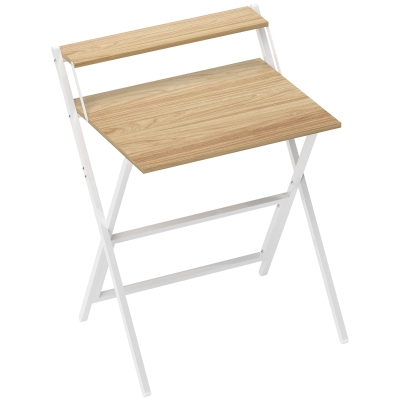
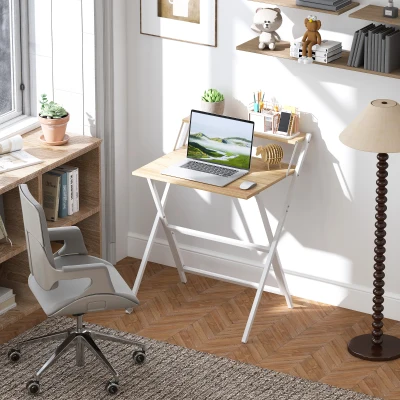
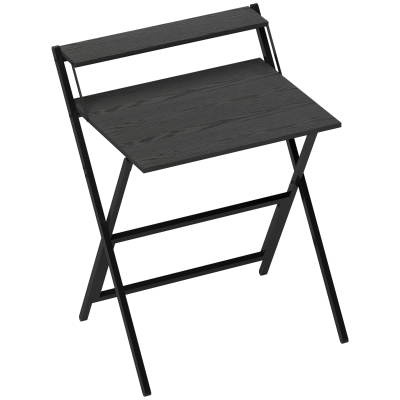
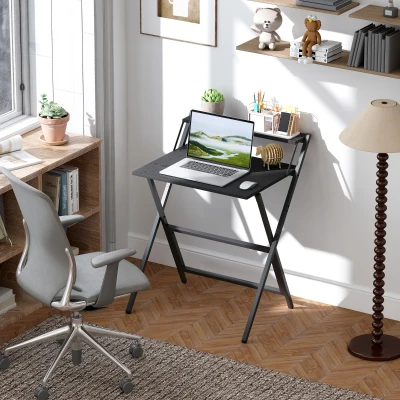
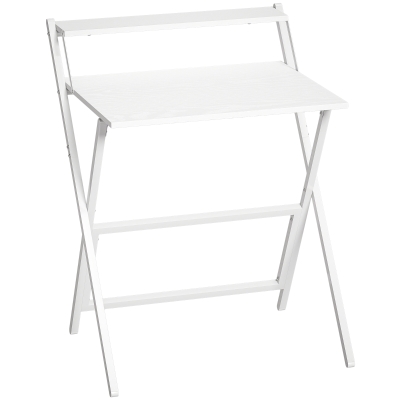
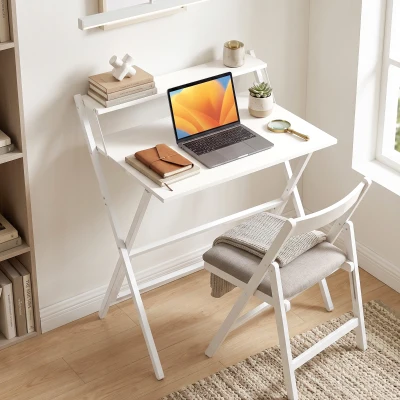
- Folding desks – These desks collapse or fold flat when not in use. Some fold in half, others have a drop-leaf panel that lowers to save depth. Models like the HOMCOM 80 cm Drop Leaf Writing Work Desk and the HOMCOM 81.5 cm Folding Computer Desk with Monitor Shelf are designed for quick setup and compact storage. They are ideal if you need a desk only a few hours a day.
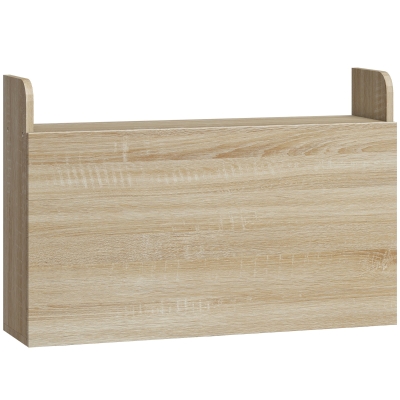
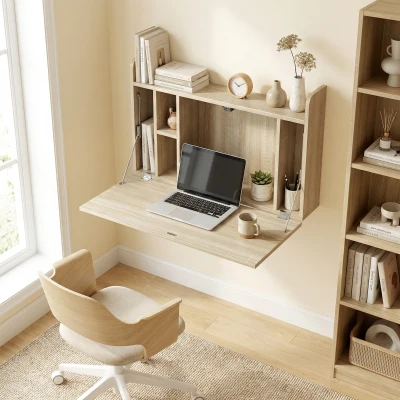
- Wall-mounted drop-leaf desks – Fixed to the wall, these desks have a hinged tabletop that folds down when not needed. They free up floor space entirely. The HOMCOM Folding Wall-Mounted Drop-Leaf Table with Chalkboard and Storage Shelf and the HOMCOM Wall Mounted Desk, Drop Leaf Floating Laptop Desk are typical examples. They work well in hallways, bedrooms, or any spot where floor area is limited.
- Mobile desks on wheels – These desks roll where you need them and can be pushed aside later. They often include storage shelves or a monitor shelf. The HOMCOM Folding Small Desk on Wheels – Rustic Brown and the HOMCOM 80 cm Folding Desk on Wheels – Black combine mobility with a folding design. They suit open-plan living where the desk doubles as a side table.
2. Size, Depth, and Storage – Measure Before You Choose
Small spaces demand accurate measurements. A desk that is 10 cm too deep can block a doorway or make a room feel cramped.
- Width – Folding and wall-mounted desks typically range from 60 cm to 90 cm wide. The HOMCOM 63 cm Drop Leaf Writing Work Desk is one of the narrowest options, while the HOMCOM 90 x 50cm Computer Table offers more surface area without taking up much floor space.
- Depth – Standard desks are 50–60 cm deep. Drop-leaf and wall-mounted models often fold down to 10–20 cm deep, which is a major advantage in tight rooms. Check the folded depth before buying.
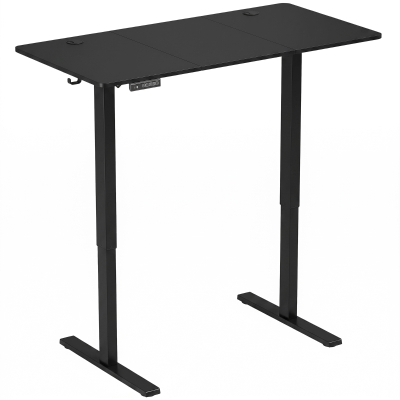
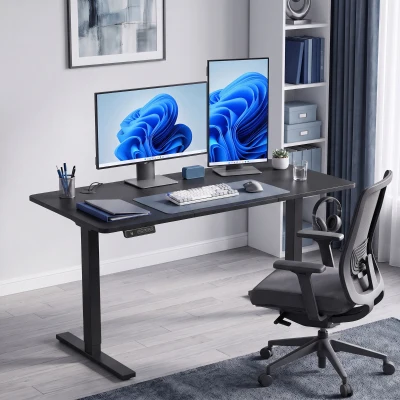
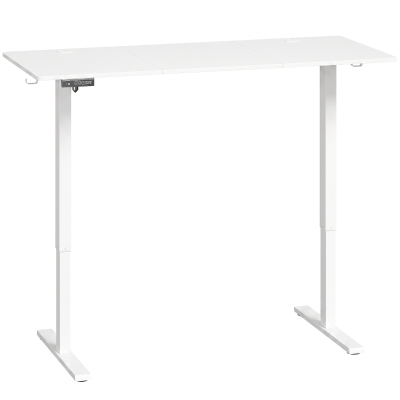
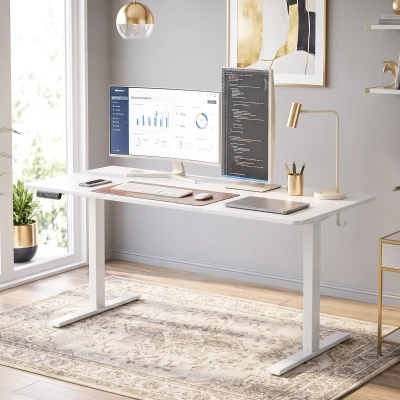
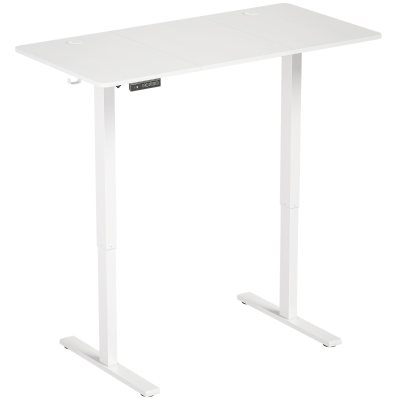
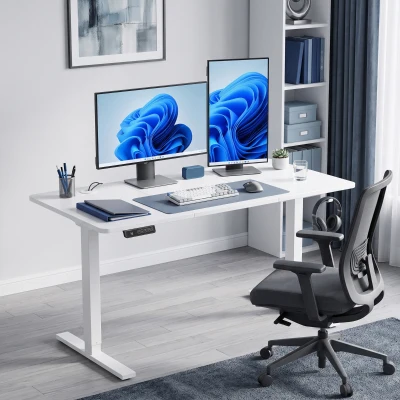
- Height – Most writing desks are 74–75 cm high. If you need a standing option, look for a height-adjustable model, though these are usually not foldable. For seated work, a fixed-height folding desk is simpler and more stable.
- Storage – Some folding desks include a monitor shelf or a small drawer. Wall-mounted models may have built-in compartments. The HOMCOM Wall Mounted Desk, Drop Leaf Floating Laptop Desk with Space Saving Storage Compartments is an example of storage integrated into a compact design.
3. Materials and Stability – What Keeps a Small Desk Steady
Compact desks can feel wobbly if the frame is too light. Look for these features:
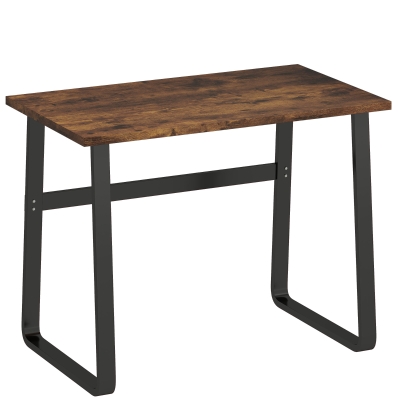
- Steel frame or metal legs – Provide rigidity and support. The HOMCOM Industrial Writing Desk With Metal Legs uses a steel frame for stability.
- Wood or wood-effect surfaces – MDF and particleboard with a melamine coating are common. They resist scratches and are easy to wipe clean.
- Wall anchoring – Wall-mounted desks must be fixed into studs or solid walls. Always use the included anchors and check the maximum load. A wall-mounted desk is only as strong as its mounting.
- Locking casters – Mobile desks should have at least two wheels with brakes. This prevents the desk from rolling while you type or write. The HOMCOM Folding Small Desk on Wheels includes casters for easy movement.
- Weight capacity – Most folding and wall-mounted desks support 15–30 kg. Check the limit if you plan to place a monitor, laptop, and printer on the surface.
4. Comparison Table: Folding vs. Wall-Mounted vs. Mobile Desks
The table below summarises the key differences between the three main space-saving desk types.
| Feature | Folding Desk | Wall-Mounted Drop-Leaf Desk | Mobile Desk on Wheels |
|---|---|---|---|
| Floor Space Used | Only when open | None when folded | Only where parked |
| Setup Time | 10–30 seconds | 5–15 seconds | Instant (roll into place) |
| Stability | Moderate to good | Very good (fixed to wall) | Moderate (depends on casters) |
| Storage Included | Sometimes (shelf, drawer) | Often (compartments, shelf) | Sometimes (shelves, bins) |
| Best For | Bedrooms, temporary offices | Hallways, studio flats | Open-plan living, shared spaces |
| Installation | Tool-free or minimal | Requires wall drilling | No installation (assembly only) |
5. Practical Tips for Using a Space-Saving Desk
- Plan your cable management – A folding or wall-mounted desk has no cable holes by default. Use adhesive cable clips or a small cable tray to keep wires tidy when the desk folds away.
- Choose a lightweight chair – If you need to move the chair every time you open the desk, a heavy office chair defeats the purpose. A folding chair or a stool that tucks under the desk works better.
- Protect the wall – Wall-mounted desks can mark the wall when folded down. Attach felt pads to the back edge of the tabletop.
- Check the folded depth – Before buying, measure the space between the wall and the nearest obstacle. Some drop-leaf desks still project 15–20 cm when folded.
- Use the desk as a shelf when closed – Many wall-mounted models double as a display shelf. The HOMCOM Folding Wall-Mounted Drop-Leaf Table with Chalkboard and Storage Shelf can hold books or decor when not in use as a desk.
FAQ
1. Can a folding desk be used as a permanent home office desk?
Yes, but with limitations. Folding desks are designed for occasional or part-time use. If you work from home five days a week, a fixed desk or a height-adjustable standing desk is more comfortable and stable. However, a sturdy folding desk like the HOMCOM 81.5 cm Folding Computer Desk with Monitor Shelf can handle daily use if you keep the load light and tighten the hinges regularly. Avoid placing heavy printers or large monitors on a folding desk, as the hinges may loosen over time.
2. How do I install a wall-mounted desk without damaging the wall?
Wall-mounted desks require drilling into the wall, so some damage is unavoidable. To minimise it, use the correct anchors for your wall type (plasterboard, brick, or concrete). If you rent, check your lease before drilling. You can patch screw holes later with filler. For a no-drill option, consider a mobile desk on wheels or a folding desk that leans against the wall, though these are less stable. Always fix a wall-mounted desk into studs or use heavy-duty wall anchors rated for at least twice the desk’s weight capacity.
3. What is the best space-saving desk for a very small room?
For a very small room, a wall-mounted drop-leaf desk is usually the best choice because it takes up zero floor space when folded. The HOMCOM Wall Mounted Desk, Drop Leaf Floating Laptop Desk is a good example. If you cannot drill into the wall, choose a folding desk with wheels, such as the HOMCOM Folding Small Desk on Wheels, and store it beside a wardrobe or bed when not in use. Measure your available wall width and the folded depth carefully. A desk that is 60–80 cm wide and folds to under 20 cm deep will fit most small rooms without blocking walkways.


