Last Updated: 09/06/2026
Abstract
Seating comfort in garden dining furniture is often misunderstood as a result of cushion thickness or material softness alone. In practice, long-sitting comfort is influenced by a combination of ergonomic support, seating structure, pressure distribution and material response over time.
Unlike indoor dining chairs, outdoor seating is commonly used for extended social activities, including outdoor dining, family gatherings and evening relaxation. As a result, factors such as backrest angle, seat depth, cushion support and seating flexibility have a significantly greater impact on overall user experience.
This page explores the underlying structural and ergonomic factors that influence outdoor seating comfort, while addressing several common misconceptions found in real user feedback and long-term product usage.
Unlike indoor dining chairs, outdoor seating is commonly used for extended social activities, including outdoor dining, family gatherings and evening relaxation. As a result, factors such as backrest angle, seat depth, cushion support and seating flexibility have a significantly greater impact on overall user experience.
This page explores the underlying structural and ergonomic factors that influence outdoor seating comfort, while addressing several common misconceptions found in real user feedback and long-term product usage.
Keywords
Garden Dining Sets, Rattan Dining Sets, Outdoor Seating Comfort, Long-Sitting Performance, Backrest Support, Seat Depth, Pressure Distribution
Common Comfort Misconceptions

Thick Cushions = Better Comfort
Reality:
Support matters more than softness.
... See More
Support matters more than softness.
... See More

Softer Seating = More Premium
Reality:
Excessive softness often reduces long-sitting support.
... See More
Excessive softness often reduces long-sitting support.
... See More

Stylish Chairs = Comfortable Chairs
Reality:
Appearance does not guarantee ergonomic support.
... See More
Appearance does not guarantee ergonomic support.
... See More

Bigger Chairs = Better Comfort
Reality:
Comfort depends on posture support, not size alone.
... See More
Comfort depends on posture support, not size alone.
... See More
Comfort depends on support, not softness alone
True outdoor seating comfort is determined by how effectively a chair supports the body over extended periods of use.
Factors such as seating stability, posture support, pressure distribution and cushion response all play a critical role in long-sitting comfort — far beyond softness or cushion thickness alone.
Factors such as seating stability, posture support, pressure distribution and cushion response all play a critical role in long-sitting comfort — far beyond softness or cushion thickness alone.
Why Comfort Matters Outdoors
Outdoor Spaces Are Designed For Staying
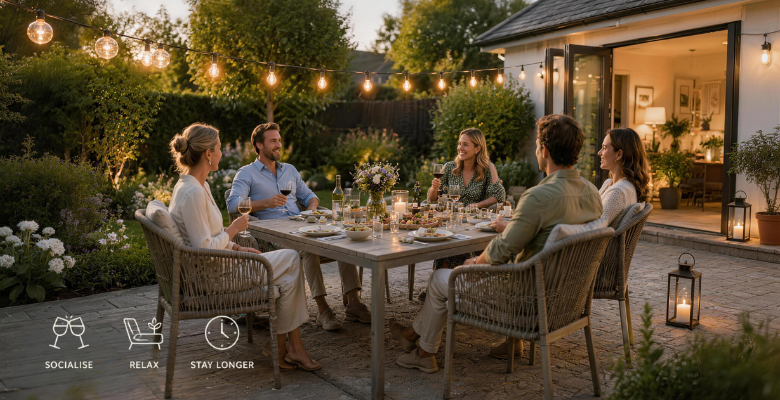

Outdoor furniture is no longer used only for dining.
It is increasingly associated with:
· relaxation
· conversation
· slower social interaction
· extended outdoor living
Comfort directly affects how long people want to stay seated and enjoy the space.
It is increasingly associated with:
· relaxation
· conversation
· slower social interaction
· extended outdoor living
Comfort directly affects how long people want to stay seated and enjoy the space.
Outdoor Seating Lasts Longer
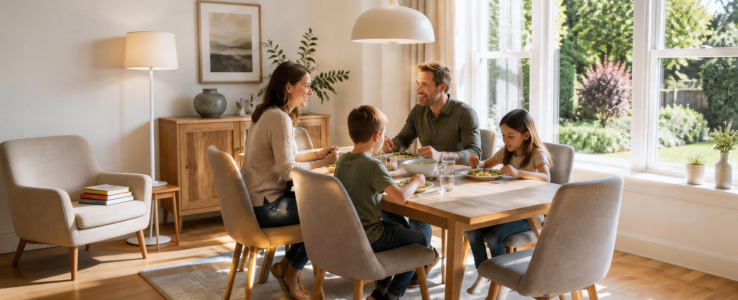
Indoor DiningShorter Seating Duration
Typical indoor dining behaviour:
· Meals are usually shorter
· Users often leave immediately after eating
· Seating pressure duration is relatively low
· Long-term posture support is less critical
Typical indoor dining behaviour:
· Meals are usually shorter
· Users often leave immediately after eating
· Seating pressure duration is relatively low
· Long-term posture support is less critical
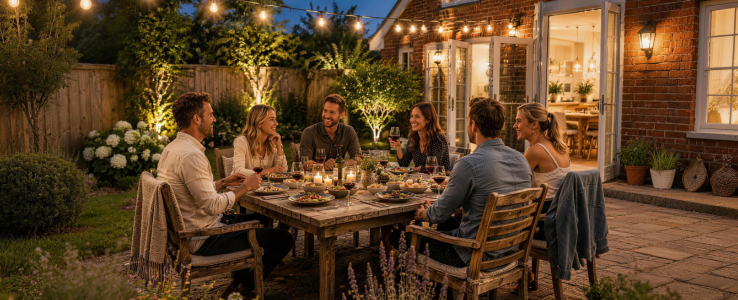
Outdoor GatheringLonger Social Seating Experience
Typical outdoor seating behaviour:
· BBQ gatherings often last several hours
· Wine evenings encourage relaxed conversation
· Family gatherings involve extended sitting periods
· Users commonly remain seated for 2–4 hours continuously
Typical outdoor seating behaviour:
· BBQ gatherings often last several hours
· Wine evenings encourage relaxed conversation
· Family gatherings involve extended sitting periods
· Users commonly remain seated for 2–4 hours continuously
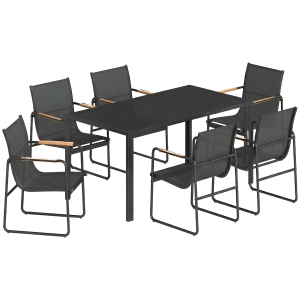
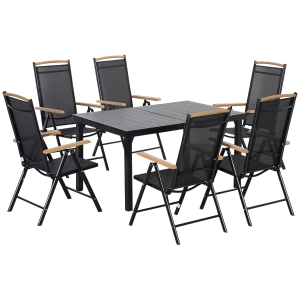
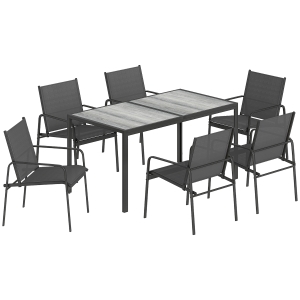
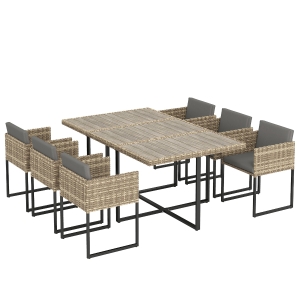
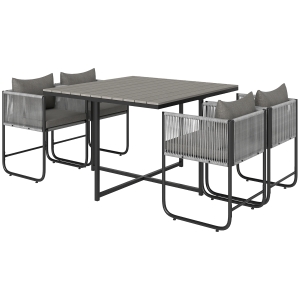
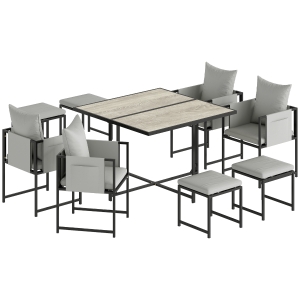
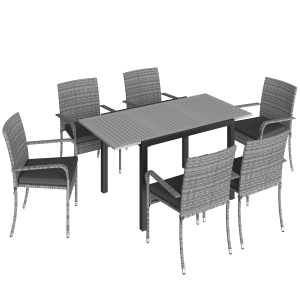
Explore Comfortable Outdoor Dining
What Actually Affects Comfort
Cushion Support
Common Assumption
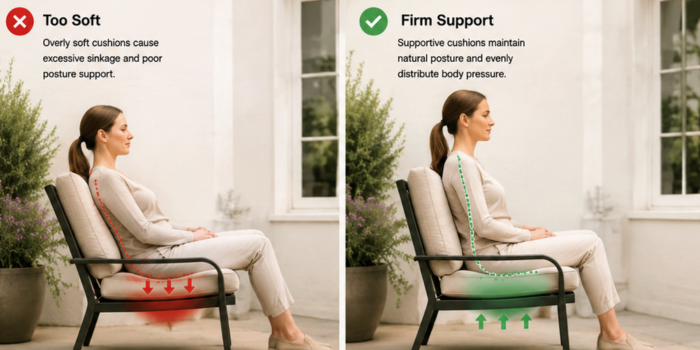
Thicker cushions automatically provide better comfort.
Why support matters more than softness
Long-sitting comfort depends less on cushion thickness and more on how effectively the cushion supports body pressure over time.
Supportive cushions should provide:
· controlled compression
· stable body positioning
· balanced pressure relief
· rather than excessive softness alone
Thicker cushions automatically provide better comfort.
Why support matters more than softness
Long-sitting comfort depends less on cushion thickness and more on how effectively the cushion supports body pressure over time.
Supportive cushions should provide:
· controlled compression
· stable body positioning
· balanced pressure relief
· rather than excessive softness alone
Backrest Angle
Common Assumption
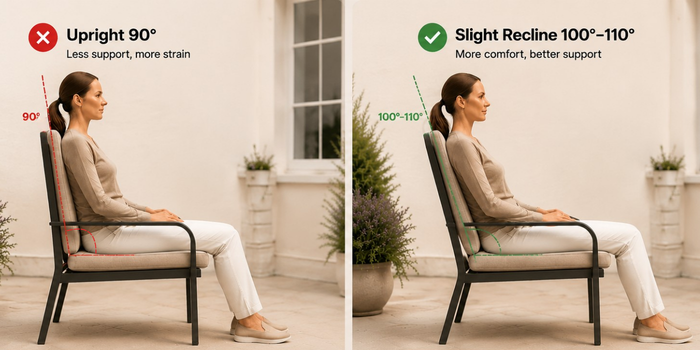
A straight backrest provides better support.
Why backrest angle matters more than upright posture
Long-sitting comfort depends on how naturally the chair supports the spine over time.
Comfortable outdoor dining chairs often include:
· slight recline angles
· lumbar support shaping
· more natural spinal positioning
· reduced shoulder and lower-back tension
rather than rigid upright positioning alone.
A straight backrest provides better support.
Why backrest angle matters more than upright posture
Long-sitting comfort depends on how naturally the chair supports the spine over time.
Comfortable outdoor dining chairs often include:
· slight recline angles
· lumbar support shaping
· more natural spinal positioning
· reduced shoulder and lower-back tension
rather than rigid upright positioning alone.
Seat Depth
Common Assumption
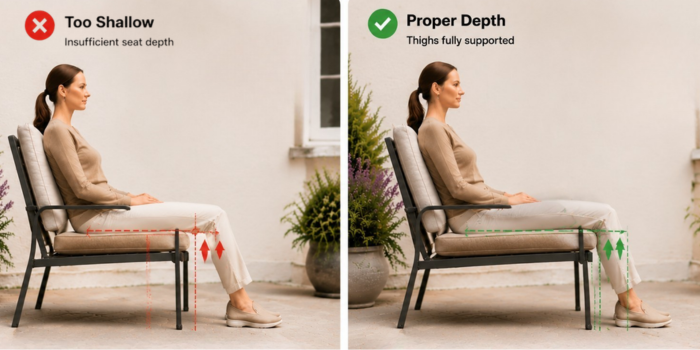
Chair size matters more than seating proportions.
Why seat depth matters more than chair size
Long-term seating comfort depends on how effectively the chair supports the lower body during extended use.
Proper seat depth helps provide:
· balanced thigh support
· improved posture stability
· reduced forward sliding
· better body weight distribution
rather than simply increasing overall chair size.
Chair size matters more than seating proportions.
Why seat depth matters more than chair size
Long-term seating comfort depends on how effectively the chair supports the lower body during extended use.
Proper seat depth helps provide:
· balanced thigh support
· improved posture stability
· reduced forward sliding
· better body weight distribution
rather than simply increasing overall chair size.
Long-Sitting Pressure Distribution
Common Assumption
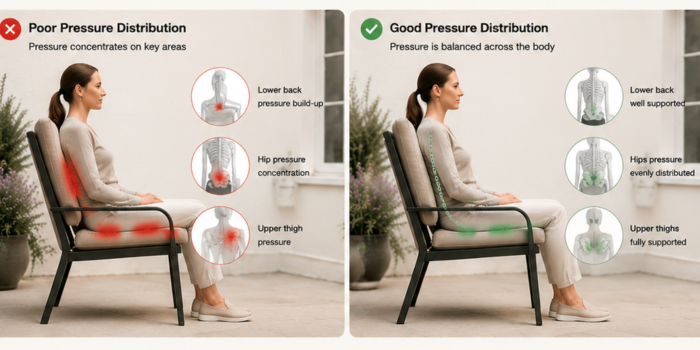
If a chair feels comfortable initially, it will remain comfortable over time.
Why pressure distribution matters more than initial softness
Long-sitting comfort depends on how evenly the chair distributes body pressure during extended seating.
Well-designed outdoor seating should provide:
· balanced body support
· reduced pressure concentration
· improved posture stability
· more consistent comfort over time
rather than temporary softness during initial use alone.
If a chair feels comfortable initially, it will remain comfortable over time.
Why pressure distribution matters more than initial softness
Long-sitting comfort depends on how evenly the chair distributes body pressure during extended seating.
Well-designed outdoor seating should provide:
· balanced body support
· reduced pressure concentration
· improved posture stability
· more consistent comfort over time
rather than temporary softness during initial use alone.
Seating Flexibility
Controlled flexibility can improve long-term seating comfort.
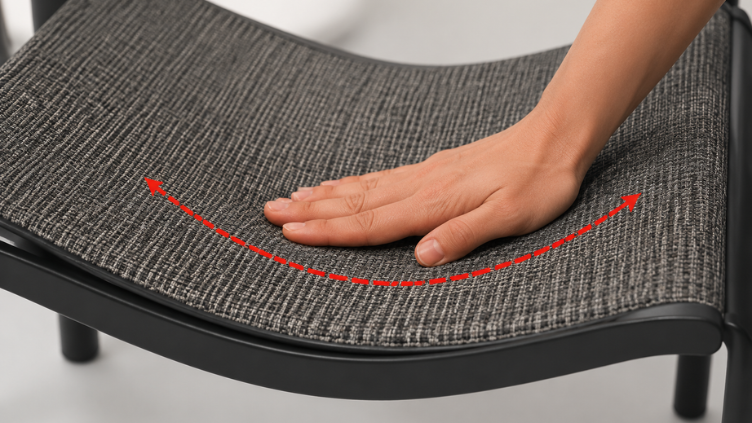

Excessive Flex (Bad)
Too much give,lack of support

Deep sagging feeling
Poor posture support
May lead to fatigue and discomfort

Pro Tip
Excessive deformation or permanent sagging may indicate structural wear or material failure.
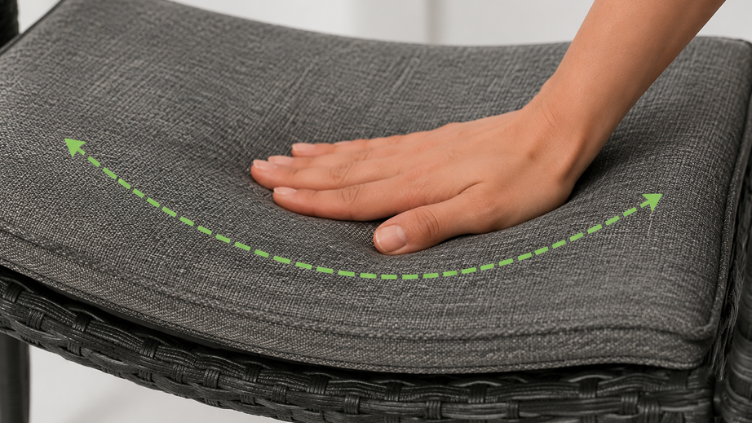

Controlled Flex (Good)
Slight give,adaptive support

Gentle,evensupport
Comfortable for long periods
Returns to shape after use
Pro Tip
Slight seating flex and adaptive support are often part of the intended comfort design.



Conclusion
True outdoor comfort is not simply about softness.
Long-sitting comfort depends on how well outdoor furniture supports the body over time — through balanced cushioning, supportive posture, proper seating proportions and adaptive materials.
In real outdoor living, comfort influences how long people stay, relax and enjoy spending time together.
Because ultimately, people are not just buying outdoor furniture. They are creating outdoor spaces designed for conversation, relaxation and staying longer.
Long-sitting comfort depends on how well outdoor furniture supports the body over time — through balanced cushioning, supportive posture, proper seating proportions and adaptive materials.
In real outdoor living, comfort influences how long people stay, relax and enjoy spending time together.
Because ultimately, people are not just buying outdoor furniture. They are creating outdoor spaces designed for conversation, relaxation and staying longer.