Last Updated: 09/06/2026

1. Introduction
Understanding the stability of garden dining sets is crucial for user experience. Stability directly affects safety, usability, and product trust—it's not merely determined by weight or material. This guide explores the core factors that affect stability and clarifies common misconceptions.
Keywords
Garden dining sets, Stability, Structural Support, Assembly, Durability, Outdoor Use, Adjustable Feet, Frame Design
2. Common Misconceptions
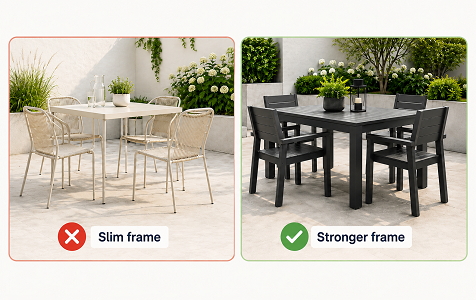
2.1 Lighter is better Light furniture does not equal stability; overly light sets may feel flimsy or cheap.
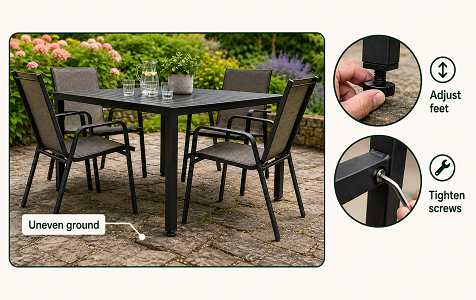
2.2 Wobbling = poor quality Many wobbles result from improper assembly or uneven ground.
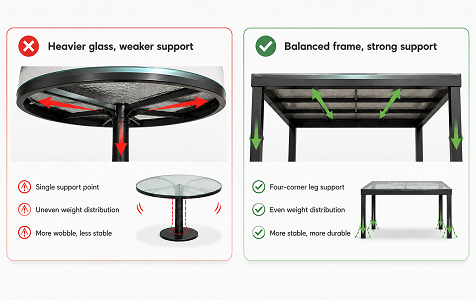
2.3 Heavier glass = more stable Stability depends on frame structure, leg support, and weight distribution, not solely on weight.
3. Structural Determinants
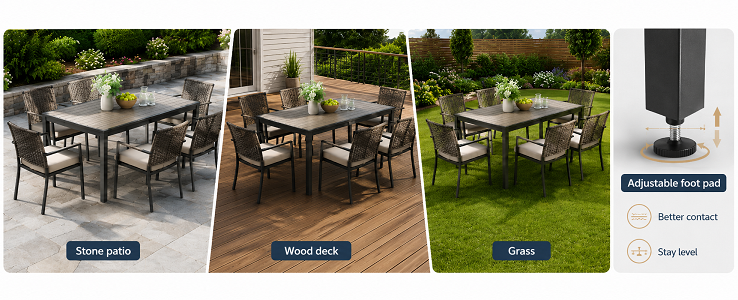
3.1 Installation EnvironmentGround evenness and type (stone, wood deck, grass)
Use adjustable foot pads to optimize contact and balance
Use adjustable foot pads to optimize contact and balance
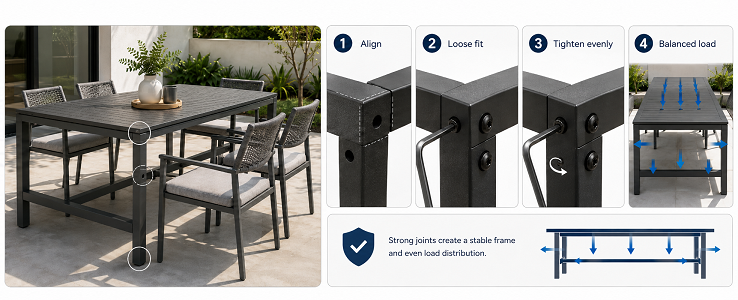
3.2 Joints & Load DistributionFrame structure: steel, rattan, or metal
Pre-assemble screws lightly, align components, then tighten evenly to ensure balanced load distribution
Pre-assemble screws lightly, align components, then tighten evenly to ensure balanced load distribution
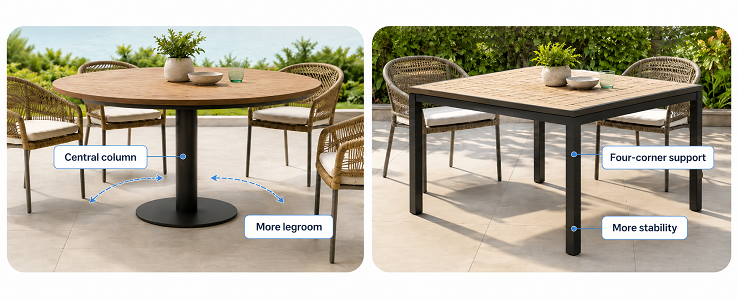
3.3 Leg Structure & GeometryCentral column vs. four-corner support
Choose structures that balance stability with legroom
Choose structures that balance stability with legroom
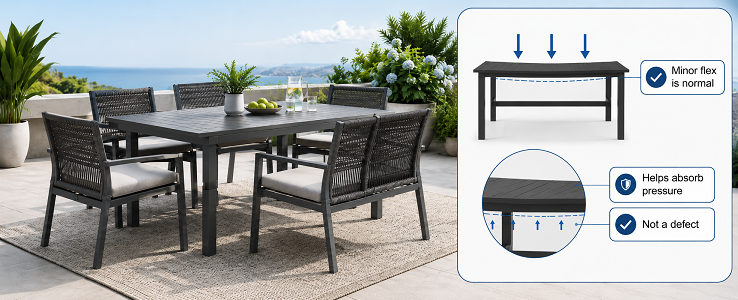
3.4 Operational StabilityMinor structural flex is normal and helps distribute pressure
4. Environmental Conditions

4.1 Wind
Moderate weight + sturdy frame can resist typical wind
Proper installation prevents tilting or overturning ... See More
Proper installation prevents tilting or overturning ... See More

4.2 Rain
Light waterproofing protects against occasional showers
Prolonged exposure may affect non-treated materials ... See More
Prolonged exposure may affect non-treated materials ... See More

4.3 Sunlight & Aging
Material and coating affect long-term outdoor durability
Frames and joints should be regularly checked and maintained ... See More
Frames and joints should be regularly checked and maintained ... See More
5. Conclusion
Stable garden furniture is determined by multiple factors, including frame structure, leg support, weight distribution, assembly process, and ground evenness. Understanding these aspects helps you choose furniture that remains secure and comfortable during long-term outdoor use.
Tips for you:
1. Ensure all screws and joints are correctly installed and evenly tightened.
2. Use adjustable foot pads to compensate for uneven surfaces.
3. Allow minor flex in metal or rattan frames, as it helps distribute weight and reduces long-term stress.
4. Regularly check frame connections and leg supports, especially before heavy use or gatherings.
2. Use adjustable foot pads to compensate for uneven surfaces.
3. Allow minor flex in metal or rattan frames, as it helps distribute weight and reduces long-term stress.
4. Regularly check frame connections and leg supports, especially before heavy use or gatherings.
Explore Our Stable Outdoor Garden Dining Sets

Frequently Asked Questions About Outdoor Garden Furniture Stability
Here are the most common questions our users have about maintaining stable, safe, and long-lasting outdoor dining furniture. Find practical tips to ensure your furniture stays secure and comfortable.
1. How do I choose the best location for my table to maintain stability?
Place tables on even, firm surfaces such as patios, decks, or compacted grass. Avoid soft or sloped ground to prevent tilting and wobbling.
2. What materials are easiest to maintain while staying stable outdoors?
Aluminum, powder-coated steel, and high-quality rattan are both durable and resistant to environmental wear. Combine with water-resistant cushions for easy maintenance.
3. How do temperature changes affect outdoor furniture stability?
Metal and wood can expand or contract with temperature fluctuations. Ensure screws are checked seasonally and frames are tightened to maintain stability.