Last Updated: 20/03/2026
Abstract
Greenhouse stability is influenced by the interaction between environmental loads and structural design. Among these loads, wind and rainfall represent two fundamentally different mechanical forces: wind introduces short-term dynamic pressure, while rainfall produces sustained static loads. Although greenhouse structures are often evaluated based on material strength or frame thickness, structural failures are more frequently caused by inadequate anchoring, insufficient drainage design, or improper foundation preparation.
This paper analyzes greenhouse stability from an engineering perspective, focusing on four critical factors: wind resistance, rain load capacity, foundation structure, and anchoring methods. Through structural analysis and environmental load assessment, the study demonstrates that greenhouse stability cannot be attributed to a single design feature. Instead, long-term structural safety depends on the combined performance of structural rigidity, load distribution, water drainage, and ground fixation.
A simplified structural stability model is proposed:
Stability = Wind Resistance × Rain Load Capacity × Drainage Design × Foundation System × Anchoring Method
The analysis indicates that if any component is absent or ineffective, the overall stability of the greenhouse may be significantly compromised.
Keywords
Greenhouse engineering
Walk in Greenhouses
Lean to Greenhouses
Mini Greenhouses
Wooden Greenhouses
Walk in Greenhouses
Lean to Greenhouses
Mini Greenhouses
Wooden Greenhouses
Structural stability
Wind load
Rain load
Foundation design
Anchoring systems
1. Introduction
Greenhouses are lightweight structures designed to create controlled microclimates for plant cultivation. Compared with traditional buildings, greenhouse structures typically use lighter materials and simpler structural frameworks. While this design provides flexibility and cost efficiency, it also increases vulnerability to environmental forces such as wind and rainfall.
Structural failures in greenhouses are commonly attributed to extreme weather events. However, field observations and installation reports indicate that most failures occur under moderate but sustained environmental loads, particularly when installation conditions are inadequate.
Two environmental forces play a dominant role in greenhouse structural stability:
- Wind pressure, which generates short-term dynamic forces that act on the external surfaces of the structure.
- Rain load, which creates continuous gravitational pressure through water accumulation on roof surfaces.
Understanding the different mechanical characteristics of these forces is essential for evaluating greenhouse safety.
In addition, the effectiveness of the foundation system and anchoring method often determines whether structural strength can be translated into real stability.
2. Environmental Load Analysis
2.1 Wind Load Characteristics
Wind is a dynamic environmental force characterized by rapid fluctuations in pressure and direction. When wind interacts with a greenhouse structure, it produces both external pressure and internal pressure, which together influence structural stability.
Wind is a dynamic environmental force characterized by rapid fluctuations in pressure and direction. When wind interacts with a greenhouse structure, it produces both external pressure and internal pressure, which together influence structural stability.
Wind load is characterized by:
- Short duration impact
- Rapid pressure variation
- Directional force distribution
From a structural engineering perspective, wind primarily tests:
- Frame rigidity
- Panel integrity
- Ground anchoring effectiveness
If a greenhouse structure is not properly anchored, wind forces may cause uplift, sliding, or overturning.
2.2 Rain Load Characteristics
2.2 Rain Load Characteristics
Unlike wind, rainfall creates a static load that gradually accumulates on the roof surface.
Rain load characteristics include:
- Long duration
- Continuous gravitational pressure
- Potential accumulation due to drainage limitations
If roof drainage is insufficient, standing water can generate significant additional loads.
Engineering calculations show that:
1 cm of standing water corresponds to approximately 10 kg of load per square meter.
During prolonged rainfall, the accumulated load may exceed the structural capacity of lightweight greenhouse frames.
Rain load often results in progressive structural deformation, such as:
- Membrane sagging
- Panel bending
- Frame fatigue
Unlike wind damage, which may occur suddenly, rain-induced structural failure is typically a gradual process.
3. Structural Wind Resistance Mechanisms
3.1 Membrane-Covered Greenhouses
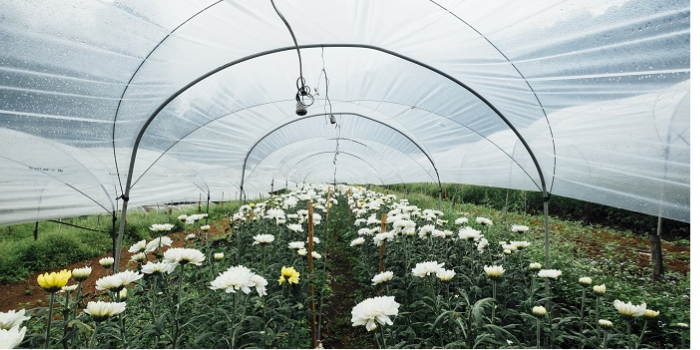
Film-covered greenhouses use flexible plastic membranes as the primary covering material.
Under strong wind conditions, the membrane surface may behave similarly to a sail, creating a phenomenon known as the sail effect. This process occurs as: 1. Wind pressure inflates the membrane surface; 2. Internal air pressure increases; 3. Uplift forces develop at the base of the structure
If the greenhouse is not securely anchored, the entire structure may be lifted from the ground.
Therefore, membrane greenhouses depend heavily on effective ground anchoring systems.
3.2 Rigid Panel Greenhouses
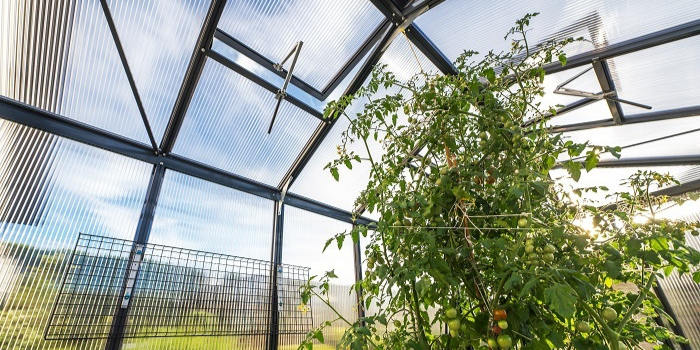
Greenhouses constructed with rigid panels, such as polycarbonate or acrylic sheets, exhibit different wind behavior.
Advantages include: 1.Reduced deformation under wind pressure; 2.More uniform distribution of external forces; 3.Greater structural integrity. However, rigid panels also increase the surface area exposed to wind, which may generate significant lateral forces.
If the structure is not anchored, the greenhouse may be pushed sideways and overturned as a single unit.
3.3 Structural Displacement Without Structural Damage
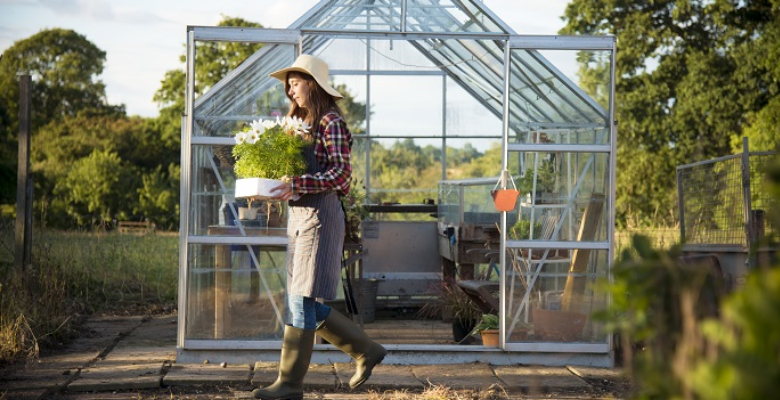
In many cases, greenhouse structures remain physically intact while the foundation fails.
Typical causes include: 1.Missing ground anchors; 2.Insufficient foundation reinforcement; 3.Lack of counterweights
In such cases, the entire structure may shift or slide without frame damage. This highlights the critical importance of anchoring systems.
4. Rain Load and Roof Design
4.1 Roof Slope and Water Accumulation
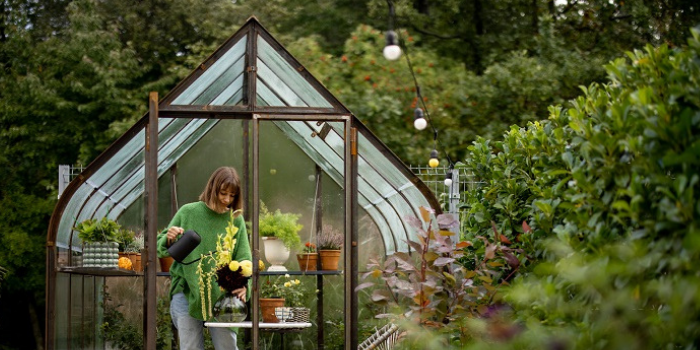
Roof slope plays a fundamental role in rainwater drainage.
If the slope is insufficient, water may accumulate on the roof surface, creating localized loads.
This can lead to: 1. Membrane water pockets; 2. Panel bending; 3. Frame deformation. These effects increase as rainfall continues.
4.2 Structural Support Distribution
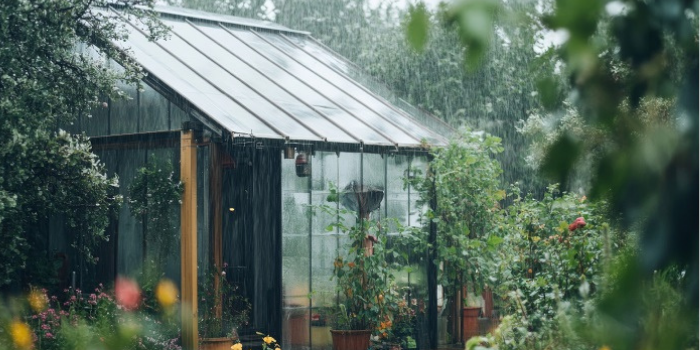
The number and spacing of roof support beams influence how rain loads are distributed across the structure.
Structures with limited roof supports may experience concentrated loads, increasing the risk of deformation.
Structures with multiple support beams distribute loads more evenly, improving overall stability.
Frame thickness and material strength also contribute to resistance against snow loads and compressive forces.
4.3 Drainage Systems
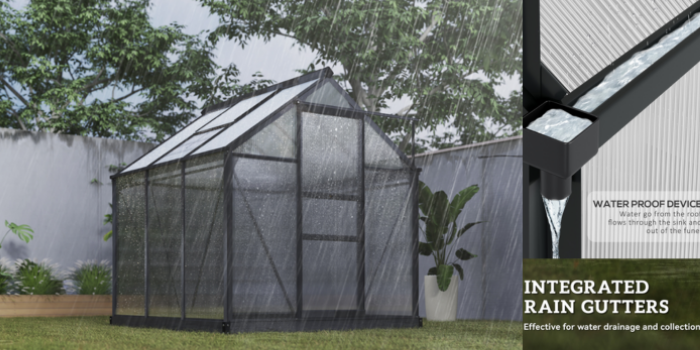
Rain resistance depends not only on waterproof materials but also on effective drainage design.
Key drainage features include: 1. Adequate roof slope; 2. Water channels; 3. Drainage pathways. Without proper drainage systems, water accumulation may occur regardless of the roofing material.
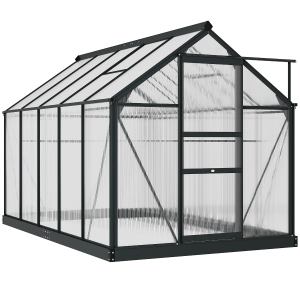
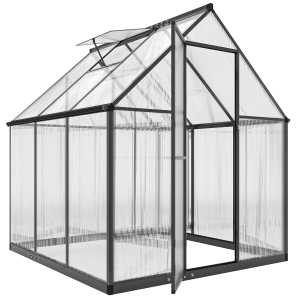
Greenhouse with rain gutters
5. Foundation Systems
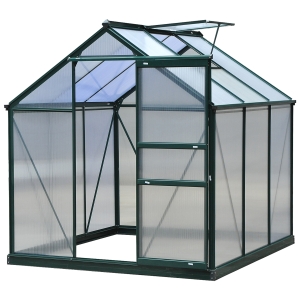
The foundation system provides the interface between the greenhouse structure and the ground. Its design directly affects long-term structural stability.
Three common foundation systems are widely used.
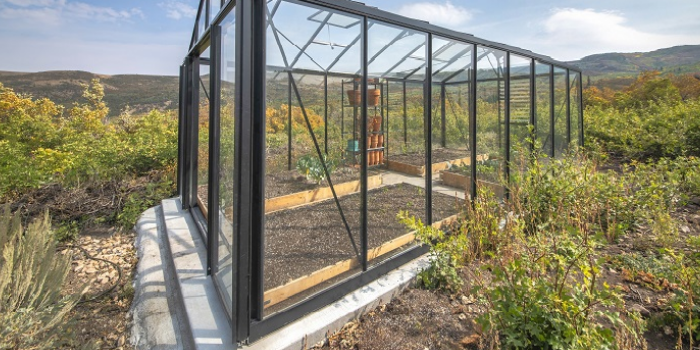
5.1 Slab Foundations
Slab foundations consist of a continuous surface that supports the entire greenhouse structure. Typical materials include:
1. Concrete slabs; 2. Brick paving; 3. Block structures; Advantages: 1. Maximum structural stability; 2. Clean and durable working surface; Limitations: 1. Prevents direct planting in soil; 2. Can function as a thermal mass, storing heat or cold
Concrete slabs may store solar heat during the day and release it at night, but they can also make temperature control more difficult in warm climates.
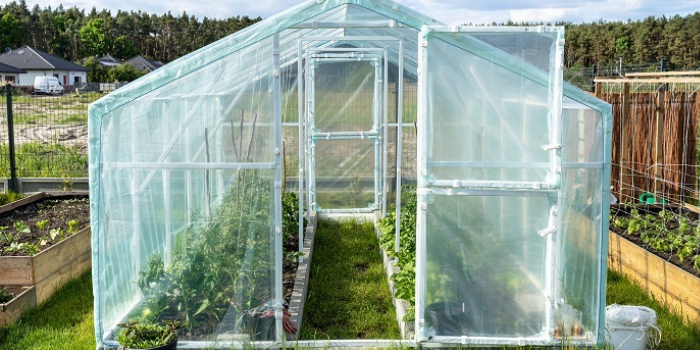
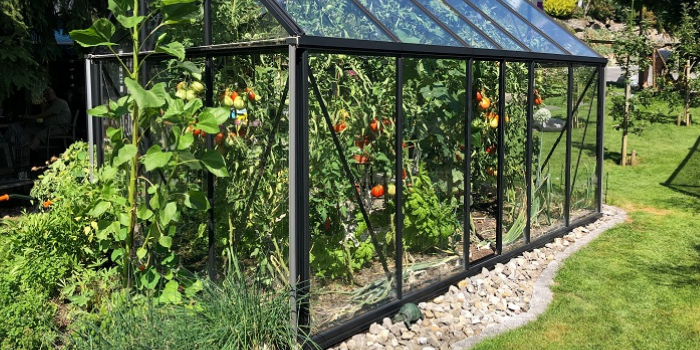
5.2 Perimeter Foundations
Perimeter foundations create a structural boundary around the greenhouse while leaving the central soil exposed. Common materials include: 1.Treated wood; 2.Concrete; 3.Brick Advantages: 1.Allows direct soil planting; 2.Provides natural temperature regulation; Limitations: 1.Requires proper anchoring to the ground; 2.May require humidity management
Perimeter foundations are commonly used in long-term cultivation greenhouses.
5.3 Level Ground Installations
The simplest foundation method involves leveling the ground using compacted materials such as gravel or sand. Advantages:
1.Low installation cost; 2.Simple construction process. Limitations: 1.Lower structural stability; 2.Suitable primarily for temporary or portable greenhouses
Even in this installation method, anchoring remains essential.
6. Anchoring Systems
Anchoring systems prevent structural movement caused by wind forces.
Different ground conditions require different anchoring approaches.
Soil or Grass Ground
Recommended anchoring methods include:
- Ground stakes
- Wind ropes
- Deep anchors for larger structures
Tunnel greenhouses may also use soil-covered edges to improve stability.
Concrete or Tile Surfaces
Anchoring systems for hard surfaces include:
- Expansion bolts
- Metal brackets
- Base plate anchors
In some cases, counterweights such as sandbags or water containers may supplement anchoring systems.
However, counterweights alone should not replace mechanical anchoring.
7. Discussion
Greenhouse stability cannot be determined solely by frame thickness or material strength.
Instead, structural safety results from the combined interaction of:
- Structural rigidity
- Environmental loads
- Foundation stability
- Anchoring effectiveness
This relationship can be expressed through the following simplified model:
Stability = Wind Resistance × Rain Load Capacity × Drainage Design × Foundation System × Anchoring Method
If any component is missing or ineffective, the overall structural stability may be compromised.
8. Conclusion
Greenhouse structures are exposed to complex environmental loads, particularly wind and rainfall. Wind generates short-term dynamic forces that challenge structural anchoring, while rainfall produces sustained static loads that test roof drainage and load-bearing capacity.
The study demonstrates that structural stability depends not only on material strength but also on foundation design, drainage systems, and proper anchoring methods.
Most greenhouse failures occur not because of extreme weather conditions but because of inadequate installation practices.
Therefore, proper anchoring and foundation preparation are essential for ensuring long-term greenhouse stability.
References
Teagasc. (2021).
Protected Structures and Polytunnel Management in Ireland.
Agriculture and Food Development Authority.
https://www.teagasc.ie
Teagasc. (2018).
Wind and Site Exposure Considerations for Farm Structures.
Agriculture and Food Development Authority.
Met Éireann. (2022).
Wind Climate of Ireland and Extreme Weather Events.
Irish Meteorological Service.
https://www.met.ie
Department of Agriculture, Food and the Marine (DAFM). (2020).
Farm Building and Infrastructure Guidelines.
Government of Ireland.
Health and Safety Authority (HSA). (2019).
Safe Design and Installation of Agricultural Structures.
Ireland.
Royal Horticultural Society (RHS). (2021).
Greenhouse Structures: Stability, Ventilation and Weather Protection.
https://www.rhs.org.uk
ADAS UK. (2017).
Structural Stability and Environmental Loads in Protected Cropping Systems.
ADAS Horticulture.
British Standards Institution (BSI). (2018).
BS EN 13031-1: Greenhouses – Design and Construction.
London: BSI.
Protected Structures and Polytunnel Management in Ireland.
Agriculture and Food Development Authority.
https://www.teagasc.ie
Teagasc. (2018).
Wind and Site Exposure Considerations for Farm Structures.
Agriculture and Food Development Authority.
Met Éireann. (2022).
Wind Climate of Ireland and Extreme Weather Events.
Irish Meteorological Service.
https://www.met.ie
Department of Agriculture, Food and the Marine (DAFM). (2020).
Farm Building and Infrastructure Guidelines.
Government of Ireland.
Health and Safety Authority (HSA). (2019).
Safe Design and Installation of Agricultural Structures.
Ireland.
Royal Horticultural Society (RHS). (2021).
Greenhouse Structures: Stability, Ventilation and Weather Protection.
https://www.rhs.org.uk
ADAS UK. (2017).
Structural Stability and Environmental Loads in Protected Cropping Systems.
ADAS Horticulture.
British Standards Institution (BSI). (2018).
BS EN 13031-1: Greenhouses – Design and Construction.
London: BSI.
About the Author
Dr. Daniel Whitaker is an agricultural engineer specialising in greenhouse structures and protected cultivation systems in temperate maritime climates. His research focuses on structural stability under wind and rainfall conditions, with particular attention to installation practices, anchoring systems, and long-term performance of lightweight greenhouse structures in regions such as Ireland and the United Kingdom. He has worked closely with horticultural growers and agricultural institutions to improve structural safety standards for small and mid-scale greenhouse applications.