



















Dog Pet Supplies
Explore dog supplies including dog beds, crates, puppy playpens, pet gates, strollers, grooming equipment, feeding accessories and ramps. The right products depend on your dog's size, age, mobility and behaviour, as well as the space available in your home or garden. Before buying, compare the usable internal dimensions, weight limits, materials and cleaning requirements rather than choosing by a small, medium or large label alone.
Dog Playpens for Indoor and Outdoor Use
A dog playpen provides a defined area for rest, supervised play or temporary separation from other parts of the home. The PawHut 12-panel heavy-duty dog playpen with two access doors can be arranged into different shapes, including square, rectangular and L-shaped configurations.
Each steel panel measures 100 cm high and 68 cm wide. In a square configuration, the complete enclosure measures 204 x 204 x 100 cm. It includes two doors with latches and ground stakes for suitable outdoor installation. The manufacturer describes it as suitable for large dogs with a shoulder height up to 60 cm.
Before choosing a playpen, check the height, spacing between the bars and the dog's ability to climb or jump. A playpen does not guarantee escape prevention and should not replace suitable exercise, interaction or supervision.
Elevated Dog Beds with Breathable Mesh
Raised dog beds keep the sleeping surface above the floor and can be useful in homes where easy cleaning and airflow beneath the bed are important. The PawHut elevated dog bed with breathable mesh and foldable steel frame measures 107 x 61 x 20 cm.
It features 600D Oxford fabric, a Texteline mesh sleeping area and a maximum stated load of 30 kg. The frame folds for storage, and the mesh surface can be rinsed for routine cleaning. The manufacturer recommends it for dogs with a body length up to 65 cm.
For a comfortable fit, measure your dog while lying in its usual resting position. Compare the usable bed area with the animal's body length and sleeping habits, and remember that an elevated mesh bed offers a different type of cushioning from a padded sofa-style dog bed.
Adjustable Dog Ramps for Beds and Sofas
Pet ramps provide a continuous inclined surface instead of separate steps. They may be useful for dogs that have difficulty jumping, although the best solution depends on the animal's mobility and the height to be reached.
The PawHut folding wooden dog ramp with adjustable height and anti-slip carpet offers four height settings of 35, 43, 47 and 50 cm. It is made from pine wood and features a carpeted walking surface with anti-slip strips.
The ramp supports up to 50 kg and folds for storage. Before choosing a ramp, measure the height of the bed or sofa and consider the slope created at the selected setting. Dogs with joint pain or mobility difficulties may need a veterinary assessment to determine whether a ramp or steps are appropriate.
Dog Crates, Strollers and Feeding Accessories
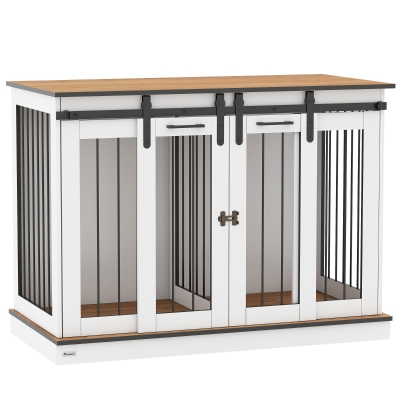
The dog supplies range also includes dog crates, pet strollers and feeding equipment. A crate should provide sufficient room for the dog to stand, turn and rest naturally, while a stroller needs to accommodate the animal's body size and weight within its stated limits.
For food and water bowls, consider cleaning access, bowl depth and the stability of the stand. Automatic feeders can help schedule meals, but they should not be relied upon without checking the food supply, power source and correct operation.
Cat Pet Supplies
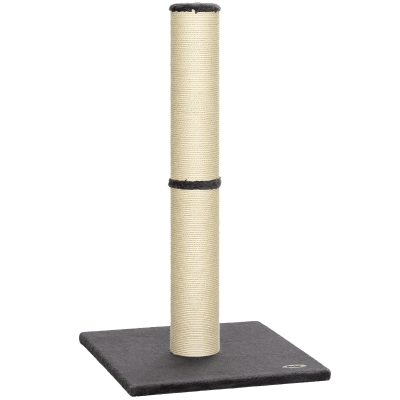
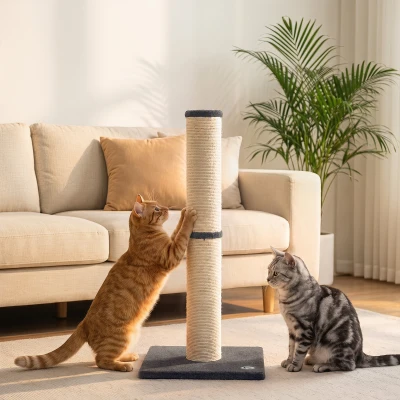
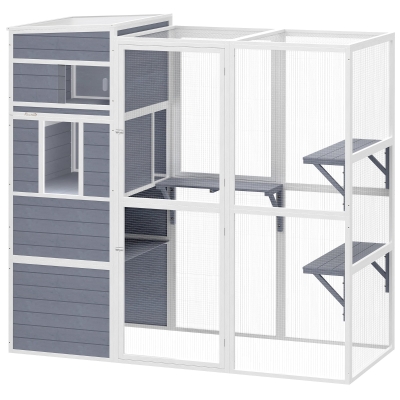
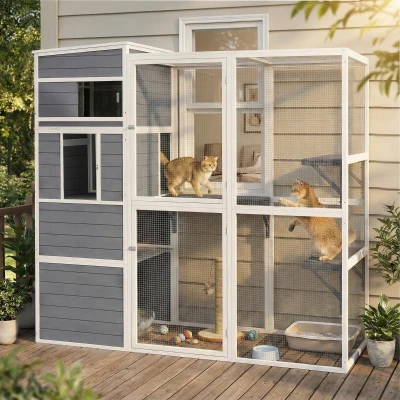
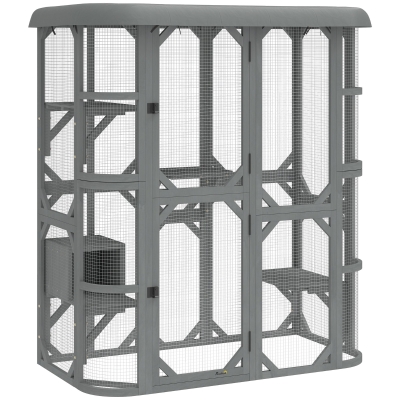
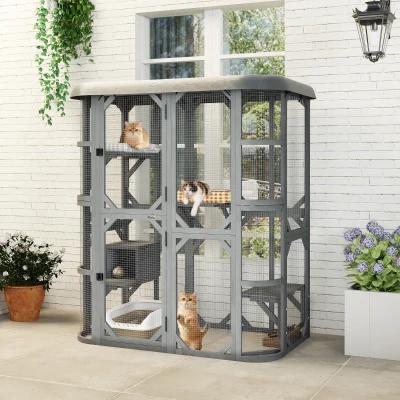
The cat supplies collection includes cat trees, scratching posts, enclosed litter boxes, outdoor cat houses, cat enclosures and feeding accessories. Different products support different needs: climbing towers provide vertical activity space, litter trays support daily hygiene, and insulated outdoor shelters provide a separate resting area. Choose according to the cat's size, mobility, behaviour and living environment.
Floor-to-Ceiling Cat Trees with Scratching Posts
A tall cat tree provides climbing platforms and elevated resting areas for indoor cats. The PawHut adjustable floor-to-ceiling cat tree with sisal scratching posts and hammocks has an adjustable height range of 240-260 cm and a base measuring 60 x 45 cm.
It includes two cat houses, two ramps, two hammocks, a tunnel, hanging toys and sisal-covered scratching posts. The manufacturer describes the individual cat spaces as suitable for cats weighing up to 4.5 kg.
Before purchasing a floor-to-ceiling cat tree, measure the room height and check that the adjustment system can be installed securely. Consider the size of each platform, the cat's jumping ability and whether the chosen position allows safe movement between levels.
Insulated Outdoor Cat Houses
An outdoor cat house provides a separate sheltered space for cats that spend time outside. The PawHut insulated wooden outdoor cat house with opening roof and removable floor measures 85 x 50 x 68.5 cm.
It has a wooden structure with foam insulation, a sloping asphalt-covered roof, a doorway curtain and a removable bottom panel for cleaning. The manufacturer indicates space for one or two cats weighing up to 5 kg each.
For outdoor use in Ireland, position the shelter on a suitable stable surface away from standing water and prevailing wind where possible. A water-resistant roof and insulated walls do not make an outdoor cat house a heated shelter or guarantee protection in every weather condition.
Enclosed Stainless Steel Cat Litter Boxes
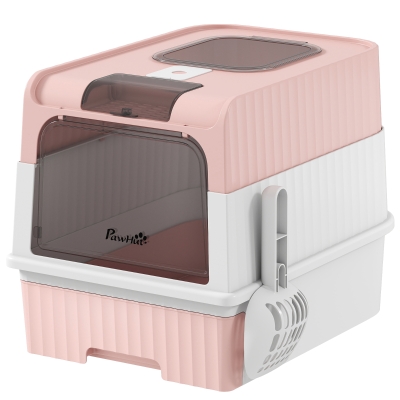
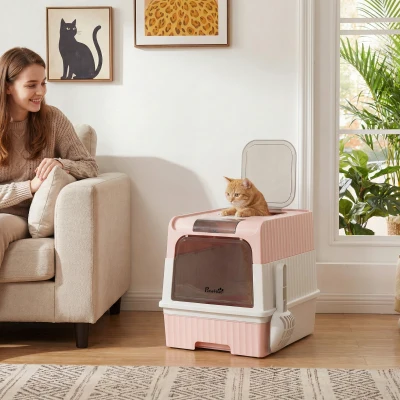
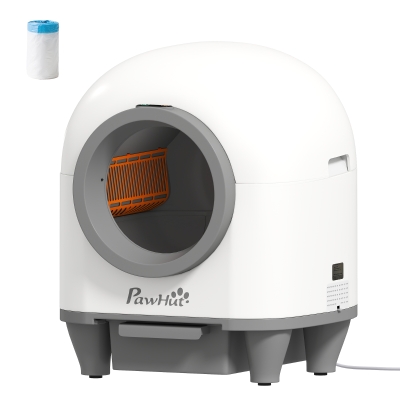
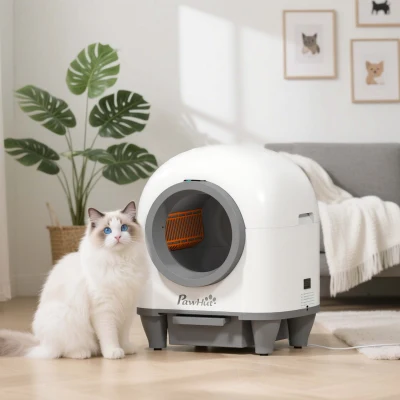
Enclosed cat litter boxes can help contain scattered litter, although not every cat prefers a covered toilet. The PawHut extra-large stainless steel cat litter box with flip-up cover and double entry measures 70 x 50 x 46.5 cm.
The design combines a stainless steel tray with a full enclosure, front entry, top exit and a 90-degree flip-up section for cleaning. A litter scoop and deodorant compartment are included.
Before choosing an enclosed litter box, check the internal space available for the cat to turn around, the entrance height and the ease of removing used litter. Regular scooping and cleaning remain necessary even when the box has a deodorant compartment.
Automatic Cat Feeders with Scheduled Meals
An automatic feeder can help organise regular portions of dry food. The PawHut WiFi automatic cat feeder with programmable meals and stainless steel bowl has a 4.5L food container and supports scheduling up to ten meals a day.
It includes app controls, food-flow monitoring, a voice-recording feature and an option for backup power using three D-cell batteries, which are not included. The feeder measures 28.6 x 18.6 x 35.2 cm.
Before buying, check WiFi compatibility, the dry food type and kibble size supported by the mechanism. A programmed feeding schedule does not eliminate the need to monitor your pet, clean the bowl and verify that food is dispensing correctly.
Small Mammal Pet Supplies
The small mammal pet supplies collection includes rabbit hutches, guinea pig housing, hamster cages and other small animal enclosures. Rabbits, guinea pigs, hamsters and gerbils have different requirements for floor space, bedding, exercise and social housing. An enclosure advertised for several species should not automatically be considered suitable for all of them.
Wooden Rabbit Hutches with Outdoor Runs
A rabbit hutch with an attached run combines a sheltered section with an area for movement. The PawHut wooden rabbit hutch with outdoor run, ramp and removable cleaning tray measures 156 x 58 x 68 cm.
It is made from fir wood and includes an enclosed resting area, mesh-sided run, connecting ramp, hay rack and slide-out tray. The asphalt-covered roof provides weather protection over the sheltered area.
When selecting rabbit or guinea pig accommodation, evaluate the actual uninterrupted exercise space rather than only the overall external measurements. A compact hutch and attached run may need to form part of a larger suitable living arrangement rather than serving as the animal's entire permanent exercise area.
Hamster Cages with Deep Bedding Areas
Hamsters need an enclosure that supports burrowing and provides appropriate space for a wheel, sleeping area and other enrichment. The PawHut wooden hamster cage with deep burrowing base and removable sections measures 80 x 50 x 76 cm overall.
The structure includes a lower section 31 cm deep, transparent acrylic viewing panels, a hut, ramps, a seesaw and an exercise wheel. The lower internal section measures approximately 76 x 46 cm, while the supplied wheel has an 18 cm diameter.
The manufacturer describes this model for dwarf hamsters and small gerbils, but enclosure suitability must be checked against the specific animal's welfare requirements. Extra tiers do not replace adequate uninterrupted floor space, and the supplied wheel may need to be replaced with a larger size. This wooden model is also not recommended by the manufacturer for animals with strong chewing habits.
Small Animal Cages and Enrichment
When comparing small pet cages, check the usable floor area, ventilation, bar spacing and depth available for bedding. A hamster cage with several platforms may offer additional activity areas, but the main floor area remains important for digging and natural movement.
Rabbit and guinea pig enclosures require different layouts from hamster habitats. Consider hiding places, food and water access, bedding materials and opportunities for exercise. Species-specific animal welfare guidance should be used when deciding whether an enclosure offers enough space for permanent housing.
Chicken Coops
The chicken coops collection includes wooden chicken houses, nesting boxes and attached runs. These structures are intended for garden poultry keeping and differ in floor space, number of nesting areas, roosting arrangements, door access and ease of cleaning. Before buying, consider the flock size, available outdoor exercise area, ventilation and protection from rain and predators.
Wooden Chicken Coops with Nesting Boxes and Runs
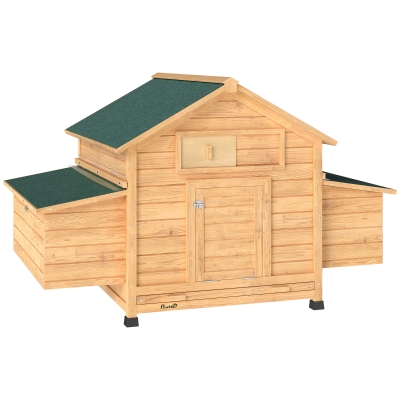
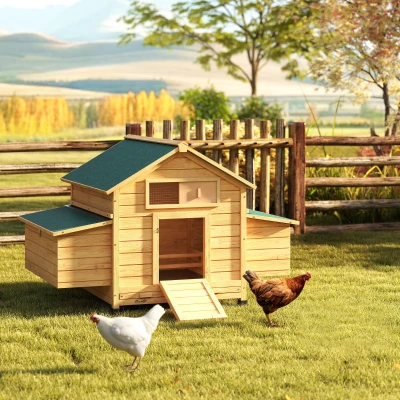
The PawHut wooden chicken coop with nesting box, outdoor run and access ramp measures 179 x 67 x 115 cm.
The fir wood structure includes a nesting area, two wooden perches, a connecting ramp, mesh ventilation and a sloping asphalt-covered roof. It also features access doors intended to make feeding and cleaning easier.
Before choosing a coop, check the actual usable internal and outdoor run areas. The manufacturer's advertised chicken capacity does not by itself establish that the complete structure provides enough permanent living and exercise space. The number of birds, local conditions and access to a larger secure run all need to be considered.
Chicken Runs for Garden Poultry
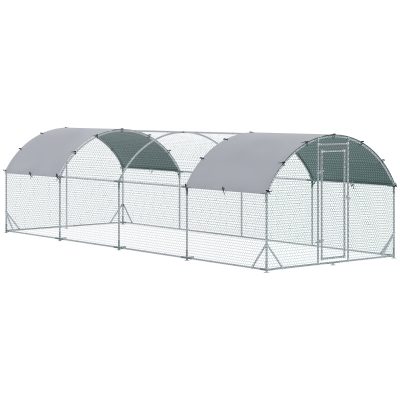
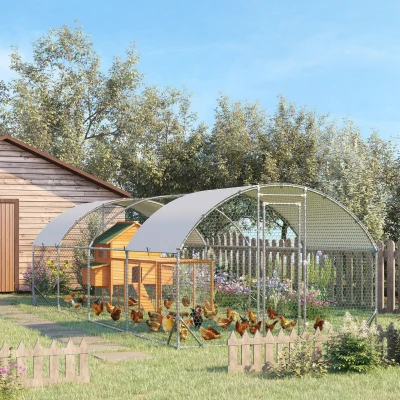
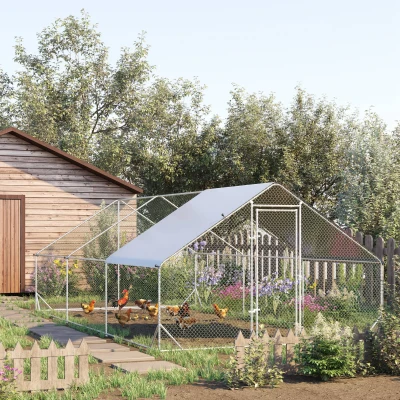
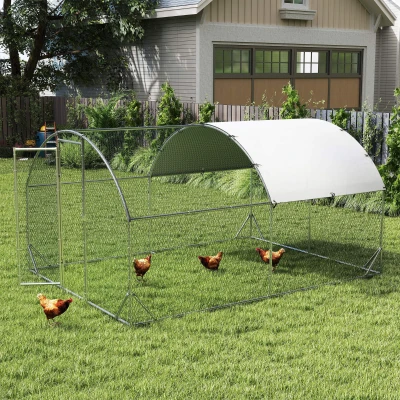
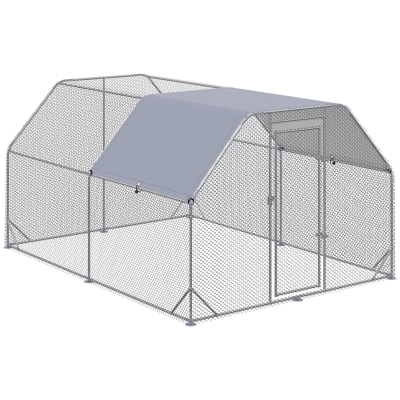
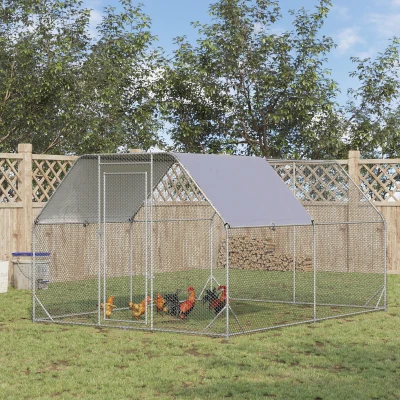
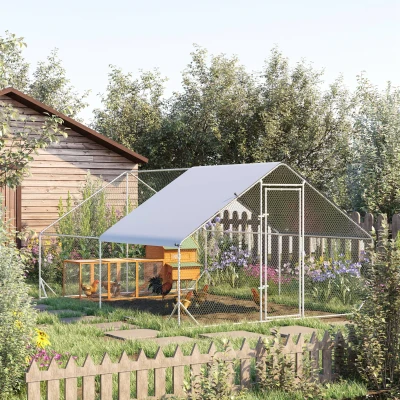
A secure outdoor run provides an area for chickens to move around outside the sleeping and nesting sections. When comparing runs, consider the area per bird, overall height, mesh construction, access doors and protection against predators.
For gardens in Ireland, pay particular attention to drainage and muddy ground. The run should be positioned where water does not accumulate, and the coop should be inspected regularly for damaged timber, loose mesh and weak door latches.
Check the applicable requirements for keeping poultry in your area, including any current animal health or disease-control measures.
Bird Pet Supplies
The bird pet supplies collection includes bird cages, aviaries, cage stands and feeding accessories. Different bird species have different requirements for cage dimensions, bar spacing, perches and opportunities for flight and exercise. A cage intended for one type of bird may not be appropriate for another, even when both are described as small birds.
Large Bird Cages with Rolling Stands
The PawHut large bird cage with rolling stand, wooden perches and removable cleaning tray measures 78 x 52 x 132 cm overall, including its stand.
It includes four wooden perches, four feeding cups, two main front doors, four smaller food-access doors and a slide-out tray. The rolling stand has four wheels and a lower storage shelf. The cage bar spacing is 1.5 cm.
Before purchasing, compare the internal cage space and bar spacing with the needs of the species you keep. The external height includes the stand and should not be mistaken for the bird's usable flight space. The stated bar spacing also needs checking carefully for smaller species to avoid escape or injury.
Bird Cage Cleaning and Placement
A bird cage should be positioned in a suitable indoor environment away from cooking fumes, direct draughts and extreme temperatures. Consider how easily food and water containers can be reached and whether the tray can be removed without disturbing the birds.
Perch diameter, material and arrangement should be appropriate for the species. Cages with wheels may be easier to move for cleaning, but the stand must remain stable and the wheels should not allow unintended movement.
Reptiles & Amphibians Products
The reptile and amphibian housing collection includes glass terrariums and other enclosures. Reptiles and amphibians have highly species-specific requirements for temperature, humidity, ventilation, lighting, substrate and enclosure size. A terrarium's appearance and outside dimensions alone are not enough to confirm suitability for a particular animal.
Glass Reptile Terrariums with Ventilated Mesh Lids
The PawHut glass reptile terrarium with mesh ventilation lid and thermometer strip measures 50 x 30 x 25 cm.
It features glass viewing panels, a sliding mesh top with a feeding opening, a raised base and a thermometer strip with a marked range of 18-34°C. A small water dish is also included, while animals and decorative accessories are not supplied.
The enclosure must be assessed for the specific animal before use. The included thermometer strip does not provide heating, humidity control or specialised lighting. Many reptiles require separate temperature gradients, UVB lighting and humidity management, while amphibians may have different substrate and moisture requirements.
Choosing a Reptile or Amphibian Habitat
When selecting a terrarium, start with the species' adult size and natural behaviour. Ground-dwelling animals may need more floor space, while climbing species may require greater enclosure height. Some animals need access to water, specialised substrates or securely mounted heating and lighting equipment.
Check that the enclosure has suitable ventilation and escape-resistant closures. Do not assume a small glass terrarium is adequate for an adult snake, tortoise, aquatic turtle or large lizard simply because those animals are mentioned in a general product description. Research the specific species' husbandry requirements before purchase.
How to Choose Pet Supplies for Your Home
- Pet species: Start with the specific type of animal. Dogs, cats, rabbits, hamsters, birds and reptiles require different housing, equipment and environmental conditions.
- Body size and weight: Compare your pet's actual measurements with the product's usable internal space and weight limits. A general small, medium or large label may not accurately describe the fit.
- Indoor or outdoor use: Check whether the product is approved for the intended environment. An outdoor shelter may have weather-resistant materials, but this does not guarantee warmth or protection during severe weather.
- Irish weather: For outdoor cat houses, rabbit hutches and chicken coops, consider regular rain, damp ground, wind exposure and ventilation. Position structures on stable surfaces and check for water accumulation.
- Enclosure space: Look at the usable internal floor dimensions, not just the overall external measurements. Additional platforms and levels do not replace adequate continuous floor space where the species needs it.
- Materials: Wood, steel, stainless steel, fabric and plastic have different cleaning and maintenance requirements. Consider scratching, chewing, corrosion and moisture exposure according to the animal and intended use.
- Cleaning access: Removable trays, opening roofs, washable covers and accessible doors can make everyday maintenance easier. Check how the product is disassembled and cleaned.
- Ventilation: Enclosed pet housing needs appropriate airflow without subjecting the animal to unsuitable draughts. Requirements differ considerably between mammals, birds and reptiles.
- Pet mobility: Ramps and steps may help some animals reach raised surfaces, but the slope, surface grip and individual mobility needs matter. Seek veterinary advice for pets with persistent pain or mobility difficulties.
- Safety and stability: Check locks, hinges, cage spacing, supporting frames and anchoring instructions. Outdoor structures should be inspected regularly for damaged mesh, weakened fittings or loose doors.
- Feeding equipment: Automatic feeders can help schedule meals, but food quantities, cleanliness, power and mechanical operation should still be checked regularly.
- Species-specific welfare: For rabbits, small rodents, poultry, birds and reptiles, consult appropriate animal welfare and husbandry guidance before selecting permanent accommodation.
- Assembly: Check whether the product requires tools or multiple people to assemble. Ensure that all locks, brackets, panels and fittings are correctly secured before allowing an animal to use it.
- Long-term use: Consider how your pet's size, activity and care needs may change. A temporary enclosure or puppy playpen may not be appropriate as the animal's only permanent living space.
Frequently Asked Questions About Pet Supplies
What should I consider when buying pet supplies online?
Check the intended animal species, dimensions, materials, weight limits and cleaning requirements. For housing products, consider the usable internal space rather than relying only on the product name. Compare the specifications with your pet's current and expected needs.
How do I choose the right size dog bed?
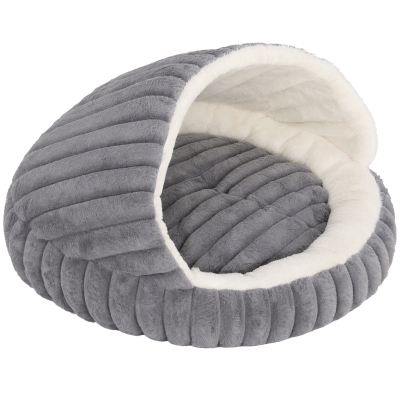
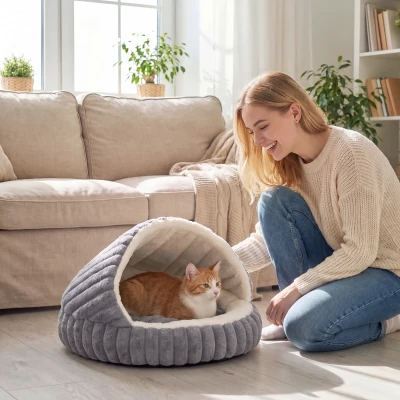
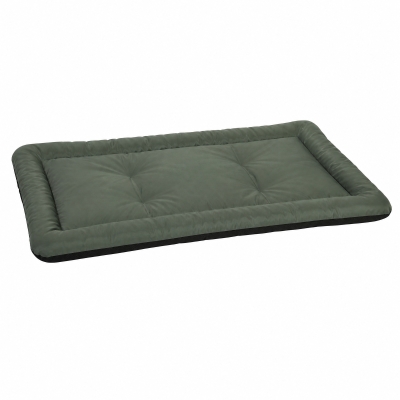
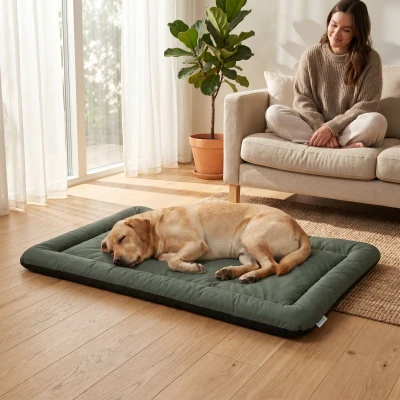
Measure your dog in a natural sleeping position and allow enough space for stretching or curling up. Check the usable sleeping surface, bed height and any weight limit. A raised dog bed and a padded sofa-style dog bed offer different levels of cushioning and support.
Is a dog playpen the same as a dog crate?
No. A playpen usually provides a larger enclosed area for supervised movement or temporary separation, while a crate is a different type of enclosure with its own intended uses and training considerations. Both must be appropriately sized and introduced in a way that supports the dog's welfare.
Are dog ramps suitable for older dogs?
A ramp may reduce the need to jump onto furniture, but suitability depends on the slope, surface grip and the individual dog's mobility. Dogs with arthritis, pain or movement difficulties may require a veterinary assessment before using a ramp or steps.
What is the difference between a cat tree and a cat house?
A cat tree provides platforms, scratching areas and climbing opportunities, usually indoors. A cat house is primarily a sheltered resting space and may be designed for indoor or outdoor use. Check the product's intended location, size and stability before choosing.
Is an enclosed litter box better than an open litter tray?
Not necessarily. Some cats prefer enclosed boxes, while others may be more comfortable with an open tray. Consider the cat's size, age, mobility and preferences. The litter box should be large enough for comfortable movement and easy to clean regularly.
Are insulated outdoor cat houses waterproof?
Insulation and water resistance are separate features. Insulation can help reduce heat transfer, while a protective roof may reduce rain exposure. Neither feature guarantees that a shelter will remain dry or warm under all conditions. Check the manufacturer's stated weather protection and position the house appropriately.
How much space does a rabbit need in a hutch?
Rabbits need enough continuous space for natural movement, resting and exercise. A hutch with a small attached run may not provide sufficient permanent living space on its own. Check recognised rabbit welfare guidance for suitable enclosure and exercise-area requirements before choosing housing.
Are multilevel hamster cages better than single-level cages?
Extra levels may provide additional activity areas, but they do not replace adequate continuous floor space. Bedding depth, ventilation, access to a correctly sized wheel and suitable hiding areas are also important. Choose according to the specific hamster species and current welfare recommendations.
Can rabbits and guinea pigs use the same type of cage?
Some products are marketed for both animals, but rabbits and guinea pigs have different needs and should not be assumed to require identical accommodation. Check the actual usable space, sleeping arrangements, ventilation and species-specific care guidance.
What should I look for in an outdoor chicken coop?
Consider the usable housing area, outdoor run space, ventilation, nesting boxes, access for cleaning and protection against predators. The number of chickens advertised in a product listing should be checked against the actual dimensions and appropriate welfare guidance.
How do I choose the right bird cage?
Check the species' space requirements, internal cage dimensions, horizontal flight space, bar spacing and perch arrangement. A cage that is marketed for several small bird species may not have appropriate bar spacing or usable space for every one of them.
Can the same reptile terrarium be used for snakes, lizards and amphibians?
Not automatically. Different animals require different temperature ranges, humidity, enclosure dimensions, ventilation and lighting. The suitability of a terrarium must be assessed for the particular species and its adult size, rather than relying on a general list of compatible animals.
What pet housing works best in wet Irish weather?
Outdoor housing should have materials and construction suitable for its stated use, along with appropriate ventilation, drainage and maintenance. Raised bases, opening roofs and accessible cleaning panels can be useful features, but the housing must still meet the animal's welfare and environmental requirements.
How often should pet enclosures be cleaned?
Cleaning frequency depends on the animal species, number of animals, enclosure size, bedding and the type of equipment. Food and water containers should be maintained hygienically, and contaminated bedding or litter should be removed promptly. Follow species-specific care guidance and the manufacturer's cleaning instructions.