Last Updated: 23/03/2026
Abstract
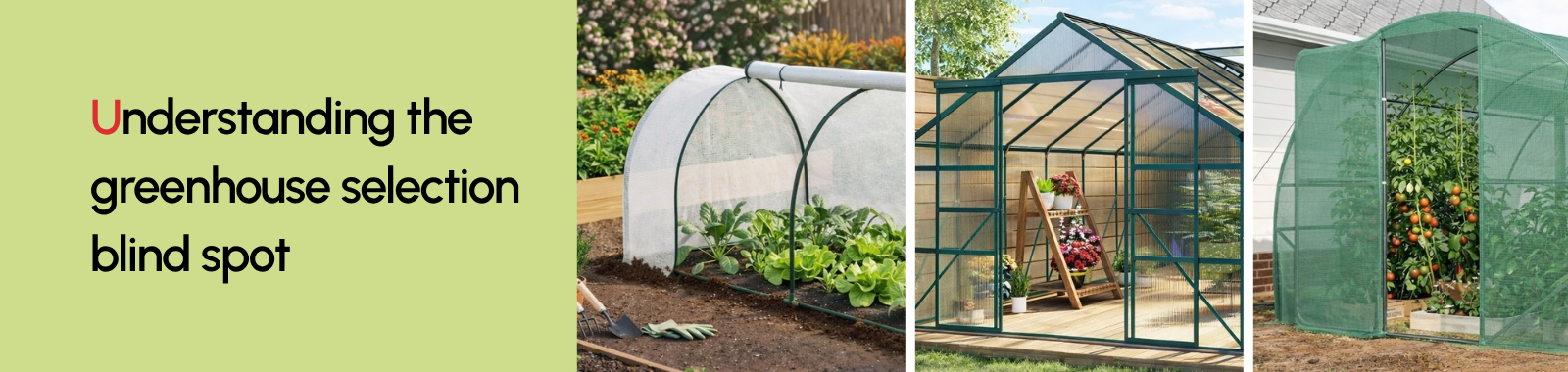
Greenhouses are widely used in residential and small-scale agriculture to protect plants and extend growing seasons. However, users often misunderstand the differences between greenhouse types and attempt to evaluate them based solely on insulation or structural strength. In reality, different greenhouse designs are intended for different cultivation objectives rather than representing a simple hierarchy of quality.
This paper analyzes three common greenhouse categories—growing greenhouses, tunnel greenhouses, and heavy-duty greenhouses—from the perspective of structural design, environmental control capability, and intended use scenarios. The analysis demonstrates that greenhouse selection should be based on cultivation goals, environmental conditions, and maintenance expectations rather than the assumption that one greenhouse type is universally superior.
The study proposes a practical framework for selecting greenhouse types based on functional requirements rather than perceived performance rankings.
This paper analyzes three common greenhouse categories—growing greenhouses, tunnel greenhouses, and heavy-duty greenhouses—from the perspective of structural design, environmental control capability, and intended use scenarios. The analysis demonstrates that greenhouse selection should be based on cultivation goals, environmental conditions, and maintenance expectations rather than the assumption that one greenhouse type is universally superior.
The study proposes a practical framework for selecting greenhouse types based on functional requirements rather than perceived performance rankings.
Keywords
Greenhouse selection, Tunnel greenhouse, Garden greenhouse, Heavy-duty greenhouse, Protected cultivation, Greenhouse design
1. Introduction
Greenhouses are designed to modify environmental conditions for plant cultivation by providing protection from weather and enabling partial climate control. Despite their widespread use, greenhouse buyers often misunderstand the functional differences between various greenhouse types.
A common misconception is that greenhouse selection should be based on finding the “most durable” or “most insulated” structure. This perspective assumes that greenhouse types represent different levels of performance rather than distinct design purposes.
In practice, greenhouse categories are optimized for different cultivation goals. Understanding these distinctions is essential for selecting an appropriate structure.
A common misconception is that greenhouse selection should be based on finding the “most durable” or “most insulated” structure. This perspective assumes that greenhouse types represent different levels of performance rather than distinct design purposes.
In practice, greenhouse categories are optimized for different cultivation goals. Understanding these distinctions is essential for selecting an appropriate structure.
2. The Greenhouse Selection Misconception
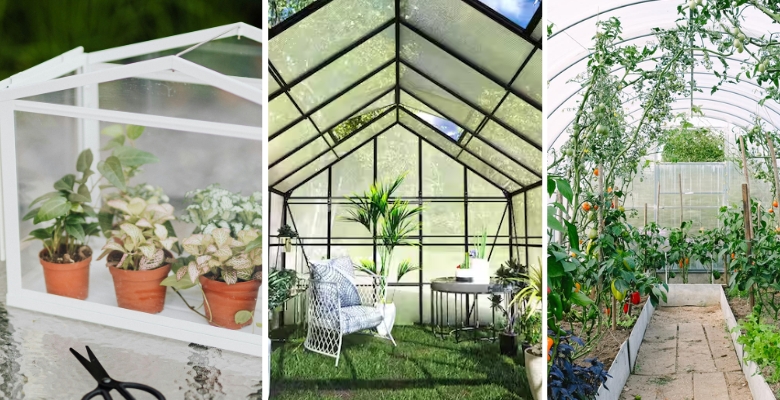

The most important concept in greenhouse selection can be summarized in a single statement:
Greenhouse types differ by purpose, not by quality.
Each type is designed to address a different cultivation need:
Growing greenhouse
→ frost protection and early seedling growth
Tunnel greenhouse
→ expanded planting area and seasonal extension
Heavy-duty greenhouse
→ long-term cultivation with stable environmental control
Evaluating greenhouse types without considering their intended purpose often leads to incorrect purchasing decisions.
3. Functional Differences Between Greenhouse Types
3.1 Growing Greenhouses
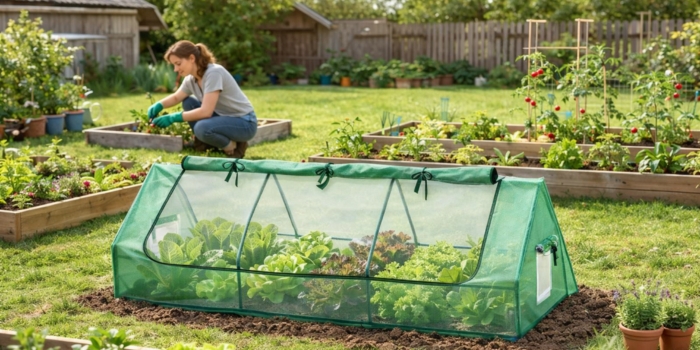
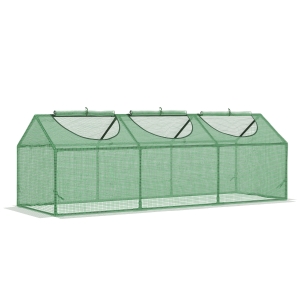
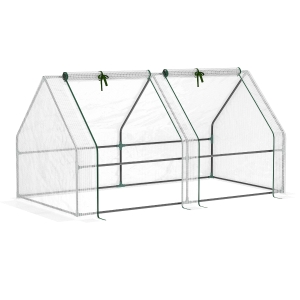
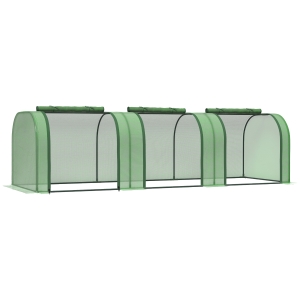
Growing greenhouses are compact structures primarily designed for early-season plant development.
Typical structural features include:
- lightweight steel frames
- PE or PVC covering films
- small structural footprint
- rapid installation
The primary function of this type of greenhouse is frost protection rather than winter heating.
These structures protect seedlings from sudden temperature drops and night frost but are not designed to withstand prolonged cold weather.
Typical applications include:
- early spring seedling cultivation
- frost protection during transitional seasons
- small backyard or balcony gardening
Growing greenhouses are particularly suitable for users seeking low-cost and temporary cultivation solutions.
3.2 Tunnel Greenhouses
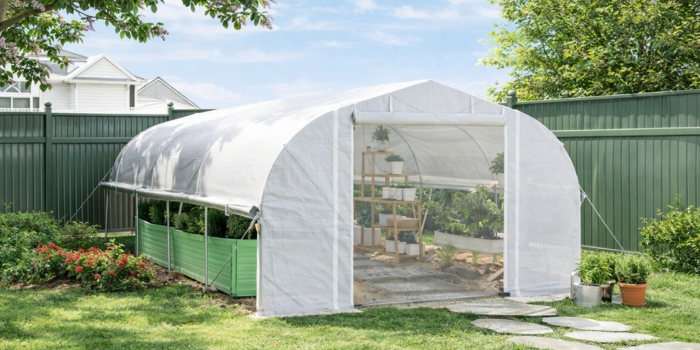
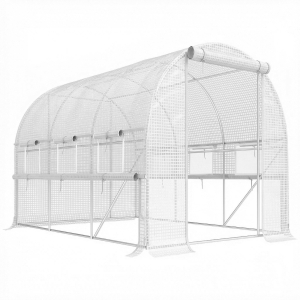
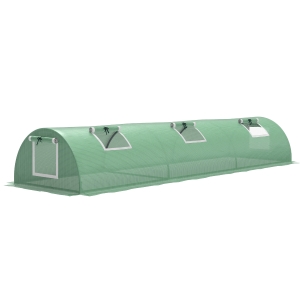
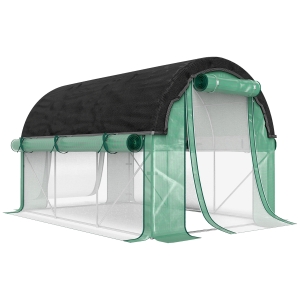
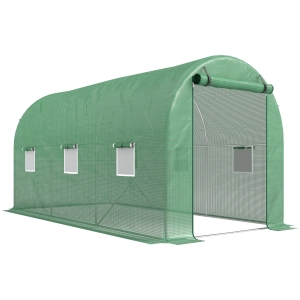
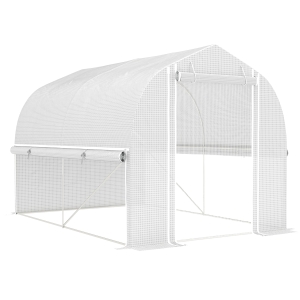
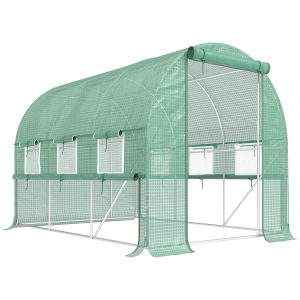
Tunnel greenhouses, also known as polytunnels, are designed to convert open planting areas into partially controlled environments.
Typical structural characteristics include:
- arched steel frames
- plastic film coverings
- elongated structures covering large areas
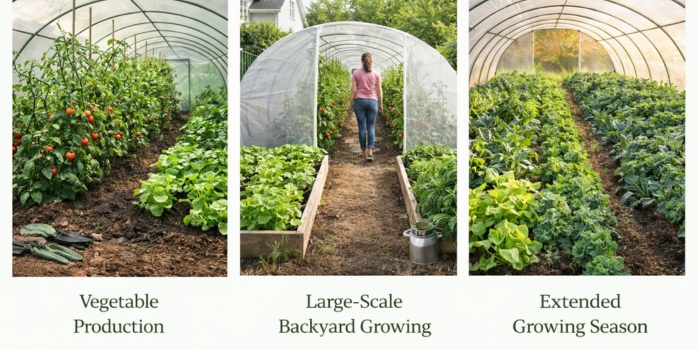
These greenhouses are widely used for vegetable cultivation due to their efficient land coverage.
Advantages include:
- large planting capacity
- strong light transmission
- good ventilation performance
However, tunnel greenhouses have structural limitations. Their lightweight design typically provides moderate resistance to wind and snow loads, making them better suited for seasonal agricultural use.
Tunnel greenhouses are particularly suitable for gardeners who prioritize productivity and planting capacity.
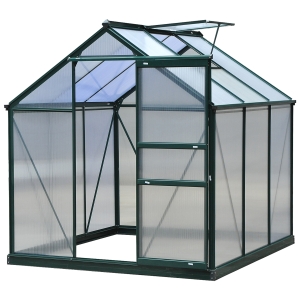
3.3 Heavy-Duty Greenhouses
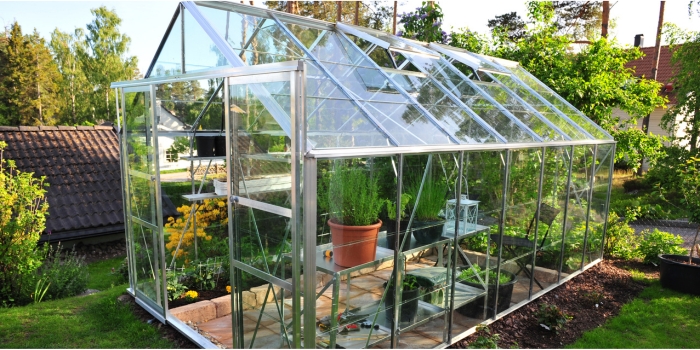
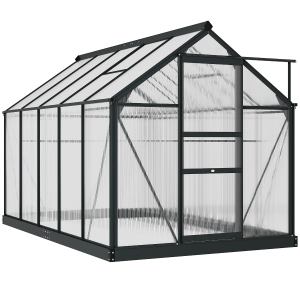
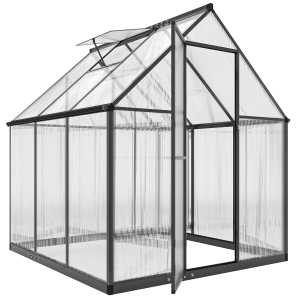
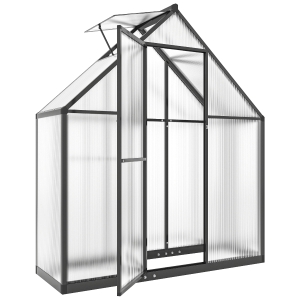
Heavy-duty greenhouses represent the most structurally robust greenhouse category.
Unlike film-based structures, these greenhouses use rigid panel systems.
Typical features include:
- aluminum or reinforced steel frames
- polycarbonate panels with multi-wall insulation
- sealed structural connections
The air layers within polycarbonate panels improve insulation and temperature stability.
These structures provide stronger resistance to environmental conditions such as wind and snow.
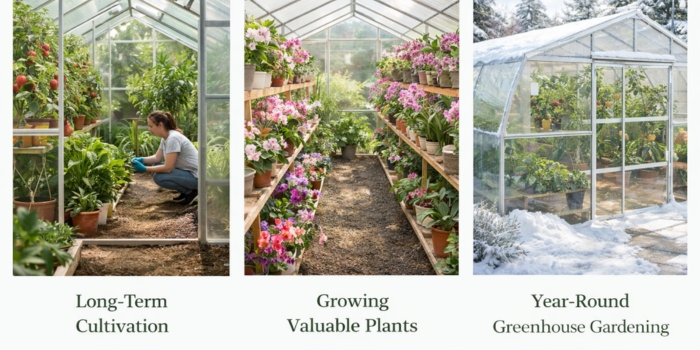
Heavy-duty greenhouses are therefore suitable for:
- year-round cultivation
- growing higher-value plants
- long-term installations
In many cases, these greenhouses can be combined with heating systems to create controlled growing environments.
Select the correct type

4. Structural and Environmental Control Characteristics
Different greenhouse types vary in their ability to regulate environmental conditions.
Growing greenhouses provide minimal insulation but offer effective protection against frost events.
Tunnel greenhouses improve temperature stability over large planting areas but rely heavily on seasonal environmental conditions.
Heavy-duty greenhouses provide the highest level of structural stability and temperature buffering.
These differences illustrate that greenhouse structures are designed to balance cost, installation complexity, and environmental control capability.
Growing greenhouses provide minimal insulation but offer effective protection against frost events.
Tunnel greenhouses improve temperature stability over large planting areas but rely heavily on seasonal environmental conditions.
Heavy-duty greenhouses provide the highest level of structural stability and temperature buffering.
These differences illustrate that greenhouse structures are designed to balance cost, installation complexity, and environmental control capability.
5. Typical Application Scenarios
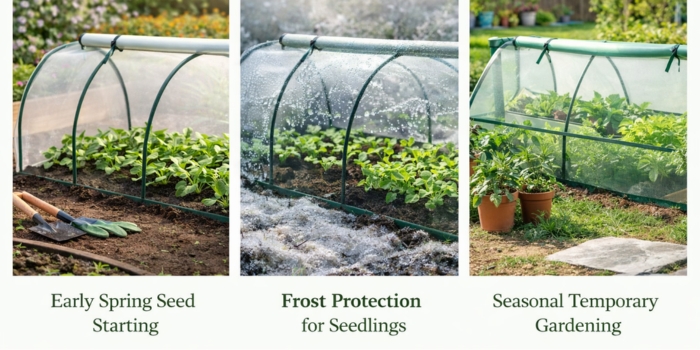
Growing greenhouse
- early spring seedling propagation
- frost protection for young plants
- temporary seasonal gardening
6. A Decision Framework for Greenhouse Selection
An effective greenhouse selection strategy begins with identifying the user's primary cultivation goal.
Instead of asking:
“Which greenhouse is the best?”
Users should consider:
- What problem am I trying to solve?
- How long will the greenhouse remain installed?
- How important is environmental stability?
- Am I willing to perform seasonal maintenance?
This approach allows greenhouse buyers to select structures that match their actual cultivation needs.
Instead of asking:
“Which greenhouse is the best?”
Users should consider:
- What problem am I trying to solve?
- How long will the greenhouse remain installed?
- How important is environmental stability?
- Am I willing to perform seasonal maintenance?
This approach allows greenhouse buyers to select structures that match their actual cultivation needs.
7. Practical Implications for Greenhouse Buyers
Understanding greenhouse design purposes helps avoid unrealistic expectations.
Lightweight greenhouses provide economical solutions for seasonal planting but require periodic maintenance.
Tunnel greenhouses allow large-scale planting but require monitoring during extreme weather conditions.
Heavy-duty greenhouses provide greater environmental stability but require higher initial investment and installation effort.
Choosing the correct greenhouse type therefore depends on balancing cost, durability, and cultivation goals.
Lightweight greenhouses provide economical solutions for seasonal planting but require periodic maintenance.
Tunnel greenhouses allow large-scale planting but require monitoring during extreme weather conditions.
Heavy-duty greenhouses provide greater environmental stability but require higher initial investment and installation effort.
Choosing the correct greenhouse type therefore depends on balancing cost, durability, and cultivation goals.
8. Conclusion
Greenhouses should not be evaluated according to a simple hierarchy of quality. Instead, each greenhouse type is designed to serve a specific cultivation purpose.
Growing greenhouses protect seedlings and reduce frost damage. Tunnel greenhouses expand planting areas and extend seasonal production. Heavy-duty greenhouses provide long-term structural stability and improved environmental control.
As a result, greenhouse selection should be guided by cultivation needs rather than the assumption that one greenhouse type is universally superior.
In practical greenhouse gardening, the most important principle is:
There is no universally “best” greenhouse—only the one that fits how you grow.
Growing greenhouses protect seedlings and reduce frost damage. Tunnel greenhouses expand planting areas and extend seasonal production. Heavy-duty greenhouses provide long-term structural stability and improved environmental control.
As a result, greenhouse selection should be guided by cultivation needs rather than the assumption that one greenhouse type is universally superior.
In practical greenhouse gardening, the most important principle is:
There is no universally “best” greenhouse—only the one that fits how you grow.
References
Teagasc. (2021).
Protected Cropping Systems in Ireland: Polytunnels and Greenhouses.
Agriculture and Food Development Authority.
Teagasc. (2019).
Choosing the Right Protected Structure for Irish Conditions.
Met Éireann. (2022).
Climate of Ireland: Temperature, Rainfall and Growing Conditions.
Department of Agriculture, Food and the Marine (DAFM). (2020).
Horticulture Development Strategy and Protected Cropping.
Health and Safety Authority (HSA). (2019).
Safe Installation of Agricultural Structures.
University College Dublin (UCD). (2018).
Protected Cultivation and Crop Production Systems.
Royal Horticultural Society (RHS). (2021).
Choosing a Greenhouse for Your Garden.
ADAS UK. (2017).
Protected Cropping Systems and Environmental Control.
About the Author
Dr. Oliver Grant
Dr. Oliver Grant is a specialist in protected cultivation systems and greenhouse design for temperate maritime climates. His work focuses on aligning greenhouse structures with cultivation objectives, environmental conditions, and user behaviour. He has collaborated with horticultural institutions and growers across Ireland and the United Kingdom, with particular expertise in greenhouse selection, structural performance, and practical installation strategies for small-scale and domestic growing environments.
Dr. Oliver Grant is a specialist in protected cultivation systems and greenhouse design for temperate maritime climates. His work focuses on aligning greenhouse structures with cultivation objectives, environmental conditions, and user behaviour. He has collaborated with horticultural institutions and growers across Ireland and the United Kingdom, with particular expertise in greenhouse selection, structural performance, and practical installation strategies for small-scale and domestic growing environments.