Last Updated: 23/03/2026
Abstract
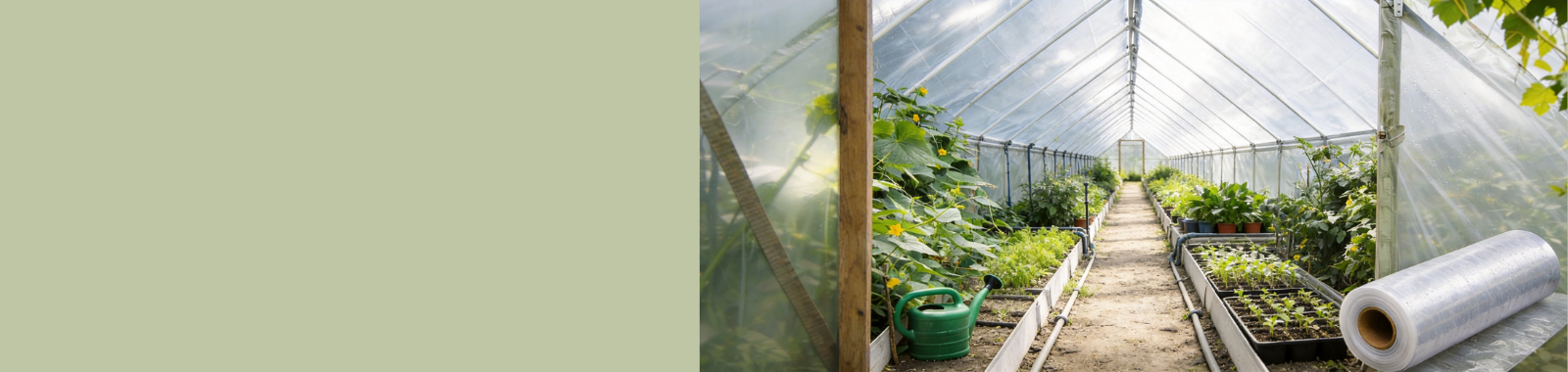
The service life of a greenhouse is often misunderstood as a single “overall lifespan.” In practice, greenhouse durability is determined by the different lifetimes of its structural components and covering materials. Structural frames such as steel supports or aluminum profiles may last several years, while cover materials—including polyethylene films and sealing components—function as consumable elements requiring periodic replacement.
This study analyzes the service life characteristics of greenhouse cover materials, including polyethylene (PE) film, polyvinyl chloride (PVC) film, and polycarbonate (PC) panels. Particular attention is given to ultraviolet degradation, thermal aging, installation quality, and environmental exposure. The analysis demonstrates that greenhouse durability is best understood as a layered lifespan system, where structural components, semi-permanent panels, and consumable coverings each follow different aging patterns.
Understanding these differences allows greenhouse users to make informed decisions about maintenance, replacement cycles, and material selection.
Keywords
Greenhouse materials, UV degradation, Polyethylene film, Polycarbonate panels, Material lifespan, Greenhouse maintenance
1. Introduction
One of the most common questions asked by greenhouse users is:
“How many years can this greenhouse last?”
However, this question often reflects a misunderstanding of greenhouse construction. A greenhouse does not have a single uniform lifespan. Instead, its durability depends on multiple components with different service lives.
Structural frames, such as steel or aluminum supports, typically last significantly longer than the materials used for greenhouse coverings. Cover materials—especially flexible films—are exposed to environmental stress and therefore behave as consumable components.
For this reason, greenhouse lifespan should be understood as a layered durability system rather than a fixed number of years.
2. Layered Lifespan Model of Greenhouses
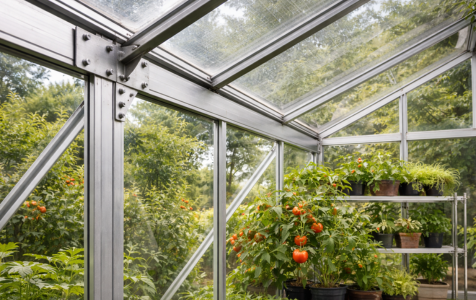
The lifespan of a greenhouse can be divided into three material layers; Each layer experiences different aging mechanisms and replacement cycles.
3. Classification of Structural and Consumable Components
3.1 Long-Term Structural Components
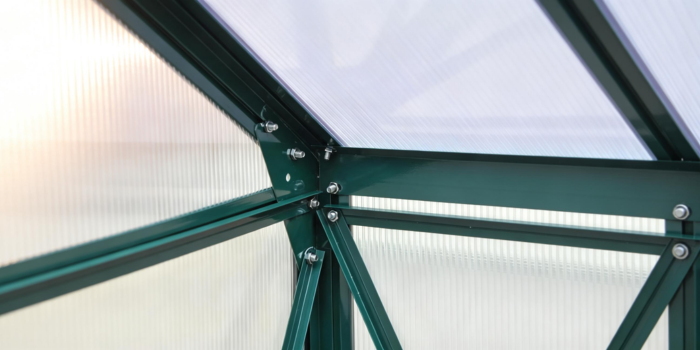
Structural components form the mechanical backbone of the greenhouse. These include:
- Steel frames
- Aluminum profiles
- Cross beams and support structures
- Foundation systems
Under normal use conditions, the expected structural lifespan is approximately:
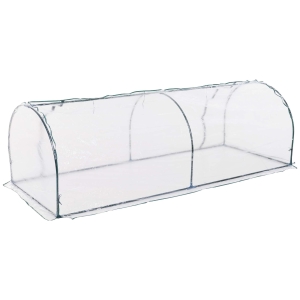
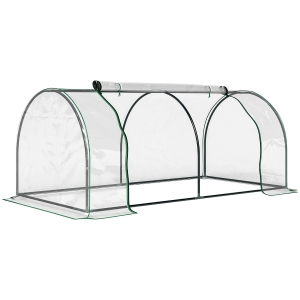
Tunnel greenhouse structures: about 2 years
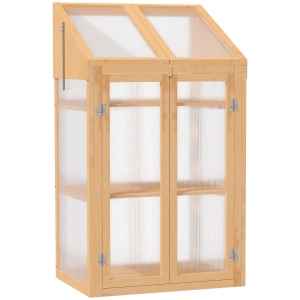
Garden greenhouse structures: about 2 years
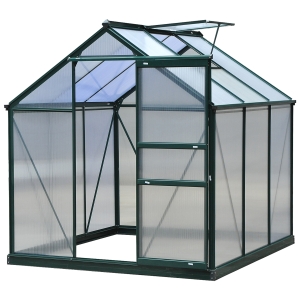
Heavy-duty greenhouse frames: approximately 5 years
These values represent typical practical expectations under residential or small-scale greenhouse usage.
3.2 Semi-Permanent Cover Panels
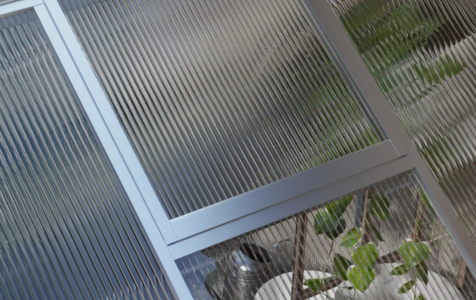
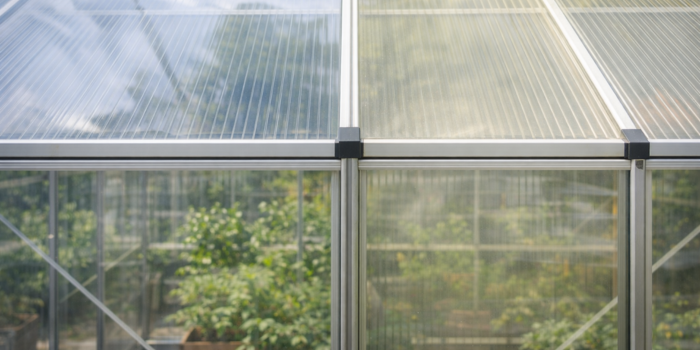
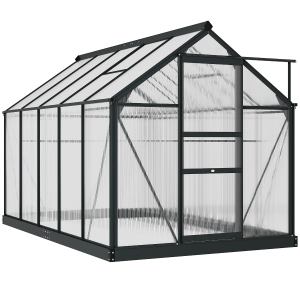
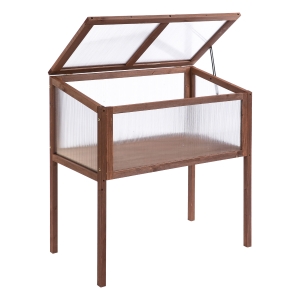
Polycarbonate (PC) panels are commonly used in heavy-duty greenhouse structures.
Unlike flexible films, PC panels age gradually rather than failing suddenly.
Typical characteristics include:
- Slow optical degradation
- Minor yellowing over time
- Gradual reduction in light transmission
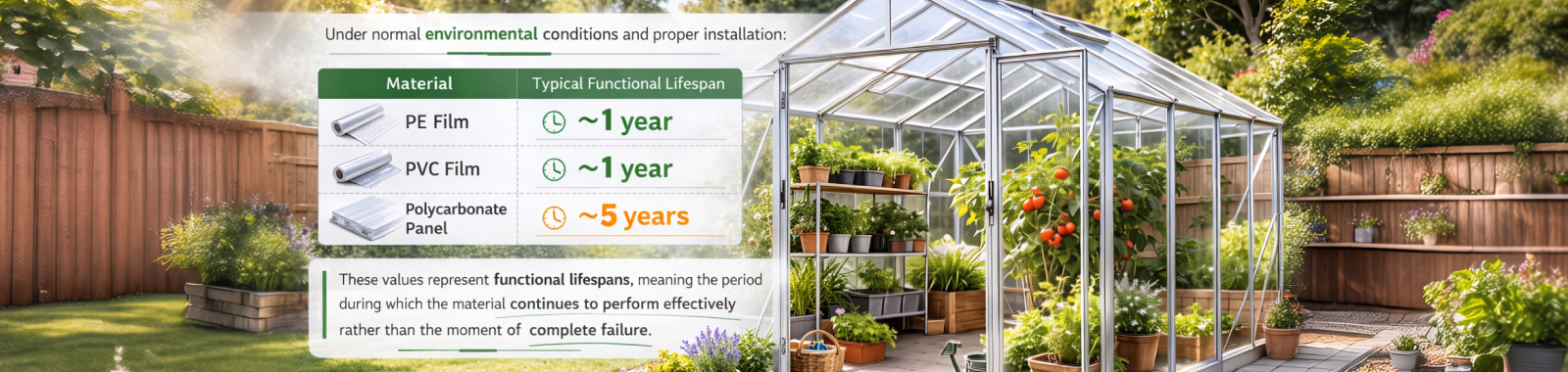
Under normal environmental conditions, PC panels may function effectively for 5–10 years or longer, depending on UV protection and installation quality.
3.3 Consumable Cover Materials
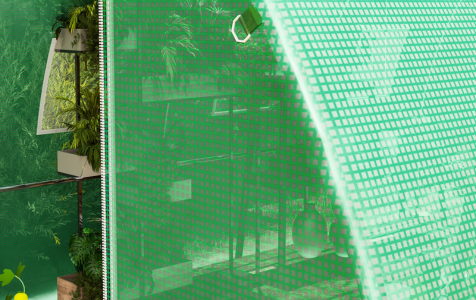
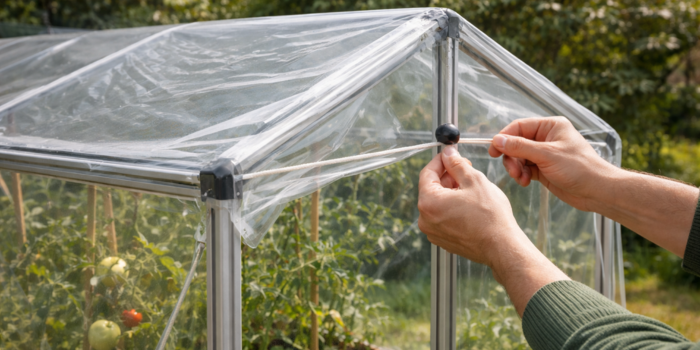
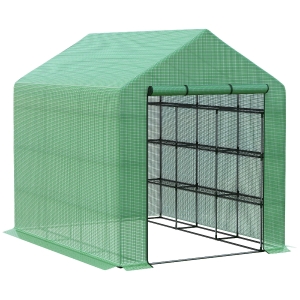
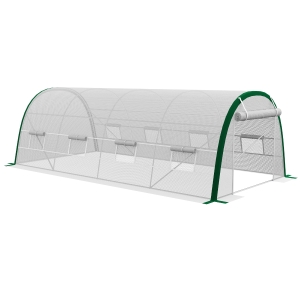
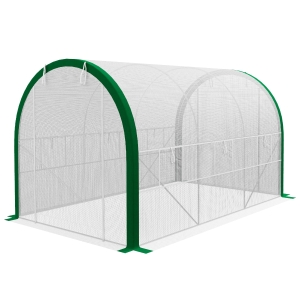
Flexible greenhouse covers include:
- Polyethylene (PE) films
- Polyvinyl chloride (PVC) films
- Zipper doors and curtain components
- Sealing strips
These materials experience significant environmental exposure and are therefore considered maintenance components.
Typical service life:
6 months to approximately 1 year
These coverings are designed to be replaceable rather than permanent.
Therefore, greenhouse cover replacement should be viewed as a routine maintenance cost rather than structural failure.
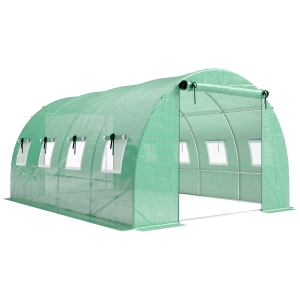
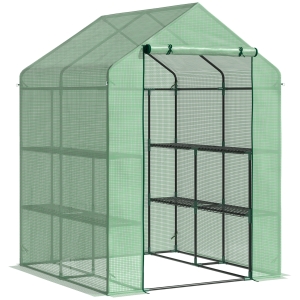
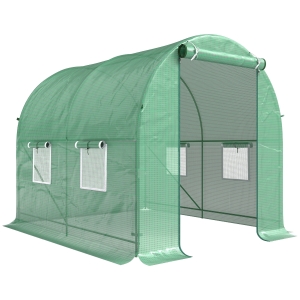
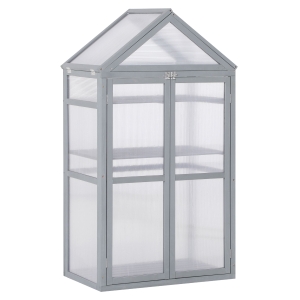
Discover more heavy-duty greenhouse

4. Ultraviolet Degradation of Greenhouse Materials
4.1 UV degradation mechainisms
Ultraviolet radiation is one of the primary causes of plastic material aging.
UV radiation affects polymer materials through three main mechanisms:
1. breaking molecular chain structures
2. increasing material hardness
3. reducing flexibility and causing brittleness
This process eventually leads to cracking and structural weakening.
Ultraviolet radiation is one of the primary causes of plastic material aging.
UV radiation affects polymer materials through three main mechanisms:
1. breaking molecular chain structures
2. increasing material hardness
3. reducing flexibility and causing brittleness
This process eventually leads to cracking and structural weakening.
4.2 UV aging in plastic films
In flexible greenhouse films, UV degradation typically appears as:
- color fading
- loss of elasticity
- cracking near structural contact points
The speed of degradation depends primarily on the concentration of UV stabilizers within the film material.
It is important to note that material thickness alone does not determine UV resistance.
- color fading
- loss of elasticity
- cracking near structural contact points
The speed of degradation depends primarily on the concentration of UV stabilizers within the film material.
It is important to note that material thickness alone does not determine UV resistance.
4.3 UV aging in polycarbonate panels
Polycarbonate panels usually include a UV protective coating applied to one side of the panel.
Unlike films, PC panels typically degrade through gradual performance decline rather than structural failure.
Typical aging effects include:
- slight yellowing
- reduced transparency
- micro surface cracking
Proper installation is critical. The UV-protected side must face outward. Incorrect installation may significantly shorten panel lifespan.
Unlike films, PC panels typically degrade through gradual performance decline rather than structural failure.
Typical aging effects include:
- slight yellowing
- reduced transparency
- micro surface cracking
Proper installation is critical. The UV-protected side must face outward. Incorrect installation may significantly shorten panel lifespan.
5. Environmental aging factors
5.2 Low-temperature aging
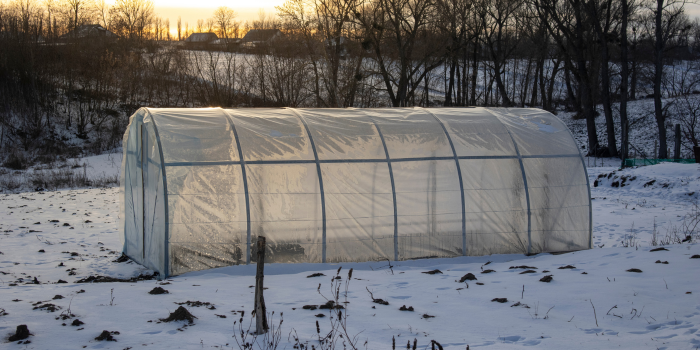
Cold environments introduce a different type of material stress.
Low temperatures cause plastic materials to become less flexible. Under such conditions, wind impact or mechanical stress may lead to cracking.
This explains a common user concern:
“Will greenhouse covers crack in winter?”
In most cases, cracking occurs not because of cold alone but because of previous UV degradation combined with sudden temperature drops.
7. Maintenance strategies for extending material life
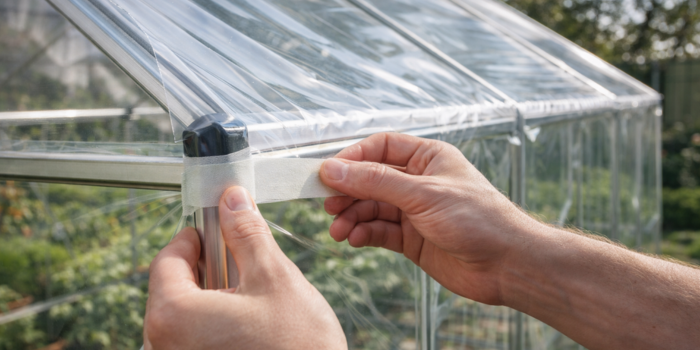
Proper maintenance can significantly extend the service life of greenhouse materials.
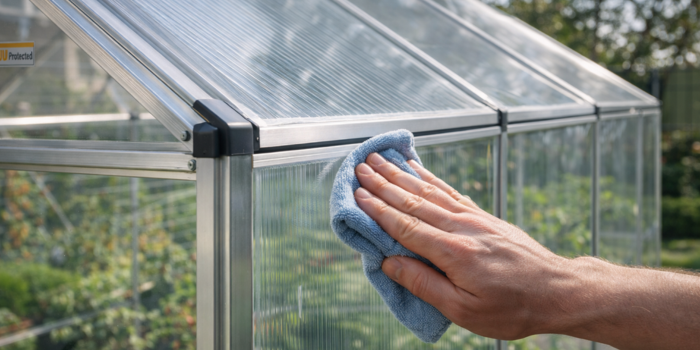
For flexible films:
- apply protective tape at frame contact points
- avoid excessive tension during installation
- provide shading during extreme summer sunlight
- inspect for looseness during winter
The most important principle is to avoid continuous tension on the film material.
Discover more greenhouses
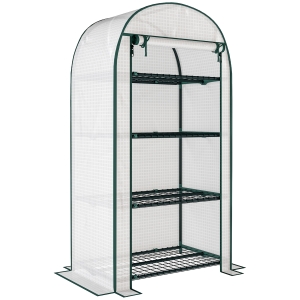
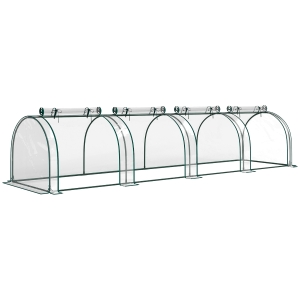
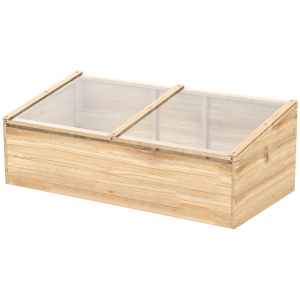
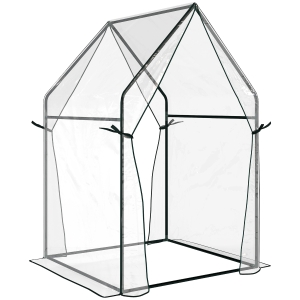
8. Lifespan model for greenhouse cover systems
The lifespan of greenhouse cover materials can be expressed as a simple conceptual relationship:
Material Lifespan
= Material Type × UV Stability × Installation Quality × Climate Conditions × Maintenance Frequency
No greenhouse covering material is completely maintenance-free.
Material Lifespan
= Material Type × UV Stability × Installation Quality × Climate Conditions × Maintenance Frequency
No greenhouse covering material is completely maintenance-free.
9. Practical implications for users
Understanding the layered lifespan of greenhouse materials helps users make more rational purchasing decisions.
For temporary planting applications, flexible film coverings provide an economical solution.
For long-term cultivation systems, polycarbonate panel structures offer improved durability and insulation.
Flexible covers should be treated as replaceable components rather than permanent structural elements.
For temporary planting applications, flexible film coverings provide an economical solution.
For long-term cultivation systems, polycarbonate panel structures offer improved durability and insulation.
Flexible covers should be treated as replaceable components rather than permanent structural elements.
10. Conclusion
The lifespan of a greenhouse should not be interpreted as a single number. Instead, greenhouse durability depends on the different service lives of its structural components and covering materials.
Structural frames may remain stable for several years, while flexible covers require periodic replacement. Polycarbonate panels provide intermediate durability with gradual performance decline over time.
Recognizing greenhouse covers as maintainable components rather than permanent structures allows users to develop realistic expectations regarding greenhouse longevity and maintenance.
Structural frames may remain stable for several years, while flexible covers require periodic replacement. Polycarbonate panels provide intermediate durability with gradual performance decline over time.
Recognizing greenhouse covers as maintainable components rather than permanent structures allows users to develop realistic expectations regarding greenhouse longevity and maintenance.
References
Teagasc. (2021).
Protected Cropping and Polytunnel Management in Ireland.
Agriculture and Food Development Authority.
Teagasc. (2018).
Plastic Covering Materials in Horticulture: Performance and Durability.
Met Éireann. (2022).
Solar Radiation and Climate Conditions in Ireland.
Department of Agriculture, Food and the Marine (DAFM). (2020).
Horticulture Infrastructure and Protected Cropping Systems.
University College Dublin (UCD). (2019).
Material Performance in Controlled Environment Agriculture Systems.
Health and Safety Authority (HSA). (2019).
Safe Use and Maintenance of Agricultural Structures.
Royal Horticultural Society (RHS). (2021).
Greenhouse Maintenance and Cover Replacement Guide.
ADAS UK. (2017).
Durability and Maintenance of Greenhouse Cover Materials.
About the Author
Dr. Adrian Holloway
Dr. Adrian Holloway is a researcher in agricultural systems engineering focusing on greenhouse materials, structural durability, and protected cultivation systems. His work examines how greenhouse materials respond to environmental factors such as solar radiation, temperature fluctuations, and long-term weather exposure.Dr. Adrian Holloway is a researcher in agricultural systems engineering specialising in greenhouse materials and structural durability in temperate maritime climates. His work focuses on the ageing behaviour of greenhouse covering systems under real environmental conditions, including ultraviolet exposure, temperature fluctuations, and installation stress. He has contributed to research and advisory projects supporting growers and greenhouse users across Ireland, with particular emphasis on material lifespan, maintenance strategies, and practical performance in small-scale protected cultivation systems.